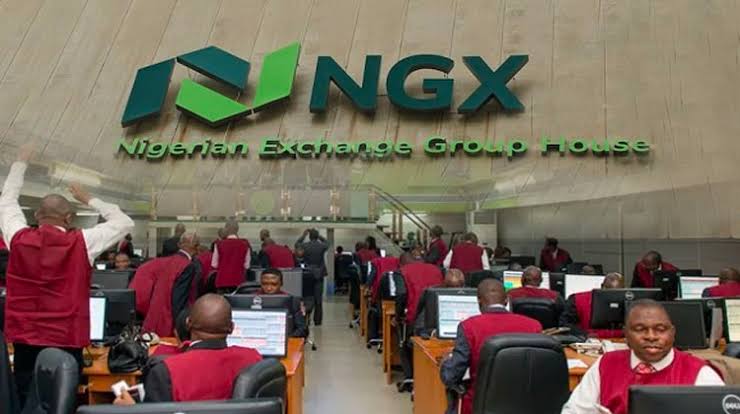
Nigeria fixed its settlement system to move closer to the world. FTSE Russell is now asking whether that same fix has made the market harder for the world to access.
Nigeria’s long-awaited return to FTSE Russell’s Frontier Market category has come under fresh uncertainty after the global index provider placed the country’s planned upgrade under further review, citing concerns over the implementation of the T+1 settlement cycle.
The development has introduced a new layer of caution into the Nigerian equities market, which had spent years working toward regaining stronger international classification status. Ironically, the same settlement reform promoted by Nigerian market authorities as a sign of improved market efficiency has now become the key issue delaying the country’s frontier market reclassification.
FTSE Russell had in March 2026 announced Nigeria’s upgrade from “Unclassified” to “Frontier Market” status, with implementation expected in September 2026. The decision was widely seen as a major breakthrough for the Nigerian capital market, with investors expecting it to attract passive inflows from index-tracking funds, improve foreign investor confidence and deepen market liquidity.
However, in its June 30 update, FTSE Russell said Nigeria had not yet been formally reclassified and that the upgrade would remain under review. The index provider said it would issue a definitive update by the end of August 2026.
At the centre of the review is Nigeria’s transition to T+1 settlement, which took effect on June 1, 2026. Under the new framework, trades on the Nigerian Exchange settle one business day after execution, compared with the previous T+2 arrangement.
The reform was introduced to speed up settlement, reduce counterparty risk and align the Nigerian market with global best practice. Nigeria also became one of the first African markets to move to T+1, a step regulators and market operators presented as evidence of the country’s readiness for deeper international participation.
But FTSE Russell’s concern is that the shortened settlement cycle could create operational difficulties for foreign institutional investors, especially those trading from different time zones and dealing with foreign exchange conversion requirements.
The key concern is whether international investors may be forced to prefund trades before execution in order to meet the one-day settlement deadline. For FTSE Russell, mandatory prefunding is a serious market-access issue because it may affect the delivery-versus-payment standard, one of the quality-of-market criteria used in assessing countries for frontier and emerging market classification.
This has created an uncomfortable contradiction for Nigeria. The reform that was meant to strengthen the market’s case for frontier status is now the same reform FTSE Russell wants to study further before allowing the upgrade to proceed.
The review unsettled market sentiment during the week, contributing to renewed selloffs after an already difficult month of June. The Nigerian Exchange All-Share Index closed the week at 229,240 points, down 1.21 per cent from the previous week’s 232,049 points, while market capitalisation declined from ₦148.91 trillion to ₦147.10 trillion.
The market had fallen through much of the week before a strong rebound on Friday, July 3, when the index gained 2.19 per cent. The recovery was led largely by Airtel Africa, which rose by the maximum 10 per cent to close at ₦5,274 per share, returning significant value to the market.
Despite Friday’s rebound, the FTSE review remains the major issue before the market. Nigeria’s frontier market reclassification had been expected to serve as a major catalyst for the second half of the year, with possible inflows from passive index trackers and active foreign portfolio investors positioning ahead of the September implementation.
Those expectations are now on hold until FTSE Russell concludes its review.
Market analysts say the Nigerian Exchange Group, the Securities and Exchange Commission, the Central Securities Clearing System and other market stakeholders now have a narrow window to convince FTSE Russell that foreign investors can trade Nigerian equities under the T+1 settlement system without being compelled to prefund transactions.
This will likely require clearer settlement guidelines, stronger engagement with global custodians, improved foreign exchange coordination and direct consultation with international institutional investors whose feedback may influence FTSE Russell’s final decision.
The broader concern is that Nigeria may have implemented a technically sound reform without sufficiently addressing how it would affect offshore investors who must manage currency conversion, custody instructions and settlement timelines across jurisdictions.
While T+1 settlement is not inherently negative, its success depends on whether the surrounding market infrastructure can support smooth participation by both local and foreign investors. For domestic investors, faster settlement may improve liquidity and reduce risk. For foreign investors, however, the challenge is whether the system allows them to complete transactions efficiently without tying down funds in advance.
This is the question FTSE Russell now wants answered.
If Nigeria resolves the issue before the end of August, FTSE Russell could still proceed with the September reclassification. That would restore confidence, unlock the expected foreign inflow pipeline and strengthen Nigeria’s position in global frontier market indices.
But if the concerns remain unresolved, the upgrade may be delayed, depriving the market of one of its most important anticipated catalysts for 2026.
For now, Nigeria’s capital market finds itself in a difficult position. It has carried out a major settlement reform intended to modernise the market and improve competitiveness, but the reform has exposed fresh questions about accessibility for foreign investors.
The coming weeks will therefore be critical. Regulators and market operators must show that T+1 settlement is not a barrier to foreign participation but a sign of a more efficient, credible and globally aligned market.