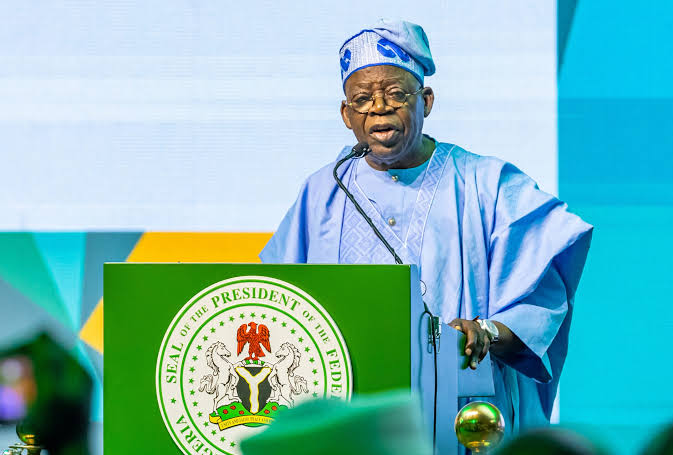
ABUJA – President Bola Ahmed Tinubu has launched three major World Bank-supported programmes valued at $3.05 billion to deepen poverty reduction, strengthen human capital development and improve livelihoods across Nigeria under the Renewed Hope Agenda.
The programmes: Nigeria Community Action for Resilience and Economic Stimulus Additional Financing (NG-CARES AF), Solutions for Internally Displaced and Host Communities (SOLID), and the Human Capital Opportunities for Prosperity and Equity (HOPE) initiative were unveiled on Thursday at the State House Conference Centre, Abuja.
The President’s keynote address was delivered by the Minister of Finance and Coordinating Minister of the Economy, Prof. Taiwo Oyedele.
Tinubu described the initiatives as a fulfilment of his administration’s promise to protect vulnerable Nigerians, empower communities and invest in the country’s human capital.
He said the programmes align with the Renewed Hope Development Plan (2026–2030), which seeks to translate macroeconomic reforms into tangible improvements in the lives of Nigerians through stronger social protection, better healthcare, quality education and enhanced support for small businesses and farmers.
According to the President, the $1.25 billion NG-CARES Additional Financing programme will support smallholder farmers and micro, small and medium enterprises, while the $300 million SOLID programme will provide infrastructure, livelihoods and essential services for internally displaced persons and their host communities.
He added that the $1.5 billion HOPE programme, comprising HOPE-GOV, HOPE-PHC and HOPE-EDU, will strengthen governance at the grassroots, improve primary healthcare delivery, enhance foundational learning in public schools and support teachers nationwide.
Highlighting the impact of ongoing economic reforms, Tinubu said Nigeria recorded strong economic growth last year, foreign reserves have risen above $50 billion, inflation has moderated from its 2024 peak, while expanded cash transfer programmes have reached 15 million vulnerable households, lifting an estimated 7.5 million people out of poverty.
The President called on state governments, development partners and implementing agencies to ensure the successful execution of the programmes, stressing that the interventions are part of a coordinated national strategy to reduce poverty, build resilient communities and improve service delivery in every ward across the country.