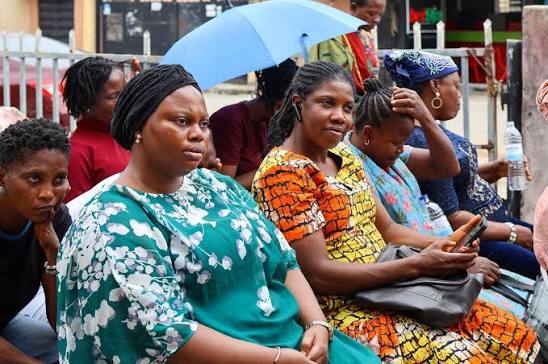
At 6am in Agege, Lagos, Funke is already awake. She sweeps her small shop, prepares her three children for school, cooks breakfast, fetches water from the compound tap, and then sits down to fry akara that she will sell until noon. By 2pm, she will go to the market to buy garri and fish on credit. By 7pm, she will be back home to cook, help her children with homework, wash clothes, and prepare for the next day. Her husband, a bus driver, will return at 9pm, eat, and sleep. Funke’s day has sixteen hours of unpaid and paid work. Her husband’s day has eight.
Multiply Funke by 100 million, and you have the story of Nigerian women. They are the invisible engine of the economy, yet they own almost nothing.
Nigeria is a country that talks a lot about development but ignores half of its population. We cannot build a prosperous nation when women who constitute 49 percent of our population are systematically excluded from land, credit, education, and decision making. Gender inequality is not a women’s issue. It is a national economic emergency.
Consider the numbers. According to the National Bureau of Statistics, women own only 20 percent of enterprises in the formal sector, yet they constitute over 70 percent of traders in informal markets. According to the World Bank, only 10 percent of land in Nigeria is owned by women, despite women doing over 60 percent of farm work. In northern Nigeria, a girl is more likely to be married at 14 than to complete secondary school. In the National Assembly, out of 469 members, only 20 are women. That is less than 5 percent. Rwanda, which suffered genocide in 1994, today has over 61 percent women in parliament, the highest in the world. Nigeria, which has never had such war, is at the bottom.
Why does this matter for development? Because when you exclude women, you exclude productivity.
The first area is education. The girl child in Nigeria still faces barriers that boys do not face. In Sokoto, Zamfara, Kebbi, Bauchi and Jigawa, school completion rate for girls is below 40 percent. Parents who are poor will choose to send the boy to school and keep the girl at home to hawk or help in the farm. When a girl is out of school, the consequences cascade. She marries early. Early marriage leads to early pregnancy. Early pregnancy leads to vesicovaginal fistula, maternal death, and stunted children. A child born to a mother with no education is twice as likely to die before age five. The World Bank estimates that Nigeria loses over 17 billion dollars yearly due to girls not completing secondary school. That is not a gender problem. That is an economic problem.
The second area is economic exclusion. Nigerian women work hard, but their work is not counted. The woman who processes cassava from 5am to 8pm, the woman who carries tomatoes from Kano to Lagos, the woman who braids hair for twelve hours, all these women are working, but they have no access to credit. The Central Bank says women get less than 15 percent of commercial bank loans. Why? Because banks demand collateral like Certificate of Occupancy, which women do not have because land is registered in husband’s name. So the woman remains small. She cannot buy a grinding machine. She cannot buy a freezer. She cannot expand. She remains at subsistence level. Meanwhile, studies show that when women get access to same resources as men, farm yields increase by 20 to 30 percent. If Nigerian women farmers had equal access to inputs, we could feed an additional 20 million people.
The third area is political exclusion. Nigeria’s democracy cannot be called representative when women are missing. Politics in Nigeria is violent, expensive, and structured to exclude women. Nomination forms cost millions. Meetings are held at night. Campaigns require thugs. Women who enter are called prostitutes or wayward. Yet countries that include women do better. When women are in parliament, they prioritize health, education, and water. When women are local government chairpersons, they ensure primary health centres work. Excluding women from governance means excluding issues that affect families.
The fourth area is violence. Perhaps the most painful aspect of gender inequality in Nigeria is gender-based violence. One in three Nigerian women has experienced physical or sexual violence. Rape cases are increasing, yet conviction rate is less than 2 percent. In many police stations, when a girl reports rape, she is asked what she was wearing. In many courts, cases take ten years. In many communities, family will settle rape case with N50,000 and a goat. Domestic violence is even more normalized. Many people still believe a man has right to beat his wife if she disobeys. This culture of violence has economic cost. Women who are beaten cannot go to work. Girls who are raped drop out of school. Women who live in fear cannot innovate.
What about culture and religion? This is often used as excuse. Some people say our culture does not allow women to own land or lead. That is selective reading of culture. In pre-colonial Igbo society, women had Umunwanyi associations that controlled markets and could sanction men. In Yoruba society, women like Efunsetan Aniwura were powerful business owners and chiefs. In Hausa history, Queen Amina of Zaria led armies. Our culture did not historically exclude women. Colonialism and distorted interpretation of religion did. Even in Islam, Khadija, the wife of Prophet Muhammad, was a wealthy businesswoman who employed men. So argument of culture is not tenable.
So what must Nigeria do? We need to move from tokenism to transformation.
First, we need to fix education for girls with urgency. The Universal Basic Education Commission should have a special fund for girl child education in states with low female enrollment. States like Sokoto and Jigawa should make education free and compulsory for girls up to senior secondary, with conditional cash transfer to parents who keep girls in school. The school must be safe. Many girls drop out because there is no toilet, no water, and teachers harass them. Building girls-friendly schools with female teachers and separate toilets will increase retention. The Federal Government’s Adolescent Girls Initiative for Learning and Empowerment project, which aims to keep millions of girls in school, must be expanded and monitored to ensure money reaches girls, not contractors.
Second, we need economic empowerment that is structural, not cosmetic. Trader Moni of N10,000 is good for politics but does not lift woman out of poverty. What women need is access to land, credit, and markets. State governments should issue Certificates of Occupancy jointly in husband and wife’s names. Bank of Industry and Bank of Agriculture should reserve at least 40 percent of loans for women with simplified collateral. Markets should be built with crèches so women who trade can keep children safe. Cooperatives should be strengthened so women can aggregate produce and negotiate better prices. When you empower a woman economically, you empower a household. Research shows women reinvest 90 percent of their income in family, compared to 35 percent for men.
Third, we need political quotas with teeth. The National Gender Policy recommends 35 percent affirmative action, but it has no legal backing. Nigeria needs a law that mandates political parties to reserve at least 35 percent of tickets for women, with penalties for non-compliance. We also need to make politics less violent and less expensive. Independent National Electoral Commission should enforce spending limits and punish electoral violence. When politics becomes ideas-based rather than money-and-thugs-based, more women will enter.
Fourth, we need to end impunity for gender-based violence. Every state should have a Sexual Assault Referral Centre with medical, legal, and psychosocial support. The Police should have special gender desks manned by trained female officers. Courts should have fast-track for rape and domestic violence. Traditional rulers and religious leaders should speak out. The Violence Against Persons Prohibition Act was passed in 2015, but only 30 states have domesticated it. All 36 states must domesticate and implement it.
Finally, we need to engage men and boys. Gender equality is not women fighting men. It is about partnership. Fathers who support daughters’ education, husbands who share housework, brothers who protect sisters from early marriage, male legislators who sponsor gender bills, all these men are needed. Organizations like HeForShe have shown that when men become allies, change is faster.
Nigeria has examples of what is possible when women are included. Ngozi Okonjo-Iweala leads World Trade Organization. Amina Mohammed is Deputy Secretary-General of United Nations. Chimamanda Ngozi Adichie is celebrated globally. In business, Ibukun Awosika built Chair Centre Group. In agriculture, Ndidi Nwuneli built Sahel Consulting that empowers thousands. These women succeeded despite system, not because of system. Imagine what would happen if system supported women.
Funke in Agege will continue to wake up at 6am tomorrow. She will fry akara, send children to school, and dream of owning a bigger shop. That dream is not too much. That dream is Nigeria’s dream. When Funke grows, Nigeria grows. When we keep Funke small, we keep Nigeria small.
We cannot develop with one hand tied behind our back. That hand is our women.