Abuja – The Nigeria Customs Service (NCS) has generated a staggering ₦1.42 trillion in revenue within two months while intercepting prohibited and restricted goods worth more than ₦8.1 billion, unveiling the scale of its ongoing battle against illegal trade, financial crimes and cross-border economic violations.
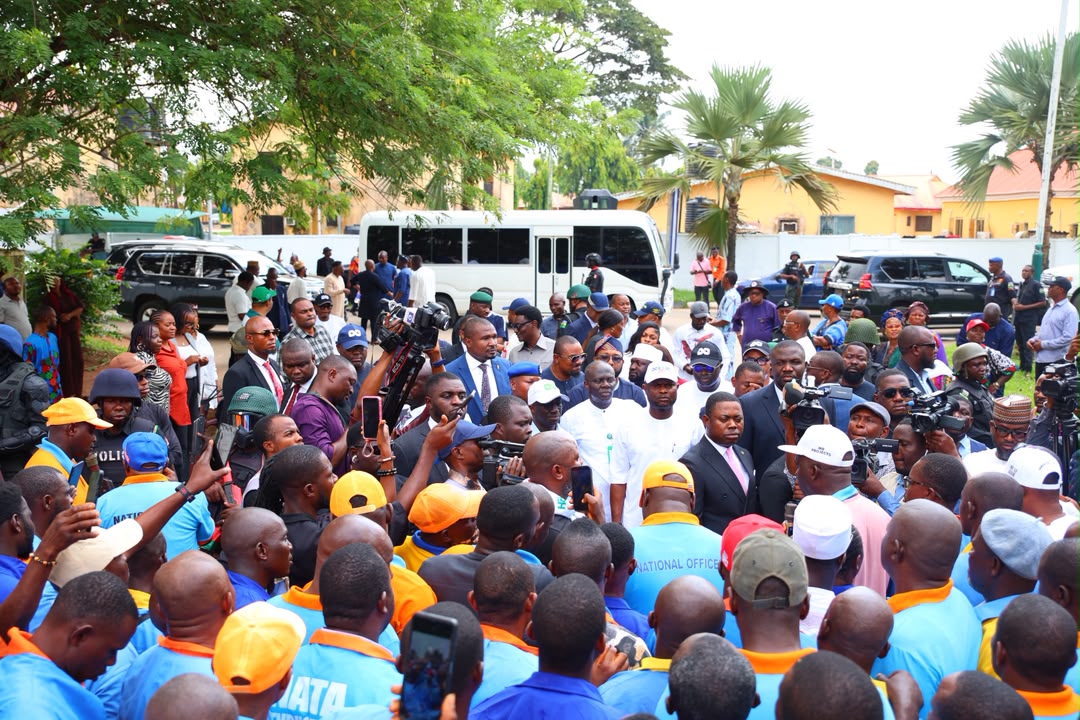
The figures, covering September and October 2026, were presented at a joint security press briefing convened by the National Counter Terrorism Centre (NCTC), under the Office of the National Security Adviser (ONSA), on November 5.
The revenue performance came alongside the processing of 99,839 Single Goods Declarations (SGDs) and 9,195 Pre-Arrival Assessment Reports (PAARs), highlighting the volume of import documentation handled by the Service during the review period.
Speaking at the briefing, the National Public Relations Officer of the NCS, Deputy Comptroller Abdullahi Aliyu Maiwada, said the performance reflected the Service’s determination to strengthen revenue mobilisation, facilitate legitimate trade and tighten enforcement through digital technology and inter-agency cooperation.
A breakdown of the figures showed that Customs generated ₦697.84 billion in September, with collections rising to ₦722.91 billion in October, bringing total revenue to ₦1.42 trillion.
The Service also processed 2,102 PAARs in September and 7,093 in October, while Single Goods Declarations increased from 48,832 to 51,007 within the same period.
However, the revenue figures were only part of the disclosures, as Customs revealed that its enforcement operations had resulted in the interception of prohibited and restricted commodities with a combined Duty Paid Value exceeding ₦8.1 billion.
The intercepted items included illicit drugs, pharmaceutical products, prohibited merchandise and petroleum products.
The Service said it was working with relevant regulatory and security agencies to ensure that seized items were appropriately handled and disposed of in accordance with applicable laws.
Beyond its conventional border enforcement responsibilities, the NCS is strengthening its financial intelligence capacity to confront trade-based money laundering and other illicit financial activities concealed within international commerce.
Maiwada disclosed that the Service was participating in a World Customs Organisation (WCO) Mentoring Mission designed to improve its ability to identify, investigate and address suspicious financial transactions associated with cross-border trade.
The four-week engagement, scheduled to run from October 18 to November 13, 2026, was inaugurated on October 19.
As part of the initiative, Customs held strategic engagements with six relevant agencies between October 27 and 29, including the Economic and Financial Crimes Commission (EFCC), Nigeria Financial Intelligence Unit (NFIU) and National Counter Terrorism Centre.
The Service also highlighted its transition to an electronic currency declaration platform, describing the digital intervention as an important mechanism for improving transparency, monitoring financial movements and detecting illicit flows across Nigeria’s borders.
The initiative underscores the growing intersection between customs administration, financial intelligence and national security, particularly as criminal networks exploit international trade channels to move illicit funds.
Nigeria’s export trade also recorded increased activity at the Lilypond Export Command, where third-quarter export value reached $752.85 million in 2026, compared with $586.15 million in the corresponding period of 2025.
The increase of $166.7 million represents approximately 28.4 per cent growth, indicating a higher export value recorded during the period.
The Service linked the performance to efforts aimed at improving export procedures and facilitating the movement of Nigerian products into international markets, particularly within the non-oil export sector.
In a separate environmental enforcement operation, Customs disclosed that six live pangolins were rescued in Ogun State through two separate interceptions.
The Ogun I Area Command rescued three of the animals, while the Federal Operations Unit, Zone A, recovered another three.
The rescued pangolins were subsequently transferred to the Green Fingers Wildlife Conservation Initiative for appropriate care and rehabilitation under Nigeria’s obligations to the Convention on International Trade in Endangered Species of Wild Fauna and Flora (CITES).
The Service maintained that its responsibilities extend beyond revenue collection to protecting national economic interests, preventing illicit trade, strengthening financial security and safeguarding endangered wildlife.
The latest figures place Customs’ operations at the intersection of economic growth and national security, with the Service seeking to balance faster legitimate trade processing with tougher scrutiny of suspicious transactions and prohibited cross-border activities.