The Minister of Information and National Orientation, Alhaji Mohammed Idris, says every Nigerian is benefiting from the ongoing reforms introduced by President Bola Tinubu’s administration to reposition the country for national prosperity.
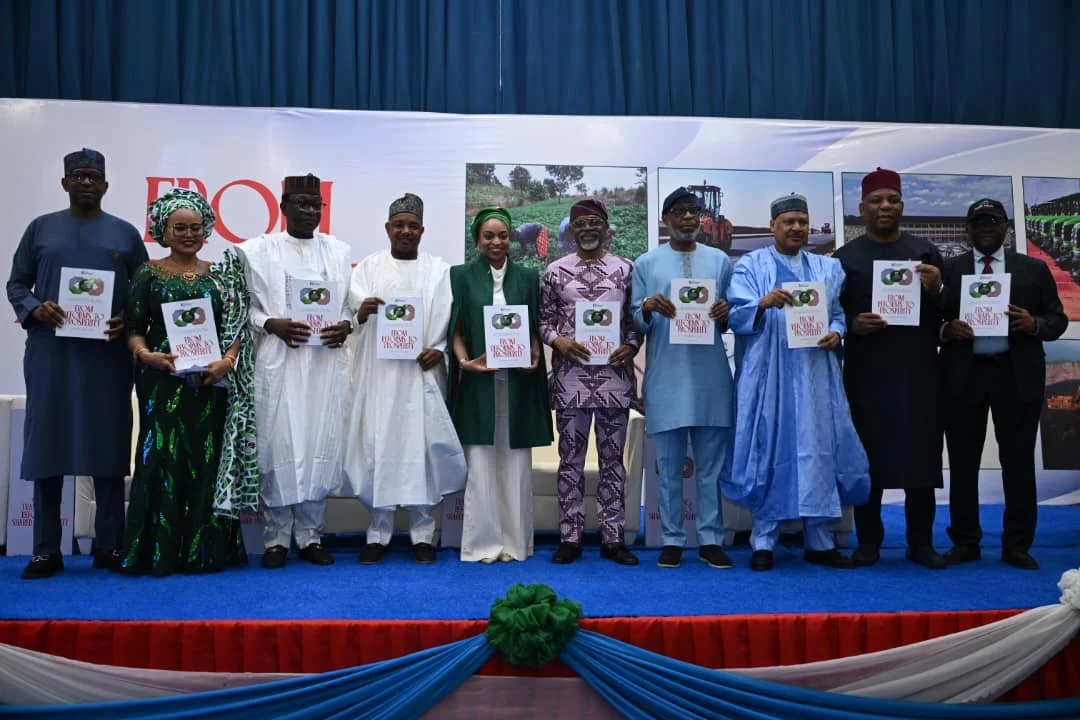
Idris stated this on Tuesday in Abuja, during the Media Pre-Sensitisation, ahead of the official inauguration of the All Progressives Congress (APC) Manifesto for the 2027 Presidential Election.
The event was organised under the theme: “From Reforms to Prosperity Agenda 2027–2031.”
The minister said the administration had laid a solid foundation for economic transformation, adding that the country was progressively moving towards an era of prosperity.
He said, “When people say that reforms are working, but we don’t know who is benefiting, I say every Nigerian is benefiting.”
Idris explained that the reforms were designed to improve the welfare of Nigerians irrespective of their political affiliations, social status or economic backgrounds.
According to him, the administration’s commitment to infrastructure development demonstrates that the benefits of government policies are accessible to all citizens.
He cited the ongoing reconstruction of the Abuja-Kano road as an example, stressing that nobody would be required to belong to the APC or be wealthy before using the road.
“Nobody needs to show his identification card that he belongs to the APC or is a rich man or belongs to a particular class before he plies it,” he said.
The minister also highlighted improvements in security, particularly along the Abuja-Kaduna highway, which he said had witnessed significant changes compared with previous years.
He recalled that motorists previously had to make enquiries about the presence of bandits and kidnappers before travelling between Abuja and Kaduna.
“Today, nobody asks this question. You take your car from here to Kano, and nobody asks whether the terrorists, bandits or kidnappers are there,” he said.
Idris further identified the Nigerian Education Loan Fund (NELFUND) as another example of the administration’s commitment to making its reforms beneficial to ordinary Nigerians.
He said about 1.6 million young Nigerians had benefited from the initiative, which provides financial assistance to students whose parents or guardians could not afford their higher education expenses.
According to him, the initiative ensures that financial constraints do not prevent qualified young Nigerians from pursuing tertiary education.
“What Tinubu is saying is that there is no reason why any young man or woman who has the credentials to go to school should be unable to do so simply because of the inability of their parents or guardians to pay,” he said.
The minister added that the programme was accessible without discrimination along political lines or family background.
He also pointed to Nigeria’s removal from the Financial Action Task Force (FATF) grey list as evidence of growing international confidence in the country’s economic reforms.
Idris said the development had strengthened Nigeria’s ability to engage in international business without the additional scrutiny associated with its previous grey-list status.
He added that international credit rating agencies, including Fitch, Moody’s and Standard and Poor’s, had improved their assessments of Nigeria’s economic outlook.
According to him, core inflation, including headline inflation and food inflation are declining, while the country’s Gross Domestic Product (GDP) is recording growth.
Idris recalled that foreign investors and airlines previously experienced difficulties repatriating funds invested in Nigeria, describing the situation as a major concern for international businesses.
He said President Tinubu’s administration had addressed the challenge by assuring investors that funds could be repatriated through legitimate channels.
The minister, however, acknowledged that the country had yet to achieve its desired economic targets, but maintained that the reforms were gradually producing positive results.
He urged journalists to sustain their constitutional responsibility of holding government accountable while also recognising policies and initiatives that positively affect society.
“It is important to criticise and point out areas of correction for any government. Indeed, that is your role as a journalist,” he said.
Idris, however, cautioned that constructive journalism should not be limited to highlighting negative developments, urging media organisations to also report government achievements.
“If you see anything good, please also say it. We need these pieces of information so that our society and our country can move forward,” he said.
He emphasised the need for Nigerians to distinguish between criticism of government policies and negative portrayals of the country, stressing that national interest should remain paramount.
The minister cited his recent visit to Istanbul, Türkiye, where he observed that citizens criticised their leaders but remained united in defending their country’s image.
According to him, Nigerians should adopt a similar attitude by supporting national development while continuing to demand accountability from public office holders.
“You don’t have to like the administration of President Tinubu, but all of us must like Nigeria. We love our country,” he said.
Idris maintained that Nigeria was on a positive development trajectory, urging citizens and the media to contribute to building public confidence in the country.
He called on Nigerians to support Tinubu’s vision of taking the country towards prosperity, expressing optimism that the administration’s achievements would become more evident in the next four years.
“He has given a promise that he’s going to take this country to prosperity. We are progressively seeing that we are on the march towards that direction. Please, let us support him and see what happens in another four years,” he said.
Source: News Agency of Nigeria (NAN)