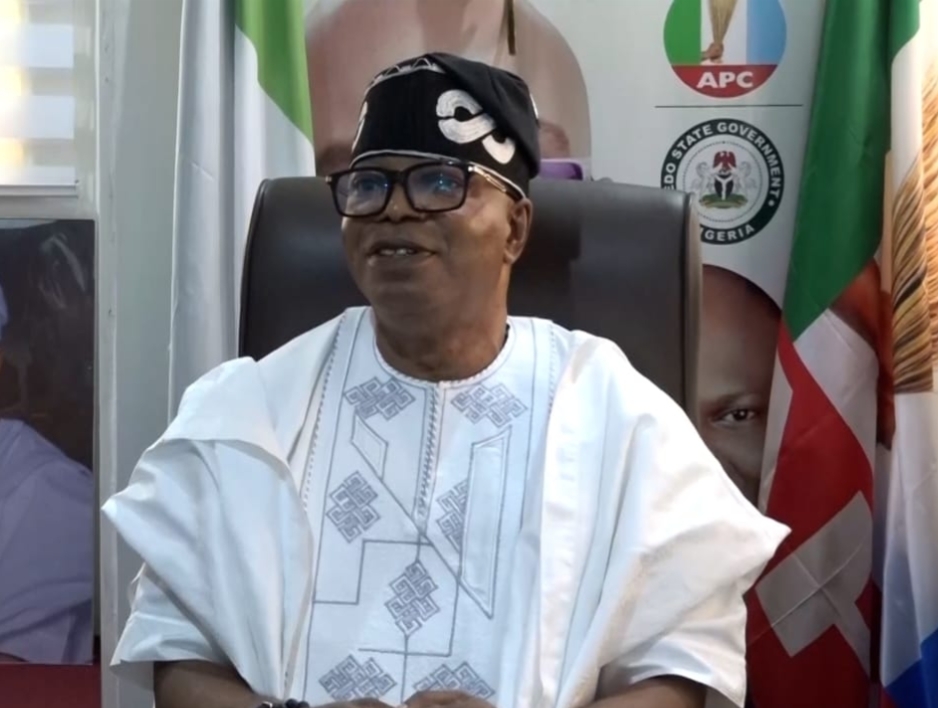
The Center for Good Governance and Socio-Cultural Advocacy on Tuesday launched a new book and honored prominent individuals who have significantly contributed to the promotion of democracy in Nigeria.
The book, titled “Stakeholders, Election, and Democracy in Nigeria: Emerging Trends, Problems, and Prospects” by Ohen Osa Harrison Imafu Okao JP, was unveiled at the Uyi Grand Marquee Event Centre in Benin City, Edo State.
This new work critically examines the complexities of Nigerian democracy, exploring themes such as election manipulation, insecurity, accountability and youth engagement.
Harrison Okao, the book’s author, is a distinguished Minister and Public servant with a rich history of service. He is an alumnus of Edo College and completed his pastoral training at the United Christian Church and Ministerial Institute in Cleveland, Tennessee, USA. Okao was ordained as a minister in 1997 and became the substantive Pastor of the Holy Arusa Cathedral in 2006.
His extensive public service experience includes roles such as Director of Public Affairs and Protocols, Honorable Supervisory Counselor, and Director General of the Center for Good Governance, Development, and Cultural Advocacy. He has been recognized with an honorary doctorate and the title of Justice of Peace (JP) for his dedication to public service.
Under Okao’s leadership, the Center for Good Governance emphasizes promoting accountability, transparency, and participatory governance as essential pathways to sustainable development.
The Center’s mission is to foster positive change through robust advocacy and policy engagement.
At the launch event, Professor Aiguosatile Otoghile reviewed the book, offering a candid assessment of Nigerian democracy. He described it as “comatose, epileptic, pediatric, and somewhat discouraging,” pointing out deep-rooted issues such as political parties operating as associations of kleptocrats, vote commodification, fraudulent practices by security agencies, a lack of judicial integrity, and complicity of the press.
The event attracted numerous notable guests, including government officials, palace royalty, and religious leaders. Discussions during the launch focused on key issues like election manipulation, insecurity, accountability, and the vital role of youth in the democratic process.
The discussions during the launch with key insights and Future directions, underscored several crucial areas needing improvement, including reforming the electoral process, enhancing youth engagement, addressing insecurity and accountability issues, and bolstering the role of journalism in democratic governance. While the challenges are significant, there was a shared optimism about Nigeria’s potential for a more promising democratic future.
The Book’s content; “Stakeholders, Election, and Democracy in Nigeria: Emerging Trends, Problems, and Prospects” provides a comprehensive examination of electoral democracy in Nigeria, discussing its current state, challenges, and future prospects. The book also explores the roles of the Independent National Electoral Commission (INEC), the pervasive influence of godfatherism, the involvement of traditional institutions and civil societies, and the impact of caretaker committees on local government development.
The launch of the insightful book highlighted the importance of a thorough understanding of Nigeria’s democratic journey and the need for a concerted effort to overcome its challenges. It was a clarion call for all stakeholders to actively participate in shaping a more vibrant and inclusive democratic landscape in Nigeria.