Support zone communities, government agencies, and development partners have come together to tackle deforestation and forest degradation in the Okomu Forest Landscape, in a bid to restore the area and improve local livelihoods.
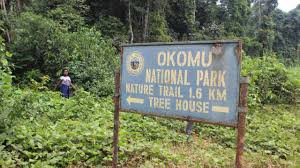
The meeting, held at Okomu National Park under the auspices of the Okomu Biodiversity Stakeholders Platform (OBSP), marked the launch of a new project aimed at fostering partnerships between communities, government, and private organisations for long-term forest restoration.
The initiative is expected to benefit over 100 households through livelihood programmes and community empowerment.
Mr. Joseph Molokwu, Technical Program Coordinator of the Society for Sustainability and Conservation Education for Rural Areas (SCERA), said the project will support the construction of nurseries and water boreholes, participatory reforestation, and mapping of degraded areas.
A public-private partnership agreement will also formalise long-term restoration efforts for the Okomu Forest, which has suffered severe deforestation for decades.
Communities praised SCERA for its successful implementation of a previous project funded by BIOPAMA, which provided farmers with tree seedlings, beekeeping equipment, and agricultural tools.
They pledged their full support for the new project, funded by the United Nations Development Programme Global Environment Facility Small Grants Programme (UNDP GEF-SGP) and The Rufford Foundation.
CP Lawrence Osaze, Conservator of Okomu National Park, represented by DCP Matthias Enaberue, reminded participants that Edo State once had over 40 vibrant forest reserves, but Okomu remains one of the few sustainable reserves today, emphasising the urgency of collective action.
Mr. Thomas Odemwingie, National Steering Committee member of GEF-SGP, urged communities and stakeholders to ensure the project’s success, noting that government cannot do it alone.
The Police, represented by DPO Julius Igbinosa of Iguobazuwa, pledged support for peaceful project implementation.
The OBSP meeting brought together representatives from 10 support zone communities, the Federal College of Forest Resources Management, the Forestry Research Institute of Nigeria (FRIN), the Edo State Ministry of Agriculture and Food Security, and Africa Nature Investors (ANI).