… As troops seize 400 Starlink devices in major blow to terror logistics
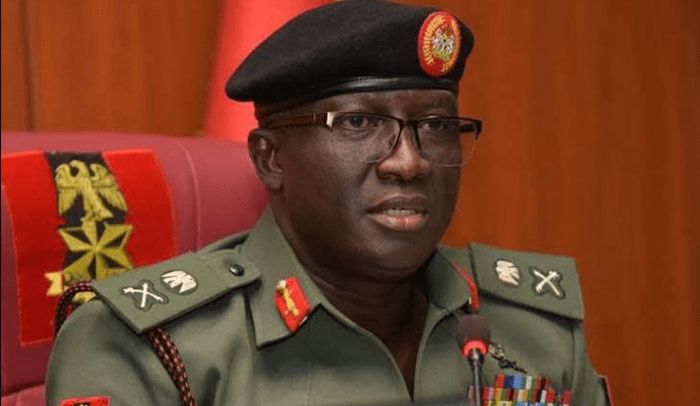
MAKURDI / DAMATURU – The Chief of Army Staff (COAS), Lt.-Gen. Waidi Shaibu, has restated the Nigerian Army’s commitment to defend the nation’s Constitution and intensify efforts to tackle insecurity across the country, even as troops in the North-East recorded a major breakthrough with the interception of over 400 Starlink communication devices allegedly used by insurgents.
Shaibu gave the assurance on Tuesday at the opening ceremony of the Nigerian Army Project Management Workshop held at the Nigerian Army School of Military Engineering (NASME), Makurdi, where he emphasised that the Army remains firmly loyal to the Constitution in the discharge of its operational duties.
The COAS, who was represented by the Force Commander, Operation Whirl Stroke, Maj.-Gen. Moses Gara, commended President Bola Tinubu, Commander-in-Chief of the Armed Forces, for what he described as sustained and unwavering support to the Nigerian Army, noting that recent gains in the fight against terrorism, banditry and other violent crimes were largely driven by improved personnel welfare.
According to him, enhanced welfare packages, including improved accommodation, office complexes, training schools and medical facilities across Army formations, have strengthened troop morale and combat readiness.
“The unwavering willingness of our personnel to engage in combat is directly linked to the care and responsibility for their well-being,” he said, adding that efficient project planning and management remained central to sustaining infrastructure development within the Army.
Shaibu said the workshop was designed to equip project officers with modern, global-standard skills, stressing that the integration of technology into project management would promote innovation, efficiency and sustainability in Army operations.
Reiterating his command philosophy, he said the Nigerian Army was being transformed into a more professional, adaptable, combat-ready and resilient force capable of operating effectively in a joint, multi-agency environment.
He also highlighted ongoing collaboration with sister services and other security agencies, noting that joint operations had continued to yield positive results in protecting civilians and restoring normalcy in affected communities.
“I wish to express my sincere appreciation to all security stakeholders whose relentless efforts contributed immensely to the fight against insecurity. We will continue to work assiduously with the Nigerian Navy, Nigerian Air Force and other agencies to ensure enduring peace in our nation,” he stated.
Similarly, the Commander Corps of Engineers, Maj.-Gen. Shamsideen Sharafu, represented by the Commandant, NASME, Maj. Essien Ekpenyong, said the annual workshop remained critical in strengthening the capacity of Army engineers and improving professional standards in military construction and project delivery.
The Coordinator of Nigerian Army Special Projects, Maj.-Gen. Bayo Adetoro, explained that this year’s workshop, themed “Optimising Quality Project Delivery in the Nigerian Army through Comprehensive Planning, Effective Cost Management and Timely Execution,” brought in experienced project managers to train participants on best practices.
Meanwhile, in a separate development in the North-East, troops of Sector 2, Operation Hadin Kai (OPHK), have intercepted more than 400 Starlink communication devices allegedly used by Boko Haram and ISWAP terrorists to facilitate communication and coordinate attacks.
The Sector Commander, Brig.-Gen. Beyidi Martins, who disclosed this while briefing defence correspondents in Damaturu, said the seizure was part of ongoing intelligence-driven operations aimed at dismantling terrorist logistics and communication networks across the theatre.
He said the devices were recovered during sustained operations conducted across Sambisa Forest, the Timbuktu Triangle and other insurgent enclaves, adding that the military had intensified efforts to cut off terrorists from critical supply chains.
“The lifeblood of terrorist activities is logistics resupply, and we are deliberately denying them freedom to move supplies, communication equipment, fuel and other operational items,” Martins said.
He revealed that troops had also disrupted over 400 logistics-related networks, leading to the arrest of hundreds of suspected suppliers, couriers and collaborators aiding insurgent operations.
According to him, intercepted items included fuel, drugs, medical supplies, food items and motorcycle spare parts, often moved through routes spanning Kano, Nguru and other corridors into insurgent strongholds.
Martins further disclosed that some civilians were either willingly collaborating with insurgents or acting under coercion, noting that intelligence-led operations had helped infiltrate and dismantle several supply syndicates.
He added that ongoing “strangulation operations” had significantly weakened terrorist logistics capacity, reducing their mobility and ability to sustain attacks.
The commander also noted that security forces had introduced livestock verification measures in collaboration with local stakeholders to block insurgents from using cattle markets as channels for funding through rustled animals.
He said continued military pressure had forced several terrorists and their families to surrender, describing it as evidence of the effectiveness of sustained offensive operations.
Both developments, he said, reflect the Nigerian Army’s renewed operational focus on combining welfare-driven reforms, capacity building and aggressive field operations to restore lasting peace and security across the country.