… Expert seeks tech-driven police reforms
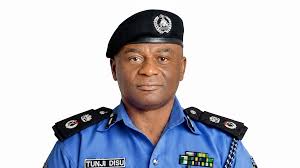
ABUJA/LAGOS — Nigeria’s policing architecture entered a new phase on Tuesday as Inspector-General of Police, Kayode Egbetokun, resigned from office, with Olatunji Disu stepping in as the new head of the Nigeria Police Force amid calls for sweeping reforms.
Egbetokun, whose tenure had been extended in 2025 by President Bola Tinubu, tendered his resignation letter on Tuesday, citing personal family reasons.
Confirming the development, presidential spokesperson, Bayo Onanuga, said the decision was voluntary and clarified that Egbetokun was not sacked
Appointed as the 22nd Inspector-General of Police on June 19, 2023, Egbetokun’s appointment was later confirmed by the Nigeria Police Council on October 31, 2023.
Although he was due for retirement on September 4, 2024, upon attaining the mandatory retirement age of 60, the National Assembly amended the Police Act, allowing him to serve a full four-year term unless removed by the President.
His departure comes at a time the country continues to grapple with banditry, kidnapping, cybercrime, communal clashes and the delicate task of post-conflict stabilisation in troubled regions.
Attention has now shifted to Disu, whose appointment has drawn cautious optimism from security stakeholders.
A Lagos-based security expert and Managing Director of Absolute Security and Advance Protocol Ltd, Mr Seyi Babaeko, described the appointment as a strategic and timely move capable of modernising and reforming the Nigeria Police Force.
According to him, Disu is widely regarded as a seasoned officer with extensive operational experience, strong administrative capacity and exposure to reform-oriented policing.
“His emergence at this critical time in Nigeria’s security landscape signals a potential shift toward strengthening internal security through professionalism, intelligence and accountability,” Babaeko said.
He noted that Nigeria’s complex security challenges require proactive leadership that is both technologically driven and people-centred.
Babaeko urged the new IGP to prioritise immediate operational audits, strategic redeployment of tactical units and intelligence-led crime mapping to boost efficiency and restore public confidence.
He also called for a renewed emphasis on modern policing — including digital crime tracking, expanded forensic and cybercrime capabilities, upgraded surveillance systems and stronger inter-agency collaboration.
Beyond operational reforms, the expert stressed the need to rebuild trust between the police and the public through community engagement, transparent complaint mechanisms and improved officer conduct.
Professionalism and discipline, he added, must be reinforced through ethical policing, zero tolerance for corruption and enhanced welfare packages covering training, insurance, housing schemes, motivation and improved equipment.
He further argued that post-conflict security efforts should focus on intelligence gathering, civil cooperation and conflict-sensitive strategies rather than heavy-handed enforcement.
According to Babaeko, Disu’s tenure offers a rare opportunity to reposition the Nigeria Police Force as a modern, technology-driven and citizen-focused institution capable of addressing 21st-century security demands.
“If he combines operational decisiveness with structural reforms and accountability, his leadership could mark a transformative phase in Nigeria’s internal security framework,” he said.
With the baton now passed, Nigerians will be watching closely to see whether the new police chief can translate reform expectations into tangible security gains across the federation.