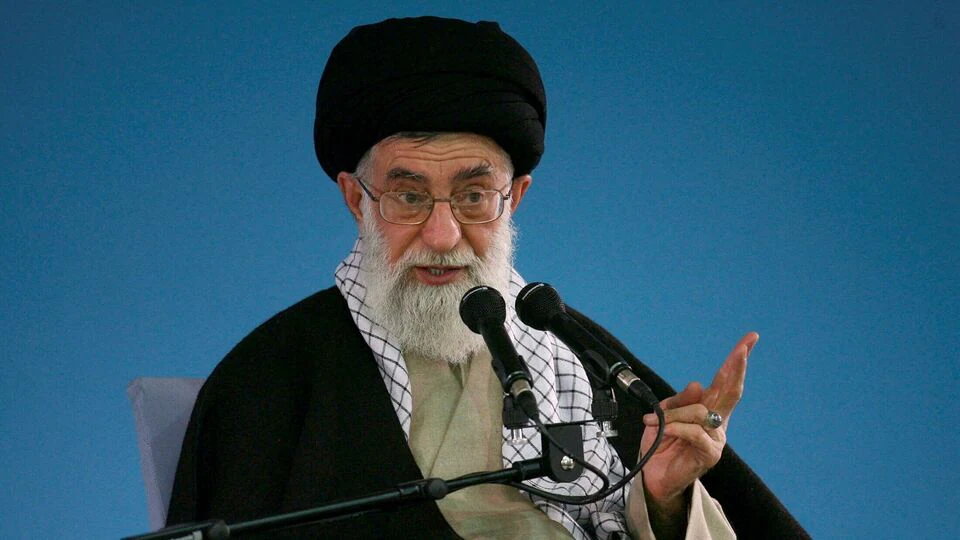
Iran has entered one of the most consequential periods in its post-revolution history following the death of Supreme Leader Ayatollah Ali Khamenei in coordinated U.S.-Israeli airstrikes on Saturday, triggering a leadership transition in Tehran, vows of retaliation from Iran’s powerful security establishment, and sharp divisions at the United Nations Security Council.
Iranian state media confirmed early Sunday that Khamenei was killed in what officials described as a targeted assault on key leadership locations. The Israeli military said the operation struck sites where senior Iranian officials were convened, killing top figures including the defence minister and the head of the Islamic Revolutionary Guard Corps (IRGC). The Iranian Red Crescent said more than 200 people were killed in the attacks.
The strikes, which also reportedly targeted strategic military and command infrastructure, have significantly escalated tensions across the Middle East, prompting retaliatory actions and raising fears of a broader regional conflict.
Transitional leadership takes shape
In accordance with Iran’s constitution, a three-member interim council has assumed the duties of the supreme leader pending the appointment of a successor.
The council comprises President Masoud Pezeshkian, Judiciary Chief Gholamhossein Mohseni Ejei, and a representative of the Guardian Council. The body will oversee the transitional phase until the 88-member Assembly of Experts, the clerical authority empowered to appoint the supreme leader, selects a successor.
Under Iranian law, the Assembly of Experts is required to nominate a new leader “as soon as possible.” However, analysts say the unprecedented nature of Khamenei’s death and the volatile regional security environment could complicate the process.
Khamenei, who succeeded Ayatollah Ruhollah Khomeini in 1989, wielded ultimate authority over Iran’s armed forces, judiciary, state broadcasting, and key strategic decisions. His leadership defined Iran’s domestic political architecture and shaped its assertive regional posture for nearly four decades.
National mourning and calls for retaliation
Iran’s leadership has declared 40 days of national mourning, with state media describing Khamenei as a “martyr.”
The Supreme National Security Council said in a statement that the “martyrdom of Imam Ali Khamenei will mark the beginning of a great uprising against the tyrants of the world.”
The IRGC, Iran’s most powerful military institution, vowed swift and decisive retaliation.
“The killers of the Imam of the nation will not escape severe, decisive and deterrent punishment,” the elite force said in a statement carried by Lebanon’s Hezbollah media outlets. It pledged to confront “internal and external conspiracies” and called on all segments of society to demonstrate unity in defence of the nation.
Under Khamenei’s leadership, the IRGC evolved into Iran’s dominant security and military force, expanding its influence across politics, intelligence, and regional operations. Its response to the strikes is expected to be a key determinant of the crisis trajectory.
Trump confirms death, signals continued pressure
U.S. President Donald Trump publicly declared Khamenei dead on Saturday following the strikes, writing on Truth Social: “Khamenei, one of the most evil people in history, is dead.” He described the development as “the single greatest chance for the Iranian people to take back their country.”
In an interview with CBS News, Trump said “there are some good candidates” to lead Iran but declined to name them. He also indicated that military pressure would continue until peace was restored in the region and globally.
U.S. officials said the operation was aimed at dismantling Iran’s ballistic missile capabilities, degrading naval assets allegedly used to destabilise international waters, and preventing Tehran from acquiring nuclear weapons.
Opposition figure Pahlavi offers transitional vision
In Washington, exiled Iranian opposition figure Reza Pahlavi, son of Iran’s last monarch Mohammad Reza Shah Pahlavi, positioned himself as a potential transitional leader.
In an opinion article published in the Washington Post, Pahlavi said many Iranians had called upon him to guide the country toward democratic change.
“Our path forward will be transparent: a new constitution drafted and ratified by referendum, followed by free elections under international oversight,” he wrote, adding that once elections were held, the transitional government would dissolve.
He stressed that a future democratic Iran would avoid the institutional collapse and instability that followed the Iraq war, pledging “no power vacuum, no chaos.”
Pahlavi has lived in exile in the United States since the 1979 Islamic Revolution that toppled his father’s rule.
Security council divided
At an emergency session of the UN Security Council in New York, Iran’s Ambassador to the UN, Amir Saeid Iravani, condemned the U.S.-Israeli strikes as “a war crime and a crime against humanity,” alleging that civilian-populated areas in multiple large cities were deliberately targeted.
He rejected claims that the strikes were pre-emptive or legally justified, calling them “unprovoked and premeditated aggression.”
Israel’s ambassador, Danny Danon, defended the action as necessary to halt what he described as an existential threat posed by Iran’s nuclear ambitions and missile expansion.
The U.S. representative said the strikes were directed at preventing the Iranian regime from ever threatening the world with a nuclear weapon.
Russia and China strongly condemned the operation, calling it a violation of the UN Charter and international law. France and the United Kingdom urged de-escalation, emphasising regional stability and adherence to international obligations.
UN Secretary-General António Guterres warned that “everything must be done” to prevent wider escalation in the Middle East, stressing that lasting peace could only be achieved through dialogue and negotiations. He noted that the military operation occurred shortly after indirect U.S.-Iran talks mediated by Oman, describing it as a missed diplomatic opportunity.
Regional reverberations
The strikes and Khamenei’s death have already prompted retaliatory exchanges between Iran and Israeli targets, as well as U.S. military facilities in the Middle East. Regional governments remain on high alert as fears grow of a broader confrontation involving proxy groups and allied forces.
Reports also indicated that news of Khamenei’s death initially sparked mixed reactions within Iran, including spontaneous celebrations in parts of Tehran following early reports circulated through exile media, though state authorities quickly asserted control of the narrative.
Khamenei’s death represents a historic rupture in the Islamic Republic’s power structure. For nearly four decades, he presided over Iran’s political consolidation, expanded its regional alliances, and oversaw contentious nuclear and missile programmes that shaped global geopolitics.
As the interim council assumes control and the Assembly of Experts prepares to appoint a successor, Iran faces a critical juncture. The coming days are expected to determine not only the country’s internal political trajectory but also the future stability of a region already strained by conflict and strategic rivalry.