In a country already weighed down by severe economic hardship, millions of Nigerians are daily subjected to another form of silent exploitation — the poor and frustrating services delivered by telecommunications companies. At a time when citizens are grappling with rising inflation, shrinking purchasing power, and widespread unemployment, the conduct of telecom providers in the country has become increasingly troubling.
Across Nigeria, it is now a common experience: a call is placed, the airtime begins to count, yet nothing is heard at the other end. Sometimes the call connects but no conversation takes place because the line is either completely silent or distorted beyond comprehension. In other cases, calls drop abruptly after only a few seconds, forcing subscribers to redial repeatedly while their precious airtime steadily drains away.
For millions of Nigerians, this scenario has become a daily frustration. Yet, despite the magnitude of complaints from subscribers, the telecommunications companies appear largely unmoved. Their services remain inconsistent, unreliable and often downright exploitative.
The most disturbing aspect of this situation is that subscribers are charged for services that are either poorly delivered or not delivered at all. Airtime disappears within seconds during failed calls. Data bundles are consumed at astonishing speed without corresponding value. Network interruptions occur frequently, but the billing system never seems to malfunction in favour of the customer.
To many Nigerians, this situation increasingly resembles organised exploitation. Nigeria’s telecommunications sector was once celebrated as one of the most successful liberalisation stories in Africa.
When private operators entered the market in the early 2000s, the transformation was dramatic. Mobile phones, which were previously luxury items accessible only to a privileged few, suddenly became available to millions of Nigerians. Communication became faster, easier and more accessible.
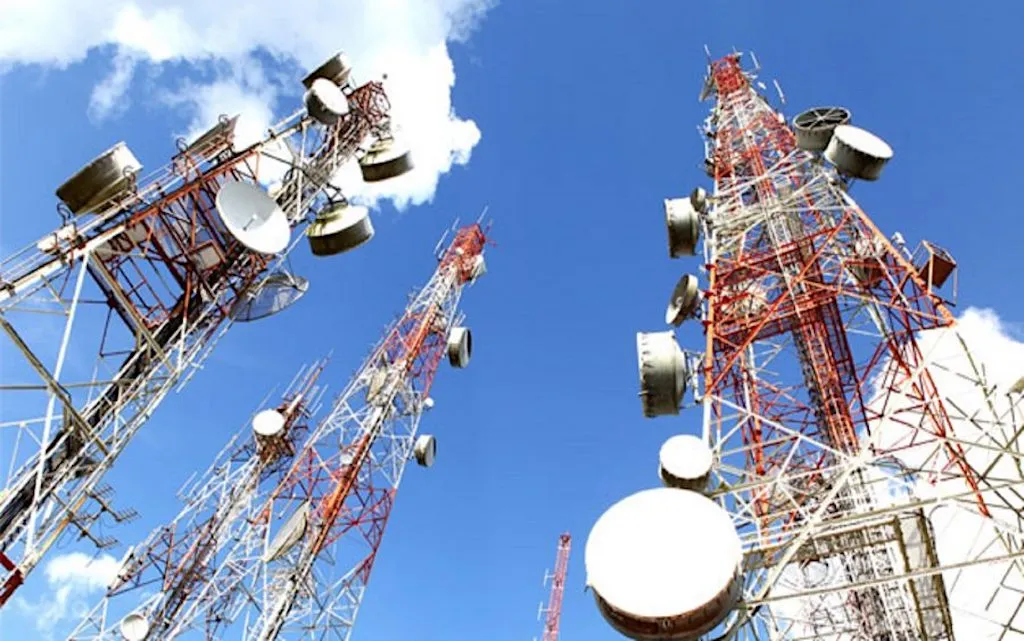
Companies such as MTN Nigeria, Airtel Nigeria, Globacom (Glo), and 9mobile played significant roles in expanding telecommunications infrastructure across the country. Base stations were erected in major cities and gradually extended into smaller towns. The number of mobile subscribers grew from a few hundred thousand in the early 2000s to well over 200 million today.
For a time, the industry symbolised progress and modernisation. But as the sector matured and subscriber numbers grew exponentially, the quality of service began to deteriorate.
Today, Nigerians are confronted with an uncomfortable paradox: while telecommunications companies continue to record enormous profits, the quality of service they provide appears to be declining.
Every day, millions of subscribers pay for services that are unreliable. Calls fail repeatedly. Messages are delayed. Internet connections fluctuate unpredictably. In many areas, network signals appear strong on the phone screen but remain practically useless when actual communication is attempted.
One of the most irritating experiences is the so-called “silent call.” A subscriber dials a number and the call connects. The airtime meter begins to run, yet neither party can hear anything. The call is essentially useless, but the billing continues as if a successful conversation is taking place.
When the frustrated subscriber disconnects and tries again, the same problem may occur repeatedly. By the time a meaningful connection is eventually established, several minutes of airtime may already have been lost.
Multiply this experience by millions of subscribers across Nigeria each day and one begins to grasp the scale of the financial haemorrhage imposed on citizens.
Telecommunications companies may argue that technical issues occasionally arise in any complex network. While this may be true, the persistence and frequency of such failures raise serious concerns. The problems are not isolated incidents; they are systemic.
In many parts of the country, network congestion has become a daily reality. And the Nigerian Communications Commission (NCC) appears complacent.
As more subscribers join the networks, the existing infrastructure appears insufficient to handle the growing traffic. Instead of expanding capacity to match subscriber growth, telecom operators seem content to maximise revenue from an overstretched system.
The result is predictable: overloaded networks, dropped calls and erratic connectivity.
Yet even as subscribers endure these frustrations, telecom companies continue to increase tariffs through subtle and sometimes opaque means. Promotional bonuses disappear without warning. Data bundles shrink in value. Charges accumulate through complicated billing structures that many subscribers struggle to understand. Even more worrisome is the fact that telecom providers deduct money for services subscribers never requested.
In effect, Nigerians are paying more for services that often deliver less. The situation is particularly painful when viewed against the backdrop of Nigeria’s broader economic crisis. Inflation has soared, food prices have skyrocketed and transportation costs have increased dramatically. Many households are struggling to meet even the most basic needs.
Communication services, however, are no longer optional luxuries. In today’s digital economy, mobile connectivity has become an essential tool for daily survival.
Traders rely on mobile phones to coordinate transactions. Students depend on internet access for academic work. Job seekers search for opportunities online. Families maintain social connections through voice calls and messaging platforms.
In short, telecommunications services have become as essential to modern life as electricity and water. This is precisely why poor service delivery in the sector carries such serious consequences. When telecom services fail, economic activities are disrupted. Business transactions collapse. Opportunities are lost. Productivity declines.
It is therefore troubling that telecom providers appear to operate with minimal accountability despite the critical role they play in national development.
The responsibility for regulating the telecommunications industry falls largely on the shoulders of the Nigerian Communications Commission. Established to oversee the sector, the commission is expected to ensure that operators maintain acceptable standards of service and protect the interests of consumers.
However, many Nigerians increasingly question whether the regulatory framework is functioning effectively. Complaints about poor service delivery have persisted for years, yet meaningful improvements remain elusive.
While the regulatory agency occasionally announces fines or warnings against telecom operators, these measures often appear insufficient to compel genuine reform. For companies generating billions of naira in revenue, modest regulatory penalties may simply be treated as the cost of doing business.
What subscribers need is not merely symbolic sanctions but decisive regulatory enforcement that prioritises consumer protection.
The commission must insist that telecom operators invest significantly in expanding and upgrading their infrastructure. Network capacity must match the growing number of subscribers. Base stations must be modernised. Transmission equipment must be improved.
More importantly, telecom providers must be held accountable for billing practices that charge subscribers for failed services. In a fair and transparent system, calls that fail to connect properly should not attract charges. If a network malfunction prevents meaningful communication, the subscriber should not bear the financial burden of that failure.
Modern telecommunications technology makes such adjustments technically feasible. In many advanced markets around the world, billing systems automatically detect unsuccessful calls and prevent charges from being applied. If such consumer protections can exist elsewhere, there is no logical reason they cannot be implemented in Nigeria.
Another troubling dimension of the telecom sector is the persistent lack of transparency in data consumption. Many subscribers frequently complain that their data bundles vanish far more quickly than expected. Within a short period, gigabytes of purchased data are exhausted without clear explanation.
For students, entrepreneurs and professionals who depend heavily on internet access, this phenomenon can become financially draining. Telecom companies often attribute rapid data depletion to background applications or automatic updates. While this may sometimes be true, the absence of transparent monitoring tools leaves subscribers uncertain about the accuracy of such claims. Trust between service providers and consumers cannot flourish in an atmosphere of suspicion and confusion.
The telecom industry must recognise that customer confidence is the foundation of long-term sustainability. Exploitative practices may yield short-term profits, but they ultimately damage the reputation of the sector and erode public trust. Nigerians deserve better.
The remarkable growth of the telecommunications industry in Nigeria was made possible largely by the patronage of millions of subscribers who embraced mobile technology with enthusiasm. Ordinary citizens invested their scarce resources in purchasing SIM cards, airtime and data bundles.
Without the collective patronage of these subscribers, telecom operators would never have achieved the enormous market penetration they enjoy today.
It is therefore unacceptable that the same citizens who built the industry are now treated with such apparent indifference.
Telecommunications companies must remember that their success carries social responsibilities. Profit should not come at the expense of fairness, transparency and quality service delivery.
As the nation continues to embrace e-commerce, online education, digital banking and remote work, the importance of dependable network services will only increase. If telecom operators fail to improve their services, the country’s broader ambitions for digital transformation may be undermined.
Government authorities, regulators and civil society organisations must therefore pay closer attention to the experiences of telecom subscribers. Consumer advocacy must be strengthened. Complaint mechanisms must be simplified and made more effective.
At the same time, telecom providers must adopt a more customer-centred approach to their operations. Investment in network expansion should become a priority rather than an afterthought. Service quality should be treated as a core responsibility, not merely a public relations slogan. Nigeria cannot afford a telecommunications sector that thrives financially while its customers suffer endlessly from poor service delivery.
Communication is the lifeblood of modern society. When communication systems function poorly, the consequences ripple across every sector of the economy. Nigerians are not asking for miracles. They simply demand fairness to pay for services that actually work.
Until telecom providers recognise this basic obligation, the perception that they are fleecing helpless citizens will continue to grow stronger.
And if that perception persists, the credibility of an entire industry may eventually hang in the balance.
Dr. Odaro, a columnist, lectures in the Department of Mass Communication, Auchi Polytechnic, Auchi.