Around the world, extreme weather events are causing the public and scientists to ask, ” What is happening to our world?” Torrential floods in Mokwa, Nigeria in 2025 killed more than 700 people as water raged through the center of the city. Ferocious fires still underway today in southwest France have caused more than 300,000 people to evacuate their homes. Extreme droughts “in Ethiopia, Kenya, and Somalia have left 23 million people without reliable access to food and water,” according to Islamic Relief Canada.
Such extreme “weather events’ are attributed by scientist all over the world as caused by climate change. They now warn that climate change is happening faster than any previous estimates indicated.
On the 18th of June 2026, the United Nations warned that “Millions of people already facing hunger, displacement and economic hardship could soon face another major climate shock… as extreme weather risks are intensifying across some of the world’s most vulnerable regions.”
The World Meteorological Organization reported that extreme weather and climate events affected more than 13 million people and caused more than 3000 deaths in Africa in 2025.
“Global temperatures have already exceeded 1.5°C above pre-industrial levels, with extreme weather events becoming increasingly frequent and ecosystems facing unprecedented pressure,” warned Professor Spencer C. Nwangwu, Director of the Centre for Climate Change and Sustainable Development Goals (SDGs) of Igbinedion University.
What is being done against climate change?
On June 6, World Environment Day, Igbinedion University, “reaffirmed its unwavering commitment to climate action and environmental sustainability” and the Vice-Chancellor of the university, Professor Lawrence Ezemonye said that the 2026 global theme, “Now for Climate,” is an “urgent call to action.”
A wide variety of initiatives are underway throughout the world.
“All the people of the world need to do what they can to act against climate change,” said this article’s author. She adds: “Together we can change the course of climate change.”
Together we can spread knowledge of climate emergencies and of efforts to mitigate climate change with the use of the 7.4 billion smartphones and social media.
We can share immediate knowledge of climate emergencies and of positive actions on an international scale. As people are aware of endeavors underway, they will gain a sense of hope for our suffering planet and be encouraged to do what they themselves can do.
At every scale, from individuals to whole countries, initiatives are underway that can set examples for others for replication in whole or in part.
Even the simplest things can help in the struggle against climate change: avoiding waste, recycling our clothes, biking and walking instead of using a car when it is safe to do so, and establish and participate in recycling centers that take broken items and make them usable.
Here are a few examples of what is being done:
In Benin, partners and locals are working together solutions are together to address challenges to its coastlines.
Video: Between Land and Ocean
This film is a documentary about the West Africa Coastal Areas Management Program (WACA) in Benin, commissioned by Nordic Development Fund (NDF) and co-financed by NDF, the World Bank and the Global Environment Facility (GEF). The video was produced by Kerawa Studio.
In Burkina Faso (https://www.unep.org/youngchampions/news/story/weaving-brighter-future-plastic-burkina-faso) Video caption: “Women and youth from the NEERE group weave plastic cloth for clothes and bags.” The narrator says, “Plastic is money.”
“Communities across Africa use discarded plastic bottles packed tightly with sand, soil, or clay as low-cost, durable “eco-bricks” to build sustainable shelters.” Tateh Lehbib a 28-year-old engineer and Sahrawi refugee, sought to provide a shelter for his grandmother in a desert region where the temperature can reach 110 Fahrenheit. He used sand, straw, cement and limestone. His first shelter consisted of 6,000 bottles. (Source: https://www.globalcitizen.org/en/content/plastic-bottle-houses-sahrawi-refugees-algeria/)
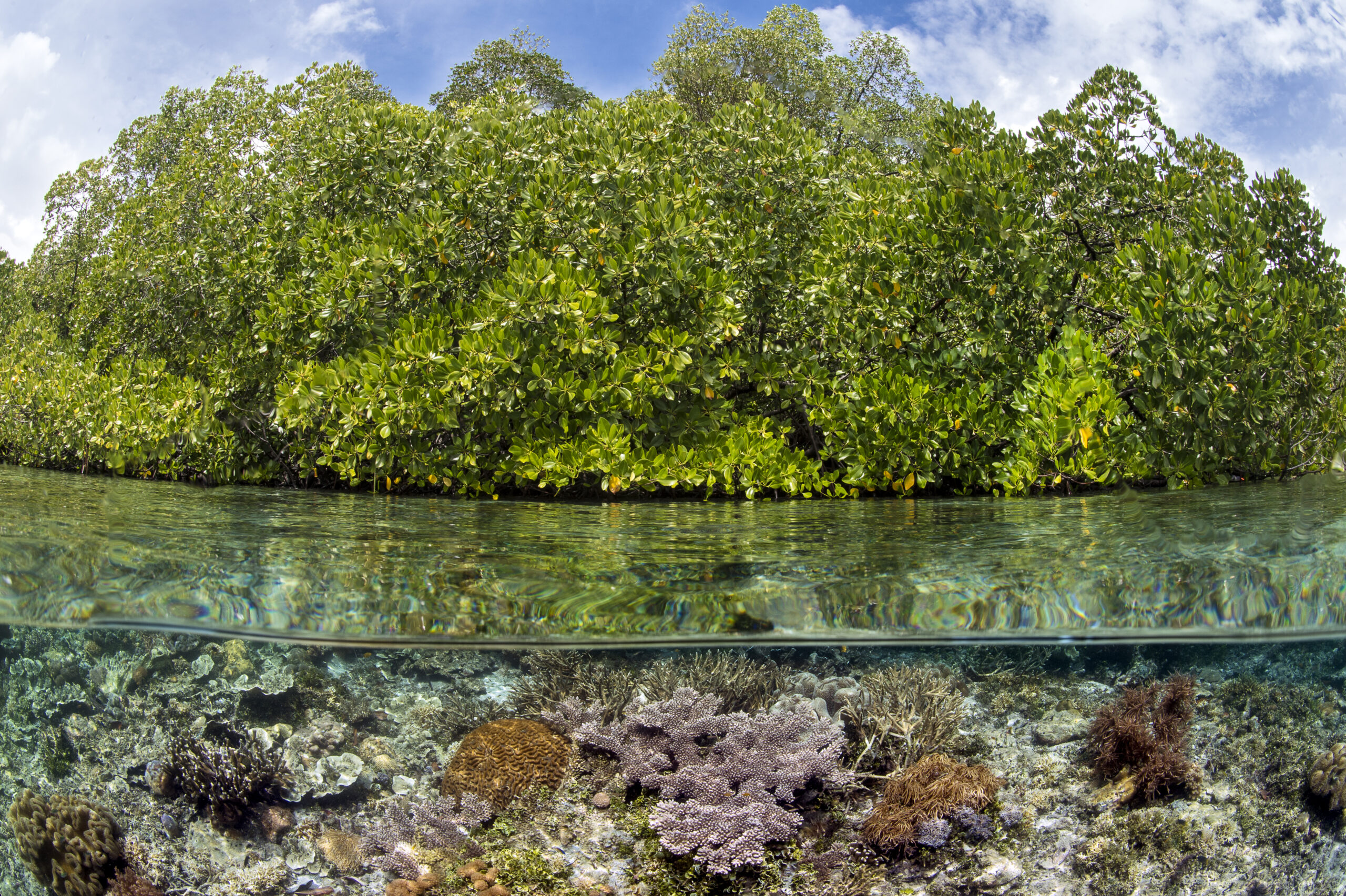
Seagrasses and mangroves are vital to protect the coast, they are vital habitats for ocean life and vital to reduce climate change by capture and storage of carbon. Source: (https://oceanconservationtrust.org/success-for-englands-largest-seagrass-restoration-project/)
In England, in the Plymouth Sound Special Area of Conservation (SAC) and the Solent Maritime SAC, restored 8 hectares of seagrass.
(Picture)
In Bonaire, mangroves and all its surrounding coastline are protected. This video shows the busy life in the long, twisted roots of the mangrove trees juvenile fish find safety before venturing into the open waters.
(Picture of mangroves and coral reefs)