BENIN CITY — The Edo State Ministry of Finance and the Edo State Internal Revenue Service (EIRS) have held a one-day stakeholders’ engagement with Ministries, Departments, Agencies and Parastatals on the implementation of the Edo State Revenue Consolidation Account (Establishment and Operation) Law, 2026.
The session, held on Monday, August 24, 2026, at the John Odigie Oyegun Public Service Academy (JOOPSA), brought together commissioners, permanent secretaries, directors of finance and heads of government agencies to develop an operational roadmap for the implementation of the new revenue framework.
The law establishes a unified Treasury Single Account system under which all state revenues are to be paid into a single Revenue Consolidation Account electronically integrated with EIRS-approved collection platforms for real-time receipting, monitoring and reconciliation.
Under the new framework, affected MDAs are required to disclose all revenue bank accounts to the Ministry of Finance within 14 days, transfer existing balances into the approved Internally Generated Revenue account, close the old accounts and submit hard and soft copies of revenue statements covering January 1, 2025 to date for audit.
Speaking at the engagement, the Commissioner for Finance, Engr. Emmanuel Okoebor, said the reform was designed to strengthen accountability and ensure that all revenue accruing to the state was properly managed.
“Every naira belonging to Edo State must be properly collected, properly accounted for, and deployed in the interest of the people of Edo State,” Okoebor said.
He said the administration of Governor Monday Okpebholo was determined to eliminate unauthorised retention of public funds and revenue leakages, which he noted could deprive residents of critical infrastructure and services, including roads, schools, healthcare and security.
Okoebor also stressed the responsibility placed on principal officers of government institutions under the new law, describing its implementation as a collective duty.
He urged heads of MDAs to raise operational concerns and seek clarification where necessary to ensure seamless compliance with the provisions of the law.
As part of the implementation framework, the EIRS has been designated as the central coordinating authority for automated revenue collection, monitoring of remittances and reporting of financial irregularities across the state.
In his remarks, the Executive Chairman of EIRS, Mr. John Osirenimhe Odior, FCA, ACTI, described the law as a major milestone in Edo State’s efforts to strengthen fiscal discipline and align its revenue administration with national public financial management standards.
Odior said no individual or government agency had an inherent entitlement to operate state revenue accounts independently, stressing that government retained the authority to determine how public revenues should be collected and managed.
He urged MDAs to embrace revenue harmonisation, cashless collection and direct integration with the EIRS portal, adding that full cooperation was necessary to achieve the objectives of the reform.
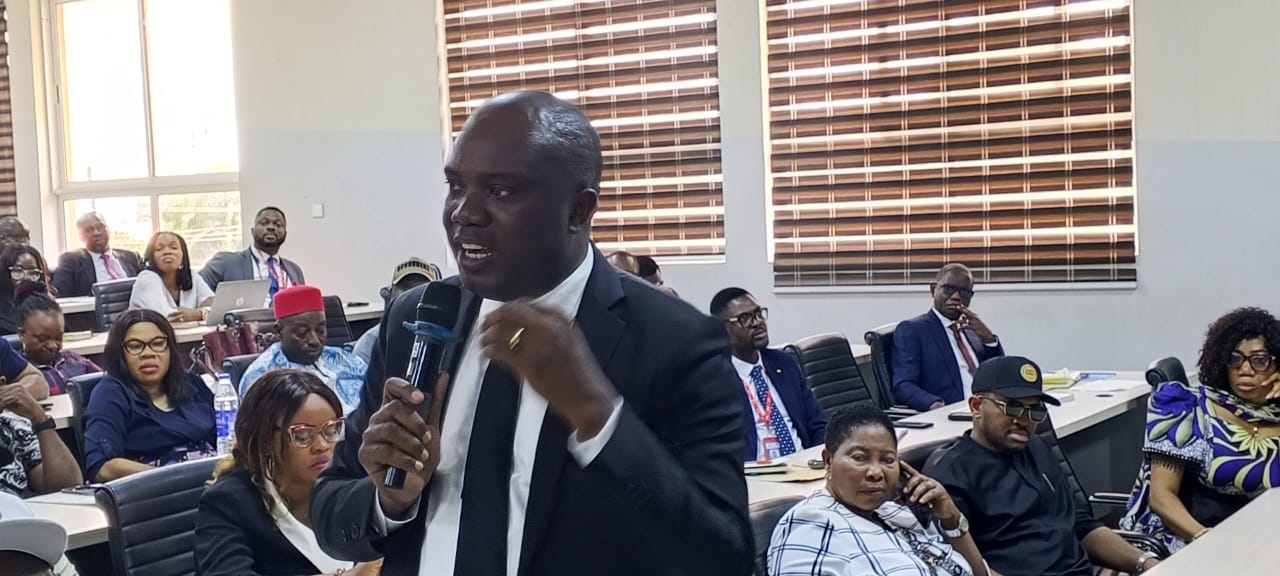
The interactive session provided participants with an opportunity to ask questions, raise operational concerns and seek clarification on the implementation of the new revenue system.
The engagement ended with a call by the Ministry of Finance and EIRS for full cooperation from all government institutions to ensure a seamless transition to the consolidated revenue framework.
Representatives of the participating MDAs also expressed their commitment to supporting the implementation of the new system.