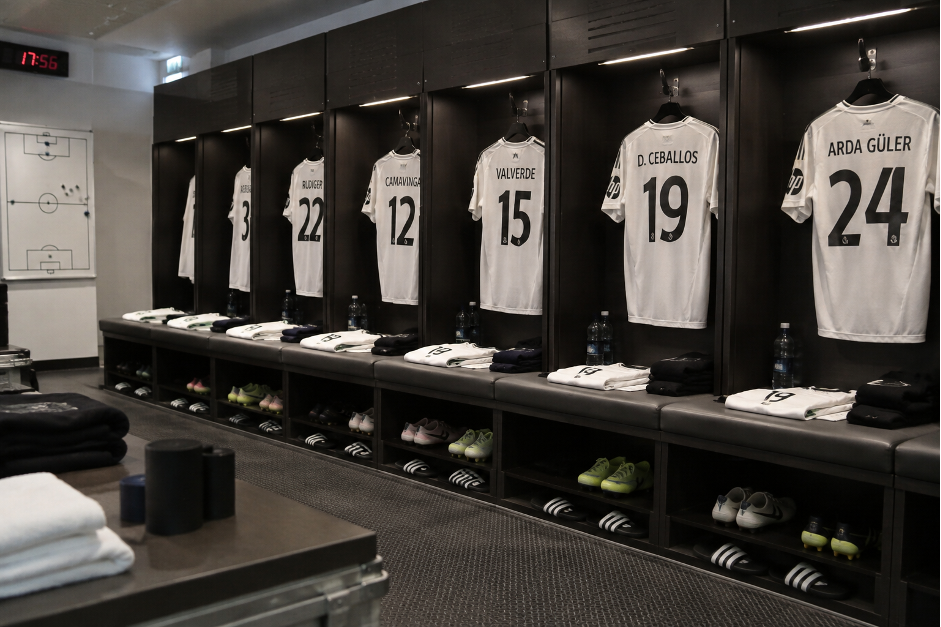
Sportswear companies can compete alongside professional teams through professional-team contracts. There are benefits at all levels, including athlete testing and endorsements, licensed merchandise, international promotion, distribution, and endorsement of a sports brand.
Professional Teams Put Products Under Pressure
Laboratory testing cannot reproduce every condition encountered during a season. Match kits and footwear have to cope with sweat, contact, travel, repeated washing, and rapid movement, while players can report problems with fit or comfort. Football itself is increasingly tracked through digital information, and access through Melbet login combines betting markets with results and statistics, while an account retains bet and transaction history. Clothing manufacturers rely on a different stream of information: repeated feedback from athletes wearing their products in training and competition.
A recent example is PUMA’s new Women’s Fit 2.0 football boots. According to PUMA, the development of the lasts took several years and involved input from female players. The lasts feature narrower forefeet and lower insteps than unisex lasts. The boots were launched ahead of the UEFA Women’s Euro 2025.
Issues that may be of little relevance in a showroom environment can become apparent with use by professionals. Excessive moisture, restrictive seams or boot fit can become tangible issues when the same boots are used under intensive training conditions.
Team Deals Open Several Sales Channels
A kit contract may cover replica shirts, training clothing, casual ranges and other merchandise distributed through club stores, manufacturer websites and retail partners. Digital platforms occupy another part of football’s commercial ecosystem, and Melbet download provides live score and odds updates for sports betting, live events and access to previous bets through its mobile interface. Sportswear brands use their team agreements differently, extending a shirt seen during a match into products sold throughout the season.
Liverpool returned to adidas at the start of 2025/26. The contract includes competition, training and culture wear for the senior men’s and women’s teams, as well as the academy and staff from the LFC Foundation. Adidas later described the first home and away range for the renewed partnership as the most successful Liverpool kit ever.
This highlights that television in a kit deal is only one aspect. Manufacturing and retailing continue outside of competition.
Club History Shapes New Products
Football shirts have an identity that is already there. Older designs, crests and colors can be used by manufacturers, as they would have to create them for an alternative sportswear brand.
Some of the more recent designs include:
- The home shirt for Manchester City for 2025/26 with PUMA made the club’s sash appear on a home shirt for the first time.
- The away shirt design referenced the earliest known shirt of City, dating back to 1884.
- Its third shirt featured a raindrop design to reference the climate in Manchester.
- For the 2026 federation kits, adidas focused on historical elements and individual identities within each nation.
- Related designs can be used across match, training and supporter products under large contracts.
Technical aspects of a shirt can be altered whilst still retaining visual references to the team. This is especially important in football where a new shirt must appear to be new, but also be immediately identifiable.
Qatar Provides a Current National-Team Case
In November 2025, the Qatar Football Association signed a deal with adidas. As a result, all QFA teams across all levels will now use adidas football kits for training and during competition. This is a renewal of a previous deal between adidas and the QFA, which existed from 2003 to 2008.
A maroon home kit was part of the surroundings for the FIFA Arab Cup Qatar 2025, and a white away kit was introduced in March 2026. The geometric elements on the away shirt were influenced by the desert dunes of Qatar according to QFA. The away kit also features lightweight and quick-drying material as well as adidas Climacool technology.
Unlike a deal with a single senior team, the QFA contract requires a single kit provider across the national teams. Additionally, adidas gains a direct link to football within Qatar.
Contracts Differ in Scope
Team agreements are not built from a single model. Technical supply may be the core of one contract, while another includes extensive retail, lifestyle clothing, or digital projects.
| Partnership | Current arrangement | Main area |
| adidas – Qatar FA | Multi-year deal from 2025 | National-team kit supply |
| adidas – Liverpool | From 2025/26 | Match, training and culture wear |
| PUMA – Manchester City | Extended in 2025 | Kit, retail and product projects |
| adidas – 2026 federations | More than 20 World Cup teams | International exposure |
Manchester City and PUMA have worked together since the 2019/20 season and announced a long-term extension in July 2025. STICHD, PUMA’s retail subsidiary, operates City’s online store and has supported physical club stores in several markets. PUMA said in 2025 that the partnership had produced new club sales records.
Retail operations make this arrangement broader than a conventional supplier contract. The manufacturer is involved not only in what players wear but also in how official products reach customers.
Elite Competition Tests Technical Claims
Performance clothing has little room for vague promises when professional athletes use it publicly. Materials have to work through high-intensity movement and changing match conditions.
Manchester City’s authentic 2025/26 home jersey used PUMA’s ULTRAWEAVE fabric, developed to reduce weight and friction. The replica retained the same overall appearance with a more relaxed construction, while both versions incorporated dryCELL moisture-management technology.
Authentic and replica shirts therefore do not have to be technically identical. The first is built around match use; the second can retain the team’s design in a product intended for a wider market.
A Football Shirt Can Become a Digital Product
PUMA, Manchester City and EA SPORTS FC took a different route in October 2025. Their special-edition City kit contained an NFC chip inside the club crest, allowing a compatible smartphone to open digital content linked to Manchester City and EA SPORTS FC 26.
Development had started in December 2023. City’s men’s team first wore the shirt against Villarreal in the UEFA Champions League on 21 October 2025, and the women’s side also used it in selected domestic matches.
The chip did not alter the shirt’s primary role as playing equipment. It added a digital layer to an object already connected with the club through its crest and match use.
What Makes a Team Attractive to a Manufacturer
Success in sport is important, but it does not necessarily indicate the value of a football kit partnership. There is also the consideration of the target market and the scope of the partnership.
Typically, the following factors are taken into account:
- Fan base – the number of fans and where they are located.
- Distribution potential – how the use of licensed products will be distributed.
- Identity – such things as colors, history, and design.
- Access to the athletes – opportunities for testing and feedback.
- Scope of the contract – just matchwear or more comprehensive use in training and lifestyle?
- Relevance in the market – the relevance of the team in regions targeted by the manufacturer.
Consequently, both a national association and an international club can offer value for different reasons. The valuable factors will vary according to the intended role of the partnership by the manufacturer.
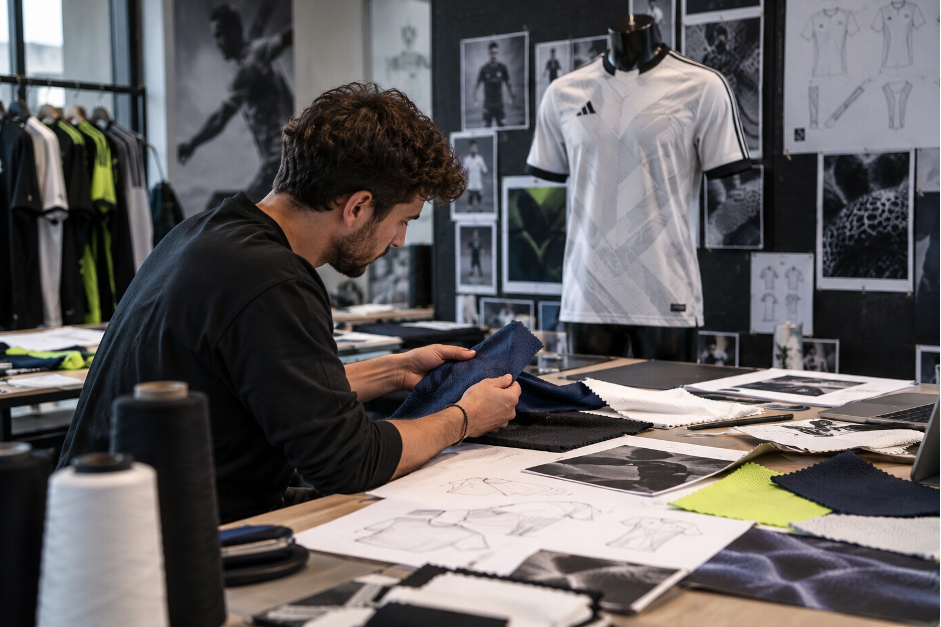
Team Partnerships Have Become Product Partnerships
The agreements between the Qatar FA, Liverpool and Manchester City offer three examples of the same business model. The agreement with the Qatar FA involves a national team, the agreement with Liverpool involves both technical and culture wear, and the agreement with Manchester City extends into retail and NFC-capable football wear.
None of these agreements only involve displaying a manufacturer’s logo in front of television. Professional teams present a high level of requirements for both football equipment, branded design and established markets for licensed football wear. These practical benefits help maintain the relationship with the team whilst football clothing continues to evolve into new materials and new technologies.