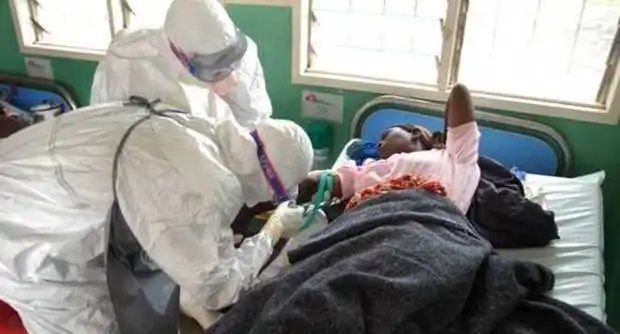
The Nigerian Senate has directed the Federal Government to enforce mandatory Ebola screening for all international travellers entering Nigeria through airports, seaports and designated land borders, following concerns over a reported case in Abuja.
The resolution followed a motion sponsored by Senator Francis Ade Fadahunsi, who warned that Nigeria faced a significant risk of importing the deadly virus and disclosed that about 44 contacts linked to the reported case had been identified for quarantine and observation.
Fadahunsi called for urgent measures to strengthen the country’s public health response and prevent further transmission.
Senate President Godswill Akpabio expressed concern over reports that the infected traveller entered Nigeria from Kenya without adequate screening, warning that lapses in border surveillance could expose more people to the virus.
Contributing to the debate, Senator Ali Ndume called for compulsory screening of all international travellers, irrespective of their countries of origin, to minimise the risk of imported infections.
Senator Adamu Aliero, on his part, urged the immediate release of emergency funds from the Service Wide Vote to support containment efforts and strengthen the capacity of relevant health agencies.
The lawmakers also called for the replacement of the Quarantine Act of 1926 with a modern public health law capable of addressing emerging infectious diseases and contemporary public health threats.
Senator Mohammed Tahir Monguno described the existing legislation as outdated, stressing the need for urgent legislative action to provide an effective legal framework for disease surveillance, quarantine and emergency response.
The Senate further directed relevant agencies to equip airports, seaports and designated land borders with trained health personnel, appropriate screening equipment and isolation facilities to identify and manage suspected cases.
Senator Ireti Kingibe emphasised the need to provide adequate resources for effective prevention and containment, while Senator Diket Plang urged public and private institutions to make hand sanitisers and other preventive materials available.
As part of precautionary measures within the legislature, Akpabio directed the introduction of temperature checks and hand-washing facilities at the National Assembly to reduce the risk of possible transmission.
The Senate urged relevant authorities to intensify disease surveillance, strengthen emergency preparedness and ensure effective coordination among health and border agencies to prevent the spread of Ebola in Nigeria.
The resolutions come amid heightened concerns over the reported Ebola case in the Federal Capital Territory, underscoring the need for strict screening, prompt identification of suspected infections and effective contact tracing.