IT was on May 29, 1999. How so proudly Nigerians looked as the green white green smoke emitted by the nation’s locally made Air Beetle filled the clouds over the Eagle Square, Abuja, signifying an end to military dictatorship and a new era of civilian rule.
The last decade had witnessed Nigeria, Africa’s most populous nation, transform from military dictatorship to militocracy and finally to democracy.
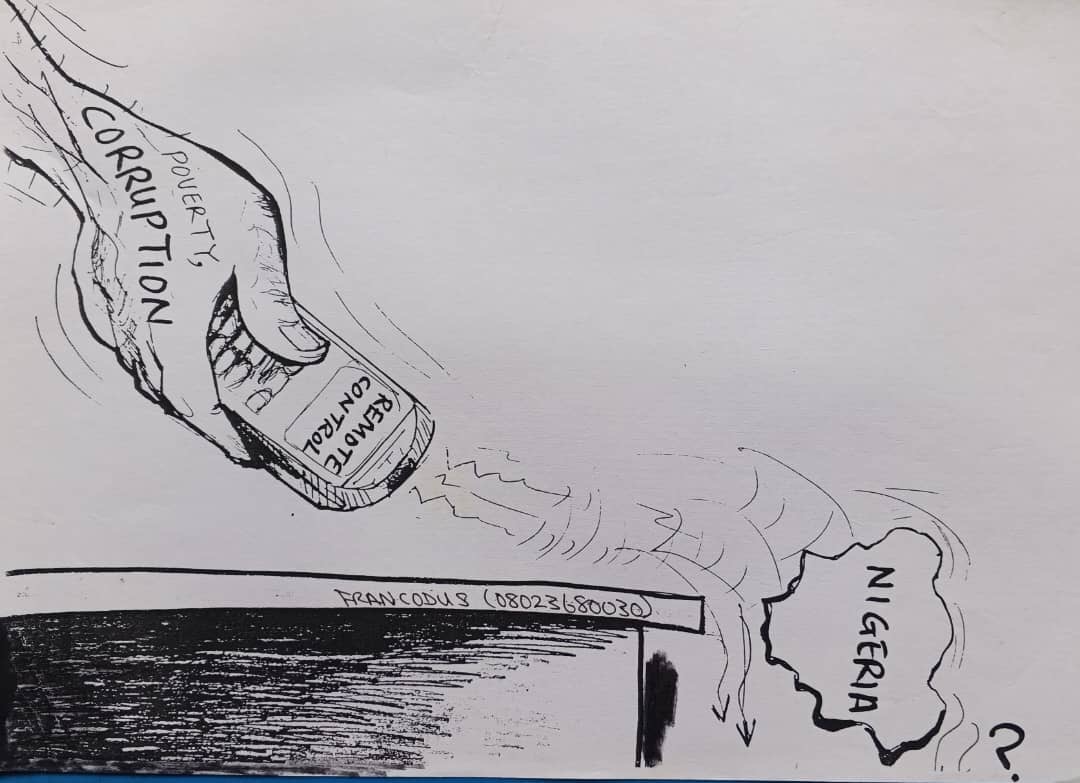
The question arising among Nigerians is ‘are we really on the right track’ it appears the quality of leadership in Nigeria diminishes successively. Comparing the military regime of the late Head of State, Gen. Sani Abacha, to the militocratic regime of late President Umaru Yar’adua it would be fair to note that the General had better control over his currency, the naira, than the farmer or the teacher. Oh! Was it a mere coincidence that under his reign we witnessed the naira gaining strength, beginning from over N100 to the dollar and to what it presently is in the black market.
Today, the situation in the country is that of a crippling naira dropping its values to N138, the lowest value obtained ever since Nigeria’s independence. Definitely, democracy is the world’s first love, but it produces fruits only when the righteous and intelligent are at the helm of affairs.
One problem causing fear and panic in the minds of Nigerians is the high level of inflation in the country. It was not by divine intervention that throughout the reign of General Sani Abacha, inflation was brought to its barest minimum. One would have expected our current leaders to have built upon this. From an academic point of view, this was most probably due to the fact that there was little money in circulation. Well said, but we must also acknowledge the more effective utilization of funds under the regime of General Sani Abacha, who frowned at the acquisition of foreign debt, which has been largely pin-pointed as the root of Africa’s ailing economy.
Inspite of the resultant limited availability of funds at its disposal, the Abacha regime refurbished and created more roads in the country than the Olusegun Obasanjo militocratic government which boasted that it had allocated 360bn naira on improving Nigerian roads, but in reality ended up turning Nigerian roads to death traps than the globally banned land mines.
In addition to the above, the massive increase in minimum wage in the civil service has led to new worries in the private sector, which has found it difficult to match such huge salaries. In an advanced country such as Nigeria, one would have reckoned that the wages of the civil service would be based on that of the private sector (i.e) slightly lower), thus, encouraging a rapid growth of the private sector as freshly turned out graduates would seek private employment, or better still become self employed.
These problems associated with the private sector can largely be felt in the agriculture sector as for instance, a poultry farmer, in order to obtain a monthly income of 60, 000 naira (U.S $440) must have a minimum of 2000 birds. Thus, he would require an initial capital not less than N2.5m, a sum not easy to come by as such agricultural loans are rarely forthcoming. Hence, members of the private sector would prefer to shut down their private investments in order to pursue civil service jobs where they don’t have to sweat much to get paid at the end of the month.
The above has led to a sharp reduction in production, further resulting in the reduced demand for the naira and consequently its present weak status. Economists have thus accurately predicted a gradual reduction in non-petroleum export in the forth-coming years.
Inspite of Nigeria’s continued reliance on oil, the nation still parades an epileptic petroleum industry despite the Olusegun Obasanjo administration’s claims to have invested 800bn on the Nigerian refineries. Nigeria still imports a large volume of crude oil. This has had its toll on the nation’s economy.
Due to this crippling effect on the private sector, there has been a sharp increase in the conventional feedstuff used in livestock production. An example of such feedstuff is maize, which was sold at a cost of N15/kg in the Abacha era and now sells for N115/kg increasing by over 650%. The price of table meat produced locally can no longer compete with that of imported meat. Nigeria’s ban on imported poultry products could therefore be classified as slightly “unintelligent. This would only result in less food and subsequently malnutrition. It would have been wiser to ask, where are our agriculturists? All working in banks, telecoms and oil companies (I guess). That is okay, considering the fact that the militocratic government of Olusegun Obasanjo had a geologist at the helm of affairs in our Power and Steel ministry. Well, his predecessor was a lawyer and guess what? Till date, the entire Nigeria enjoys 24 hours of uninterrupted power supply (??)
With the then democratic government being headed by an ex-academician, the university system in the country still retained its topsy-turvy status. It was rare in Nigeria to have a year go by without a disruption in the academic calendar. Well, this was achieved under the General’s rule. It might have been better though as strikes give parents ample time to put together their money (through legal business or by mounting of road blocks) in order to pay huge school fees for their dependants. The administration of Umaru Yar’adua really has done nothing and remained inactive since its inauguration. People had to call on the President to at least buy his children a dog so we could have some activity. As a former university teacher, one need not wonder the quality of students the president had produced in the past. This democratic administration was a far cry from what we expected.
With the President Goodluck Jonathan’s administration exiting on May 29, the private sector is still under heavy battery. This is slow poison for any county as the private sector is the backbone and driving force of any economy. It is a platform in which innovative ideas are actualized. Sad but true, this fact is alien to the present democratic government.
In all fairness, it might not be fare to use the current leaders in Nigeria as a measure of the effectiveness of democracy as the country’s current leaders are comprised chiefly of the old and spent, whether at the Executive, Legislature and Judiciary. Yes, the youth have visions. The youth of any country are the empowerment of that country. It might dawn on you that Nigeria’s great leader, Obafemi Awolowo was a youth at his peak. This led to the founding of the Obafemi Awolowo university (formerly called the University of Ife) as well as the building of Cocoa House, located in Ibadan Nigeria. It took West Africa over two decades to erect another structure of equal magnitude.
To be continued.

President-elect, General Muhammadu Buhari