A certain Philosopher (I think that great man was Socrates) was seen in the broad day light in the market place with a lighted lantern moving around as if to say he had no definitive mission in mind. When confronted by an unlooker who knew him as one of Greece’s revered thinkers of the Ancient period asked him why he had to move around in the heat of the sun with a lighted lantern and he responded that he was searching for a wise person.
I did almost the same thing today June 3rd 2015 but with slightly a more elaborate agendum when I randomly moved around at the Wuse Main Market in Abuja and asked a dozen or so market women and other young people doing buying and selling what the most notorious problem afflicting their individual household is and I got a unanimous response- Electricity power problem. Similarly the people interviewed in far flung places as Jos in Plateau State and Arondizuogu in Imo State by some commissioned research agents concurred with the unanimity of response I got in Abuja that poor electricity power supply is the most debilitating problem affecting most families. Statistically there are between 80 to 90 percent out of the 160 million Nigerians who live in squalor and absolute poverty. So household poverty is the second leg of the twin evil of poverty which even the World Bank rated as the most disturbing existential and economic problem of the African continent. What then is energy poverty since the socio-economic poverty affecting most households is a notorious fact already? Scholars say the fact of living without any or limited access to electricity energy has been termed “Energy Poverty”. By some rough estimates there are over 70 million rural poor in Nigeria and almost all of these people live in total squalor with no sign of civilization and there is this notorious lack of essential amenities in all of these local communities even as the severe energy poverty afflicting this significant high percentage of the Nigerian populace has a very important role to play in the unprecedented rate of absolute poverty in the rural communities. Artesans depending on daily streams of incomes who would ordinarily depend on consistent supply of electricity energy to sustain their small scale enterprises are completely out of job and this sad phenomenon has crippled the small and medium scale industry of the Nigerian economy.
Scholars who should know have stated that energy poverty is an endemic and crippling problem affecting by some estimates nearly 600 million people in Africa who live without access to any power, which also means no access to safer and healthier electric cooking and heating, powered health centers and refrigerated medicines, light to study at night or electricity to run a business. The World Bank study revealed these scandalous findings among other credible sources encountered online whilst conducting this research. Miss Sylvia Okonkwo a lawyer in Abuja said the issue of energy poverty in Nigeria is a huge economic matter that demands an immediate declaration of a national state of electricity energy emergency by the newly inaugurated President Muhammadu Buhari Government because if some form of strategic intervention isn’t enforced on a national scale then the widening chasm between the very few rich elite and the large number of absolutely impoverished Nigerians will increase in scope and pose grave national security challenge for Nigeria. In Wuse market for instance this writer sighted over 300 generators perjoratively called ‘I pass my neighbour’ which are used by the traders to power their electricity needs while doing their legitimate businesses.
As so well known already by scholars the World Bank’s Global tracking framework (GTF) is the world’s premier approach to tracking energy poverty. According to the GTF, about 1.2 billion people are living without household electricity and 2.8 billion without cooking and heating fuels. Those living in energy poverty are overwhelmingly rural and 80 percent, in Sub-Saharan Africa. Nigeria has the largest population of black people globally and therefore stands the notorious chance of inhabiting more than half of these suffering populations who live without electricity power.
The scholars consulted said that the implications associated with energy poverty are vast, for example, a lack of reliable electricity presents a critical hurdle for growth of businesses and job creation. Few opportunities for advancement they observed will be available in the area where there is no electricity to power business and industry, leading to a vicious cycle of household poverty. The informal sector of the economy of Nigeria is huge but the challenge of energy poverty has led to the crippling of these small businesses and since there’s usually a chain reaction in the event that someone’s business outlet closes down it therefore follows that the large army of dependants waiting for their daily bread to flow from the fountain of economic generosity of that distress business person will go hungry. Typically a visit to Aba the commercial nerve center of South East of Nigeria will show any one interested in knowing the damaging extent of energy poverty that the once vibrant business climate of this boisterous city is as clear as the Northern Stars. Aba city needs special energy intervention from both the Federal and Abia State governments to return business vibrancy and engage the tens of thousands of Nigerians sent out of their legitimate businesses by this grave problem of electricity energy poverty.
Again, scholars affirmed without fear of contradiction that the adverse health effects of energy poverty are particularly distressing and monumental. Experts also warned that using traditional cooking fuels indoors, leads to dangerous indoor air quality and exposes the occupants to the risks of fire explosions and deaths. Health statisticians have even estimated that 4.3 million premature deaths in 2012 came from this sort of dangerous practice aforementioned making indoor air pollution most dangerous environmental problems facing Africa today, especially for the women and children who are disproportionally affected.
Energy poverty disproportionally impacts the lives and prospects of rural women and children who spend hours each day gathering bio -mass, other traditional fuels and drinking water, according to researchers. Schools without access to modern energy services do not have luxury of heating, cooling, lighting and utilising computers-such schools serve about 90 million children in sub-saharan Africa alone. These obvious facts discovered by experts are disturbing.
Students who want to study in this sort of energy poor communities which most places are in Nigeria can choose a kerosene lamp (associated with serious health effects) or to venture to study under a street lamp. Even cities such as Owerri and Onitsha Students are seen sitting under street lights at nights to do their home studies. Why should we allow our young ones to pass through these excruciating pains to study?
Other important effects, says researchers includes a lack of fully functional clinics and hospitals, without refrigeration, vaccines and other medicines cannot be provided to those who need them.
These are very serious threats to the lives of the populace and if we go by the clear provisions of virtually all humanitarian laws which stipulates the imperative of promoting and protecting human rights it would appear that energy poverty perhaps constitute grave threat against Right to life and the imperative of according dignity to human life. Both chapters two and four of the Nigerian Constitution are littered with human rights provisions which are wantonly breached by government and other stakeholders who are mismanaging the commonwealth of Nigerians.
A lack of reliable power according to knowledgeable sources means that life-saving machines cannot be used and many other services are limited. Take for instance the cases of rural communities that have limited healthcare services the social fact of serious energy poverty means that most of these primary health institutions that are usually not well funded would be closed down and therefore not able to meet the increasing demands for healthcare services by the high number of rural poor who frequently fall sick due to the increased presence of female anopheles mosquitoes that carry and transmit malaria to Nigerians.
Environmentally speaking the implications of energy poverty to the environment can be devastating.
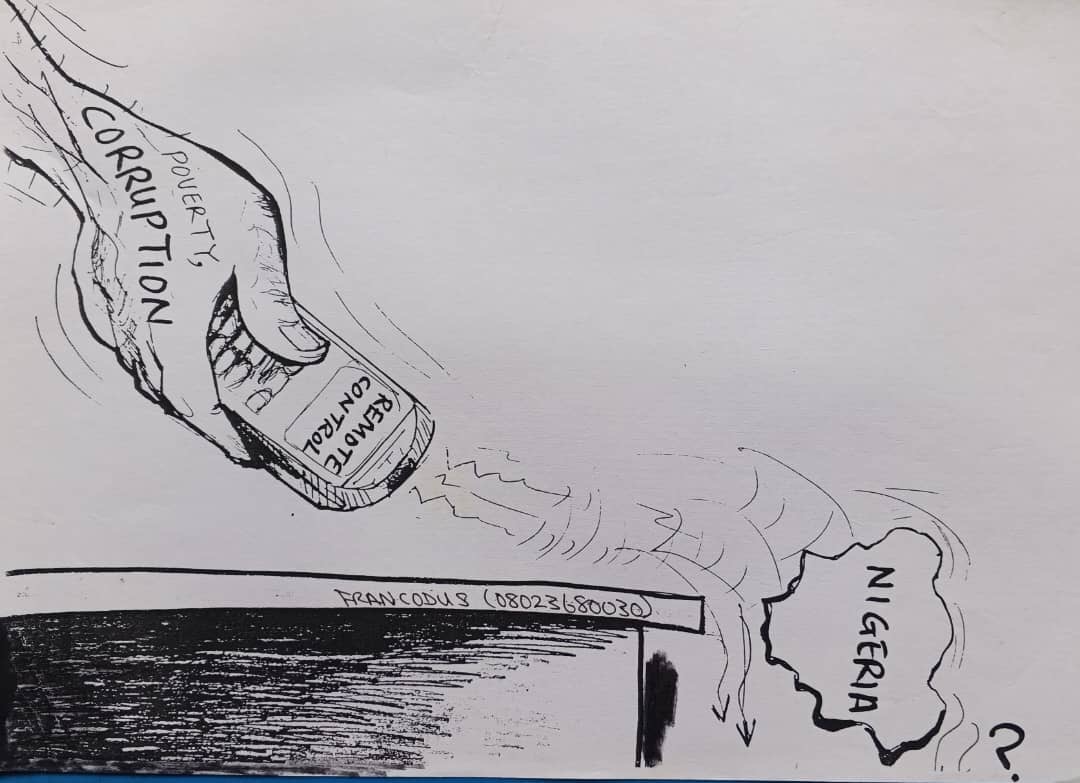
Scientists say that Biomass and other traditional cooking fuels (household energy) are usually harvested unsustainably. For example in South Africa and Nigeria, using Paraffin (Kerosene) for cooking, heating and lighting is strongly associated with poverty in these countries. In addition, many regard it to be the most dangerous form of household energy because of high profile given to the unacceptably high number of harmful paraffin-kerosine related domestic incidents that have taken place. These are well researched views expressed by tested and trusted scholars. Therefore tackling the increasing phenomenon of energy poverty must and should constitute a high priority area for the current government. The high volume of public fund reportedly poured into the electricity energy sector in the last 16 Years running to over $20 Billion certainly has not reflected which goes to prove that these massive amount of money must have been pocketed by the political actors who have mismanaged Nigeria in the last 16 Years. The need to conduct dispassionate probe into the electricity sector cannot be over emphasised. This current government must go after those who have pocketed the humongous energy/electricity budgets in the last 16 Years and recover to the last kobo all the looted electricity energy funds.