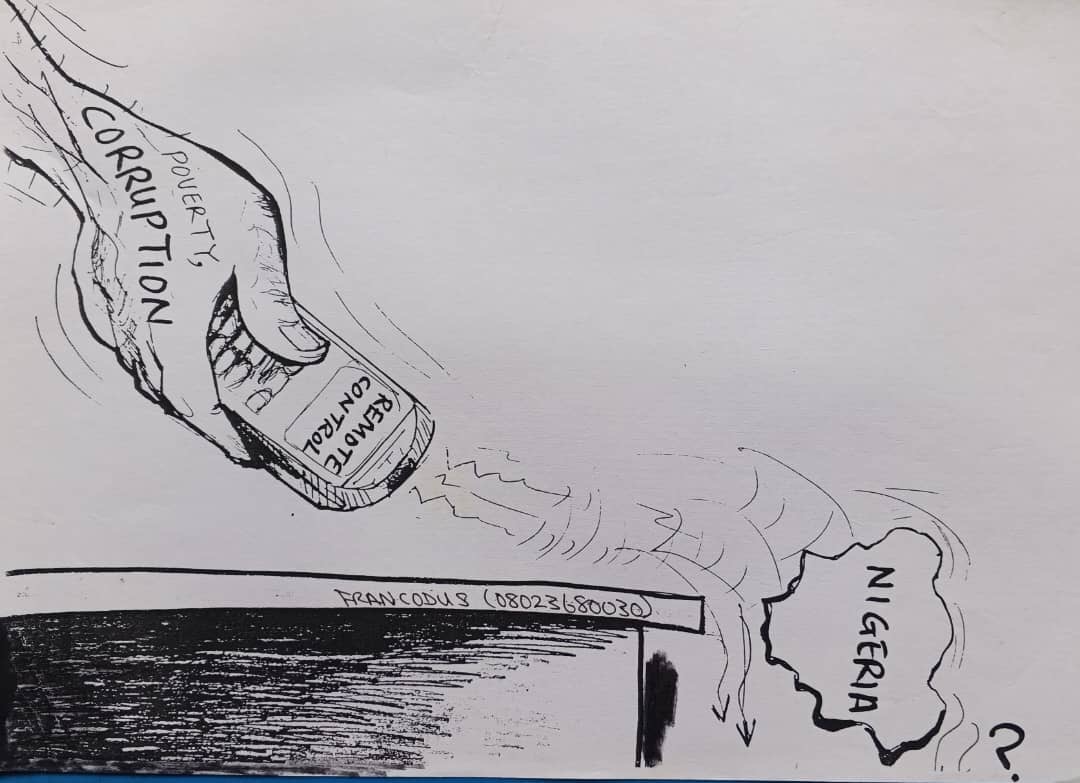
GREAT attention has been paid to the public service of Nigeria in the more recent weeks since the end of the 2015 General Elections. This should not be surprising because the public/ Civil Service is the instrument through which government delivers its services, implement policies and execute programs. It even helps in the formulation of policies through inputs to council papers by top public servants.
Public Administration in practice is concerned with the effective and efficient implementation of government policies and programs and it uses public servants including hired consultants with tax payers money to do this. A weak, inefficient and ineffective public service is thus a recepice for failure and there are many who strongly believe that this has been a major problem of Nigeria since the advent of military rule.
Consequently the mass media have been filled with articles calling for Reforms of the Civil Service of Nigeria. According to experts Civil Service Reforms is a ‘ deliberate action to improve the efficiency, effectiveness, professionalism, representatively and democratic character of civil service with a view to promoting better delivery of public goods and services with increased accountability’.
Though reforms in Nigeria had come to be associated more with sack or loss of jobs, yet in the view of experts it can be done in a number of ways including ‘data gathering and analysis, organizational restructuring- of the down sizing/ right sizing variety, improving human resource management and training, enhancing benefits within available resources, strengthening measures for public participation, transparency, and combating corruption’ .
While the environment of reform is of critical importance, it is needless to say that reform can be costly in terms of financial resources and human pains. It takes time to implement key aspects and a lot of money in terms of payment of severance allowance as a result of labour cut. For instance as revealed by El Rufai (2014) about N 2.5 billion was paid to 45000 affected workers during the Obasanjo administration. And another group of 75’575 workers cost as much as N 5.7 billion to settle. Some of them reportedly found their way back to the service later.
Some of the environmental factors to consider today include high rate of unemployment, low morale and cynicism of the civil servants, low level of patriotism, failing revenue especially fall of oil price, high cost of reforms, low private sector activity, imperative of a labour-surplus, history of reforms which shows little impact on the performance of public service etc. Within this context the question is how best do we go with the task of promoting efficiency and effectiveness of public service in Nigeria for quality service delivery? Is labour cut the best way out.
Last week the APC held a retreat for its elected members and of course one of the areas of focus was the Public Service whose performance has been rightly observed to have fallen far below expectation. Sadly a pre-2005 perception of the service as a ‘dysfunctional, inefficient, corrupt, lacking administrative capacity and incapable of attracting the best and brightest’ has remained largely today as it was at that time. Theory and practice of Public Administration appear to have been stagnant in Nigeria.
But public administration has moved on since the 19th century when Wilson first called for the separation of politics and administration or Taylor developed his scientific theory of administration which he hoped would help the manager to discover the “the best way” to do things. Taylor had emphasized enforcement of rules of work. Gulick Urwick took things further with his idea of POSCORB which stands for the functions and activities of administration viz-planning, organizing, staffing, directing, coordinating, reporting, budgeting.
While the search for the best way has continued with some scholars asking that we look more at the human side of production to motivate workers to achieve organizational goal or use a combination of theories and techniques to solve problems of administration, Osborne and co sought to reinvent government which to them was failing by using ‘private sector style, models, ideas and value to improve the efficiency, effectiveness and service orientation of the public sector’. This is what is called the new public administration that seeks to add value to public sector service delivery by measuring the impact of given service on the quality of life of citizens. But how much of the knowledge and skills here is on the palm of the average public servant in Nigeria? Available evidence suggests little or nothing at the moment.
Let me quickly correct a wrong impression to the effect that civil service of Nigeria is bloated and incapable of attracting the best and brightest. The public service may be inefficient and ineffective in it’s task of service delivery but in an economy that has over 40million unemployed and over 100 million people, the civil service cannot be said to be bloated and incapable of attracting the best and brightest.
The truth is that recruitment method is unclean and extremely corrupt and the appropriate authority has not done the needful to attract the “best and brightest”. The situation today in Nigeria is akin to early stage of public service in Europe before the 19th century during which staffing was ‘rife with nepotism, favoritism and political patronage’. Garbage in, garbage out especially in the absence of culture of training. Thus it was not surprising that the Fika committee which ‘ lamented the low morale and widespread malaise’ in Public Service of Nigeria attributed the fate to the weakness and corruption of the Public Service Commission. This is an area that deserves the attention of the authority- the overhauling the PSC.
The Public Service of Nigeria has not done its work well. It’s recruitment system is corrupt and unfair and laden with favoritism at expense of merit. It is not transparent and does not throw vacancy open for competition. It deceives the public with cries of embargo only for new faces to appear in offices and on pay roll recruited on basis of long leg, political patronage or cronyism. It is needless to say that patriotic citizens and the best candidates for the job are not got this way.
Among the paper presenters at the APC workshop was El Rufai, Governor Kaduna State, former Minister of FCT and a key player in the largely unsuccessful Reforms program of the Obasanjo Administration. He reportedly called for reform of the public service, cut its alleged bloated size and the ‘abrogation of the Permanent Secretary cadre’ because according to him it is not associated with the presidential system of government. For a number reasons I intend to show that due to a number of reasons including limited time for reform within a four year tenure, cost, and some developments in the environment the El Rufai suggestion here will not be helpful.
The abrogation of the cadre would not improve the civil service. Incidentally the earliest argument for the separation of politics and administration belongs to Woodrow Wilson who later became an American President. Wilson believes that the study of public administration is to ‘discover first what government can properly and successfully do and how it can do these successfully properly with the utmost possible efficiency, and at the least possible cost either of money or of energy’. What seems to matter more is what works better for the country.
Thus without meaning to, El Rufai re- ignites an old debate about whether the civil service should be politicized or not. Each has merits and demerits and I dare say that the problem of the civil service in Nigeria is not with the presence of the permanent secretary cadre but the poor knowledge base, weak capacity to deliver service, general lethargy, wrong attitude and negative mentality that the civil service is not my papa’s job etc.
They betray a poor orientation and absence of relevant training of the worker as well as lack of effective supervisory mechanism to keep workers in check and do the needful at work. In other words it is not what is associated with the presidential system or not but what works. In case of Nigeria it is what works better because both had been tried and one was found much better than the other. The politicization of the position of permanent secretary in the 1980s under the name of Director-General nearly ruined the entire Service.
Nigeria adopted the British model which isolates the civil service from party politics on attainment of Independence and its strength was demonstrated in the 1960s after the January 1966 coup. The civil service held the country intact before a political leadership could emerge. The 1988 civil service reforms by Prof. Dotun Phillips did what El Rufai was proposing but it served no useful purpose and indeed almost crippled it as inexperienced hands were hired in the name of politics to head the service with loyalty to the individual or political party rather than the nation state. This was the rationale for the action of the Ayida commission Report which corrected some of the defects of the 1988 reforms.
Before leaving El Rufai, let us discuss more his ideas of a bloated civil service and the need ‘to go with a knife and take drastic actions’ perhaps to cut jobs. At the moment the pubic service is said to have nearly 5 million workers in both the state and federal service to administer the welfare of about 180 million people. What is the ratio? Definitely there are some people who have no business being in the public service and can be axed to promote efficiency and effectiveness in service delivery following due process but it does not mean that the service is over staffed in a labour surplus economy such as Nigeria.
For instance the security agencies especially the police are grossly understaffed. To cut indiscriminately would only worsen the unemployment situation. It was the mistake of the Obasanjo administration’s reform which failed woefully. It failed to take cognizance of developments in the environment and to involve citizenry participation. In stead of creating jobs it started to swell unemployment through unhelpful ways. Massive training, retooling and re-skilling is much better than job cuts in the present circumstance.
Lessons Of History
PART of the problem is that the Nigerian authority does not learn lessons from history and past reports. Also it has not often taken steps to bridge the communication gap between the top and low cadres of the service, empower the lower cadre to execute programs and to implement recommendations of study groups. When we talk of Reforms we give the false impression that there has been none in the past. There had been many since the Tudor Davis commission of 1945-6, the Morgan Commission of 1963 which is credited to have introduced minimum wage Adebo (1973), Udoji (1972-4) Ironsi unification decree(1966)Dotun Philips(1988) Ayida report( post 1999) Oronsaye Initiative(2009) that makes the tenure of Permanent Secretary and Directors to be eight years.
Some of these reforms quaked the economy, led to inflation, military coup and assassination grumblings, impoverishment and alienation of majority citizens. But on the whole the general impression is that they made little impact on service delivery. Still together they provide a body of knowledge especially areas of weakness in the public service that need correction. For instance disparity of wages within the Service, severance package, heavy allowance to some officers in the face of high unemployment, the high cost of service where about one percent of the population garner over sixty percent of the annual budget need to be reviewed. There has been gross inability to learn and to apply available information/knowledge to solving identified problems in the country.
There is therefore need for caution in the choice we make today. History should serve as guide here and there is need to look before leaping. There could be simple, cheap but effective way of achieving the desired result. For instance there might be the need to cut senior workers allowance and to reduce the salary of some public servants whose institutions maintain special salary scale- for example the NNPC and such category of organization. On the whole, the key is training and retraining and the deliberate promotion of idea of patriotism in society. No one does wonders without due knowledge, proper empowerment and due commitment to the task at hand.
Some creative thinking is also necessary. Since the early 1980s it has become clear that the civil service was largely an illiterate force and ill- prepared for effective service delivery. It has also been unrealistic in not creating a special time for lunch break during which people could do school – run as well as refresh. All these and more became evident in a 1982 opinion survey of civil servants at the Federal Secretariat Ikoyi, Lagos done by me. Part of my findings was later published in the New Nigeria newspaper of… Among others, the survey showed low commitment to service, lack of understanding of the purpose of civil service, many civil servant do not know the time of opening and close of office and they leave office at will for break, do school runs at government’s expense and close before time with impunity. Most senior officers report at work as from 10 am.
Ignorance pervades the scene. There was general lack of understanding of the purpose of the civil service let alone commitment to service delivery. There was little or no supervision as many staff were on the corridors doing nothing. Most of the offices were over crowded and unconducive and they lacked basic tools of work such as tables, chairs, telephones, air conditioners, fans etc. Enthusiasm to serve was low. It was clear that the civil service lacked the capacity to deliver and it needed to be educated and strengthened in number of ways. It is needless to say that nothing much has changed in the attitude of the average Civil Servant to work since then.
Even more revealing is a 2005 fact finding report which showed that the public service of Nigeria was characterized by ineffectiveness, inefficiency and corruption. It was rapidly aging, the staff are largely untrained, uneducated and outdated in knowledge and skills in IT- les than 5% was IT Compliant, prevalence of poor management of human and other resources. Of the approximately 5million workers, about 1.1 million belonged to the federal service while others are states and LG workers, their average age is 42 years ,12% of them hold university degrees,70% are junior staff and about 20% are ghost workers. The civil service is expensive to run as it consumes about 60% of annual budget. While salary is generally low- far lower than the private sector, the service is marked by unethical conduct, corruption, poor accountability failure of past reforms and resistance to change. The security forces are better run than the civil service and the reason for this is their emphasis on training as in military schools, police college etc.
The picture of the condition of our Public Service is largely ugly and the task is to make it beautiful through creative ways. It is important to remark that some of these information that informed the Obasanjo administration’s reforms but which like other efforts failed to make the desired impact because of poor methods adopted. As already suggested the reasons for failure are many but the leading ones include the failure to reckon with critical issues of the environment such as high level of unemployment, insensitivity, lack of citizenry participation, high cost of reforms especially severance package-about 2.5 billion naira to settle about45000 retrenched people, lack of sincere commitment, low private sector activity, corruption, despondency, and falling revenue non observance of financial rules and general regulation of public service. In short the public service cannot be treated in isolation but must be considered along other factors in the environment. One employed person has about ten dependents and this makes the labour cut only an inevitable last resort. The government was voted in to make life better and not inflict pains with knives and dagger.
I believe that part of the problem is that most of the past reforms had focused more on pay increase and improved allowance than enrichment of the contents of work, intellectual empowerment of the worker through training and retraining and improvement of the internal environment of work say through the provision of modern tools of work, good ventilation and structural flexibility to enable the supervisor to teach, monitor, correct and if need be punish misconduct or deal with emerging issues of discipline without much delay.
Against this background where should we focus attention on in the years ahead? How do we make our public service more efficient, effective and result oriented? In short how do we make the service to perform as expected? What is happening to the recruitment system, the unemployment level, the knowledge base, skill level, performance level, the leadership and management skill level of the public service of Nigeria etc.
The major step is to intensify the education and training of staff- promotion and enhancement of knowledge base of Service. It will strengthen the capacity for service delivery. If animals especially the dogs can be trained to serve man and the community, the man can be trained to be expert in any field.
Nigerians are not lazy and they are amenable to training. The bank worker at work before 8 am attending to customers is Nigerian but trained to be responsible and to respect rules and regulation of work including ethics. He is closely supervised and due lapses checked in good time unlike in the public service. The public service and its workers need proper orientation.
Other measures include the promotion of values of work through mental orientation, strengthen apparatus of work, be realistic with human nature that he has need for tea and lunch break and do school runs and so make room for them through an hour break. Work can start by 9 am and close by 5 pm. Promote relevant skills and education. Put in place better recruitment system and effective mechanism for supervision. Check ghost workers through the use of appropriate technology. Invest on infrastructure to stimulate the economy and promote employment. Support the growth of private sector especially the manufacturing sub- sector, fix and establish more Refineries. As much as possible avoid retrenchment but strengthen the supervisory mechanism and the reward system based on merit. Bye Bye Jonathan and welcome Buhari.