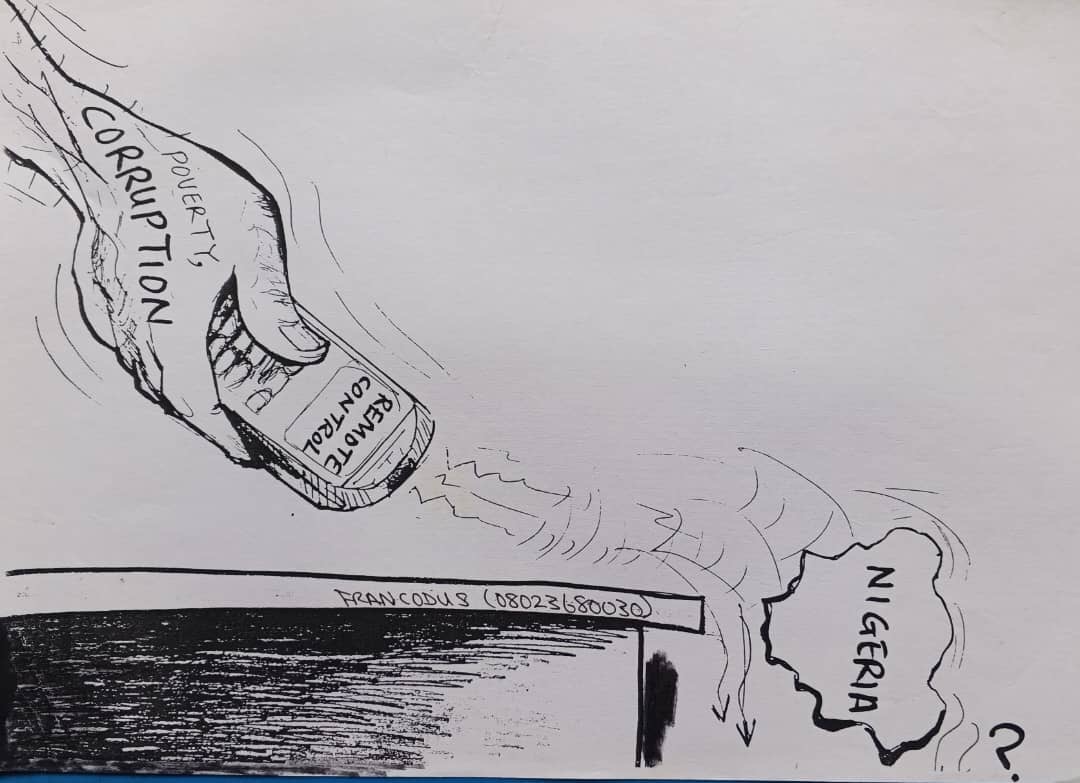
In yet another disturbing but increasingly familiar episode, a failure within one of Nigeria’s most critical systems has led to the death of a promising young Nigerian, leaving the nation’s social spaces awash with grief, debate, and sharply critical reflections.
Twenty-six-year-old Ifunanya Nwangene, an Abuja-based rising singer popularly known by her stage and social media name Nanyah, died after suffering a snake bite. She was a former contestant on Season 3 of The Voice Nigeria, where she first gained public attention in 2021. Her blind audition performance of Rihanna’s Take a Bow was particularly memorable, turning two judges’ chairs and later circulating widely online—an early indication of her promise and growing influence.
Nanyah’s voice was both versatile and expressive, blending elements of classical training, jazz, soul, opera, and R&B. Known for her soprano range, she was well suited to both sacred music and contemporary performance. Her consistent digital presence was not merely promotional; it served as a record of her artistic growth and a means of connecting with listeners. Beyond television and online platforms, she was an active performer with the Amemuso Choir in Abuja, where she served as a key soprano voice—evidence that she was not only visible online but firmly rooted in Nigeria’s live music culture.
Before her death, many within the music community regarded Ifunanya Nwangene as a rising talent with genuine potential. She was preparing for her first headline solo concert scheduled for 2026, a major milestone for any artist transitioning from ensemble work and competitions into an independent career.
She had also been collaborating with fellow musicians and developing new material, signalling an artist still discovering and expanding her creative voice. Choir members and collaborators described her as one of the most promising voices of her generation, noting that her passing felt like the loss of a sound Nigeria was only beginning to hear.
That all of this could be cut short with so much left unexplored raises difficult questions. We often dismiss tragedies like this with the familiar phrase, “Nigeria happened to them.” Yet when reduced to a cliché, we risk overlooking the deeper truth it conveys: a collective loss of faith in systems meant to protect life. That this expression is so casually understood as negative speaks volumes about the fractured hope of Nigerians, and even more so of Nigerian youth.
The fatal incident occurred on January 31, 2026, when Nwangene was bitten by a snake, reportedly a cobra inside her Abuja residence. According to reports, she was asleep when the bite woke her, and two snakes were later discovered in the house, further unsettling an already grieving public.
Following the bite, Nwangene reportedly sought urgent medical attention, visiting two hospitals in quick succession. Her first stop was Divine Health Hospital, located at the Trade Fair Mall in Lugbe, where she was reportedly informed that the facility did not have the required antivenom and was therefore unable to treat her.
She then travelled, in what was reported to be a 30-minute journey, to the Federal Medical Centre (FMC), Jabi. Reports indicate that FMC had only one dose of the required antivenom available. Efforts were made to source an additional dose, but by the time these attempts materialised, Nanyah had passed away.
In the aftermath of the tragedy, public commentary sharply criticised the circumstances surrounding Nwangene’s death. One particularly viral response came from social media influencer and medical doctor Dr Egemba Chinonso Fidelis, popularly known as Aproko Doctor. In a widely shared video captioned “It was not a snake that killed Ifunanya Nwangene. It was our system that failed her,” he emphasised that while snake bites are common in many countries, fatalities are far less likely where healthcare systems function properly.
He described the absence of antivenom in two hospitals within a snake-endemic country as “ludicrous,” especially in the modern era. Aproko Doctor also noted that similar failures often go unnoticed when they affect private individuals, but because Nanyah was a public figure, the tragedy attracted widespread attention.
He further highlighted misplaced national priorities, observing that while critical healthcare infrastructure deteriorates, government focus often gravitates towards high-visibility projects—flyovers, bridges, and other developments designed to court public approval ahead of elections. This, he argued, repeatedly undermines basic services such as primary healthcare, leaving lives and potential unrealised.
Other commentators have echoed these concerns, warning that systemic lapses of this nature steadily erode youth capital and generational strength, as Nigeria continues to lose promising talents to preventable circumstances.
Some critics have suggested that in Nanyah’s case, the lack of antivenom may also be linked to power failures, with hospitals reportedly lacking adequate refrigeration for the medicine. This points to yet another layer of systemic breakdown: the central role of electricity in sustaining healthcare, businesses, and creative enterprises. Many promising young Nigerians, including entrepreneurs see their aspirations constrained by inadequate infrastructure, from spoiled goods to prohibitive operating costs.
It is devastating to realise how often dreams, and in Nanyah’s tragic case, lives are cut short by such systemic deficiencies. Her death is not merely the loss of a rising star; it is a stark reflection of how persistent governance failures continue to undermine Nigeria’s youth and future.
As criticism continued to trail her death, the government appeared to swing into action—a pattern many Nigerians recognise as reactionary governance, often described as “medicine after death.” The Senate of the Federal Republic of Nigeria announced a series of responses, chief among them a resolution mandating the availability of antivenom and other emergency medicines in hospitals nationwide.
Lawmakers called for the compulsory stocking of antivenoms and life-saving antidotes in both public and private hospitals, while urging the Federal Ministry of Health and Social Welfare to develop and enforce national guidelines requiring minimum stocks of essential emergency medicines. These standards, they proposed, should be tied to hospital licensing and accreditation to ensure system-wide compliance.
Beyond the theatrics of immediate responses, however, what truly matters is sustainability. Nigeria does not need reforms driven solely by public outrage that fade once attention shifts. What is required are deliberate, actionable, and enduring changes that address systemic failures at their roots. Nigerian youth do not ask for miracles, only for a system that allows them to live, work, and thrive without preventable obstacles.
In the wake of this tragedy, many young Nigerians hope for a genuine paradigm shift: one that supports and uplifts rather than diminishes; one that illuminates potential instead of dimming it; one that facilitates growth rather than discouraging ambition. Anything short of this risks reducing yet another national loss to a fleeting headline.
It is hoped that Nanyah’s death serves as a jarring wake-up call—a reminder that the future of the nation is inseparable from the wellbeing of its youth. Only by strengthening and protecting them can Nigeria begin to transform into a country that nurtures its young, rather than one that consumes them.