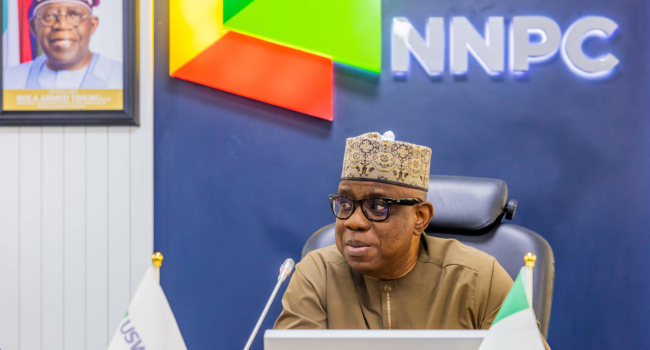
ABUJA — The Nigerian Senate has issued a firm directive to the Nigerian National Petroleum Company Limited (NNPCL), mandating its management to appear before the Senate Committee on Public Accounts on April 29, 2026, to account for an alleged ₦210 trillion flagged in audit reports covering the period from 2017 to 2023.
The committee specifically instructed the Group Chief Executive Officer, Mr Bayo Ojulari, to personally lead the company’s management team to the hearing.
Also required to appear are former GCEO, Mr Mele Kyari; former Chief Financial Officer, Umar Ajia; Dr Bala Wunti; as well as the company’s external auditors.
The resolution followed a motion moved by Senator Osita Izunaso and seconded by Senator Adams Oshiomhole.
Chairman of the Senate Committee on Public Accounts, Senator Aliyu Wadada, expressed dissatisfaction with the explanations so far provided by the national oil company, stressing that Nigerians deserve full and transparent disclosure.
Wadada noted that NNPCL’s responses to 19 audit queries lacked sufficient detail, particularly concerning the breakdown of ₦103 trillion reportedly classified as liabilities.
“Liabilities are in three components — retention fees, legal fees, and audit fees. The specific amounts spent on each must be clearly stated and explained,” he said.
He further demanded comprehensive clarification on the remaining ₦107 trillion, which the company claimed was expended on Joint Venture Cash Calls and debts allegedly owed by unnamed defunct banks.
“The explanations provided are not acceptable. There must be transparency and accountability,” Wadada added.
The committee warned that NNPCL management must appear without fail on the scheduled date, following previous failures to honour invitations by the Senate.
Earlier, Senator Abdul Ningi called for stricter enforcement of legislative authority to compel compliance, cautioning that repeated disregard for National Assembly summons undermines democratic institutions.
“We must treat this matter with utmost seriousness. The strength of democracy lies in the authority of the legislature,” Ningi said.
The Senate’s directive signals intensified scrutiny of the operations and financial records of the state-owned oil company, amid mounting concerns over transparency and accountability in Nigeria’s petroleum sector.