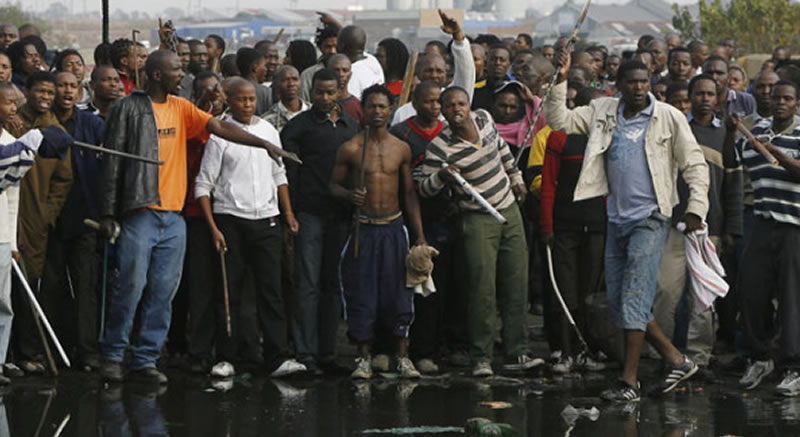
In recent weeks, disturbing reports have emerged from South Africa about renewed protests targeting foreign nationals, particularly Nigerians. Demonstrations in cities such as Johannesburg and Pretoria have once again revived the spectre of xenophobia, with protesters blaming immigrants for unemployment, crime, and economic hardship.
For many Nigerians living in South Africa, the situation has become increasingly precarious. Some have reportedly closed their businesses or restricted their movements for fear of attack, while others have requested evacuation by the Nigerian government as tensions escalate.
Although the South African government has officially condemned xenophobic violence, the persistence of these protests reveals a deeper societal problem that cannot be ignored. While crime should be confronted wherever it occurs, collective blame against an entire nationality is unjust and dangerous. Unfortunately, the recurring hostility towards Nigerians abroad also compels us to reflect critically on the circumstances that have pushed so many Nigerians to seek refuge outside their homeland.
To fully grasp the gravity of the current situation, it is important to understand that xenophobia against foreign nationals in South Africa is not a new phenomenon. Since the end of apartheid, the country has periodically experienced violent attacks against immigrants from other African nations, including Nigeria, Zimbabwe, Mozambique, and Somalia. Some of the worst incidents occurred in 2008, when more than sixty people were killed in anti-foreigner violence, followed by further attacks in 2015 and 2019.
These periodic outbreaks of violence reveal a troubling pattern. Whenever economic hardship intensifies, migrants often become convenient scapegoats for the frustrations of the local population. In many South African townships where unemployment is rampant, foreign traders are frequently accused of “stealing jobs” or dominating informal markets.
The resentment is further fuelled by rumours and misinformation suggesting that foreigners are responsible for rising crime rates or social instability. Such narratives, whether accurate or exaggerated, create fertile ground for mob action.
Nigeria played a crucial role in the struggle against apartheid in South Africa. During the dark years of racial segregation, Nigeria was among the most vocal and generous supporters of the anti-apartheid movement. Successive Nigerian governments contributed financially to the liberation struggle, provided scholarships for South African students, and mobilised international opinion against the apartheid regime.
Many Nigerians still remember how their country imposed sanctions on companies that supported apartheid and rallied other African states to isolate the regime diplomatically. For this reason, the recurring attacks on Nigerians in South Africa are often perceived as a painful betrayal of historical solidarity.
However, while history provides context, it does not fully explain the present tensions. The real issue lies in the socio-economic pressures currently confronting South Africa itself. Despite being one of Africa’s most industrialised economies, South Africa struggles with extremely high unemployment, particularly among young people. Inequality remains among the highest in the world, and many citizens feel excluded from economic opportunities decades after the end of apartheid.
Foreign traders are often accused of undercutting local businesses, while undocumented migrants are blamed for placing pressure on housing, healthcare, and social services. Whether these accusations are justified or not, they contribute to a climate of suspicion that periodically erupts into violence.
But beyond South Africa’s domestic challenges lies another uncomfortable truth: Nigeria’s internal failures are also part of the story.
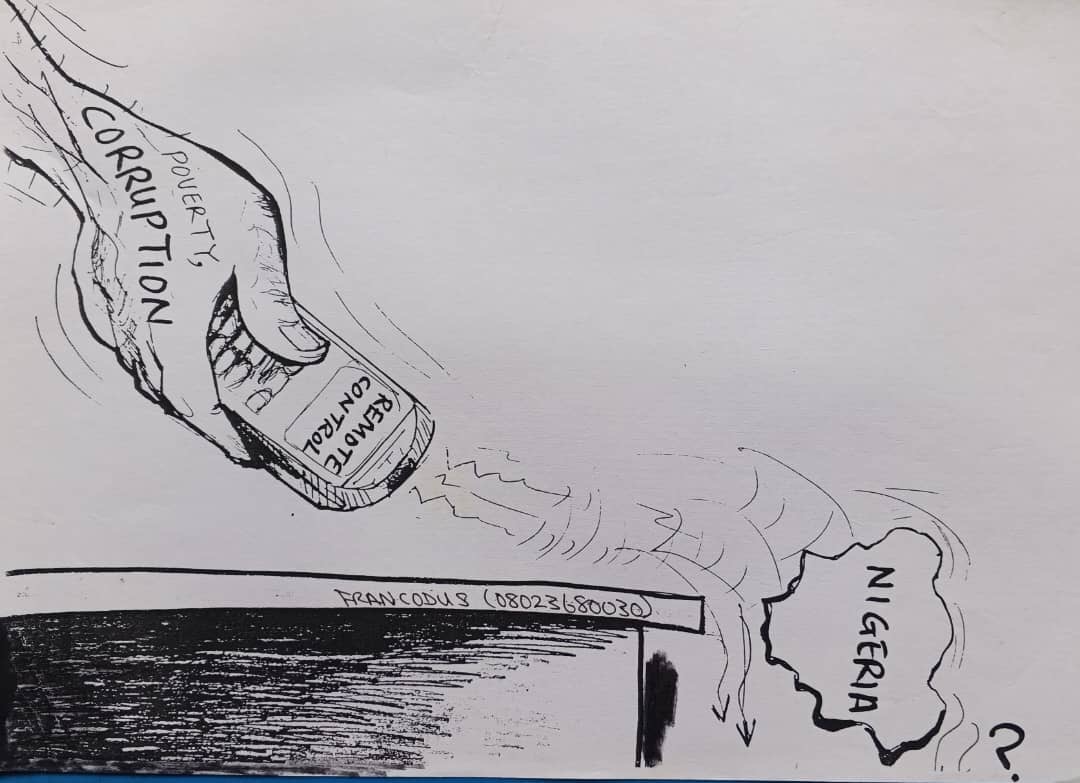
One of the most tragic commentaries on contemporary Nigeria is the scale at which its citizens are fleeing the country in search of better opportunities abroad. From airports to desert routes and perilous sea crossings, thousands of Nigerians continue to risk everything to escape a nation that has increasingly failed to provide economic security or social stability.
This mass migration is not merely about the pursuit of greener pastures; it is also a powerful indictment of Nigeria’s governance failures.
For decades, Nigeria has been endowed with enormous natural resources, yet the benefits of these resources have rarely reached the majority of its citizens. Instead, corruption has steadily eroded public institutions and diverted wealth meant for national development into private pockets.
Funds intended for hospitals, schools, roads, and infrastructure have often been misappropriated. The result is a nation rich in resources but poor in public services.
Leadership failure compounds this problem. Many Nigerians have grown deeply frustrated with a political class that appears more interested in personal enrichment than in national development. Policies are frequently implemented without long-term planning, while institutions that should safeguard accountability are weakened by political interference.
For the average Nigerian, survival often depends more on personal resilience than on any support from the state. Consequently, when opportunities arise abroad, many young Nigerians seize them eagerly.
Unemployment, particularly among young people, has reached alarming levels. With a population exceeding 200 million and a demographic structure dominated by youth, Nigeria faces immense pressure to create jobs. Unfortunately, the economy has struggled to absorb this growing labour force.
Even graduates with impressive qualifications frequently find themselves unemployed or trapped in precarious informal work. This frustration fuels the now-popular slogan “Japa,” a Yoruba expression that symbolises the desire to escape from Nigeria in search of better prospects.
Security concerns further intensify this migration. From insurgency in the North-East to banditry in the North-West and kidnapping in many parts of the country, insecurity has become a pervasive feature of Nigerian life. Citizens are not only fleeing poverty but also escaping the constant threat of violence.
Healthcare is another factor driving the exodus. Public hospitals are underfunded, medical personnel frequently embark on strikes, and many political leaders prefer medical tourism abroad rather than investing in domestic healthcare systems. When a nation’s leaders seek treatment overseas while its citizens struggle with dilapidated hospitals at home, the message is unmistakable.
The cumulative result of corruption, unemployment, insecurity, and institutional decay is a society where hope appears increasingly elusive. Consequently, Nigerians continue to migrate to other countries including South Africa in search of dignity and opportunity. Ironically, this migration then fuels resentment in host countries, where locals perceive immigrants as competitors for limited resources.
If xenophobic violence escalates in South Africa and Nigerians are forced to return home abruptly, Nigeria may face a humanitarian and economic crisis. The country is already grappling with a massive housing deficit, overstretched infrastructure, and a fragile labour market.
An influx of returnees could exacerbate unemployment, intensify urban congestion, and increase social tensions. Crime rates might rise as desperate individuals struggle to survive in an economy that offers limited opportunities.
Rather than wishing for mass return migration, Nigeria must focus on addressing the structural failures that have driven its citizens abroad in the first place.
The Nigerian government must continue to engage South African authorities through dialogue rather than confrontation. Strong diplomatic ties between the two nations should be used to ensure the safety of Nigerians while also addressing legitimate concerns about crime and migration. Joint initiatives on policing, economic cooperation, and cultural exchange could help reduce mutual suspicion.
Equally important is the role of Nigerians in the diaspora themselves. Those living abroad must recognise that they serve as informal ambassadors of their country. Their behaviour, achievements, and contributions shape the global perception of Nigeria.
While the vast majority of Nigerians abroad are hardworking professionals— teachers, doctors, engineers, entrepreneurs, and students, the actions of a few individuals involved in criminal activities can unfortunately damage the reputation of the entire community.
Media narratives also require balance. Stories of Nigerian criminality abroad often dominate headlines, overshadowing the countless Nigerians who contribute positively to their host countries. Highlighting these success stories could help counter harmful stereotypes and foster greater understanding.
Ultimately, the recurring xenophobic tensions in South Africa should serve as a wake-up call for Nigeria. A nation cannot continue to export its citizens in large numbers without confronting the underlying reasons for their departure.
Nigeria must begin the difficult but necessary task of rebuilding its institutions, combating corruption, revitalising its economy, and restoring public trust in governance. Only then can the country transform itself into a place where its citizens choose to stay rather than desperately seeking to leave.
For South Africa, the lesson is equally important. Xenophobia undermines the very ideals of African solidarity that helped end apartheid. The continent’s future depends on cooperation, not hostility among its people.
Nigeria and South Africa remain two of Africa’s most influential nations. Their relationship should be defined not by suspicion or hostility but by mutual respect and collaboration.
The current tensions must therefore be addressed with wisdom, empathy, and foresight. Nigeria must rebuild itself, South Africa must confront xenophobia, and both nations must remember that Africa’s destiny is intertwined.
Only through unity, justice, and responsible leadership can the continent realise its immense potential.
_____________________
Dr. Odaro, a columnist, lectures in the Department of Mass Communication, Auchi Polytechnic, Auchi.