“History will remember us for not remembering history” -Davidson Izegaegbe-
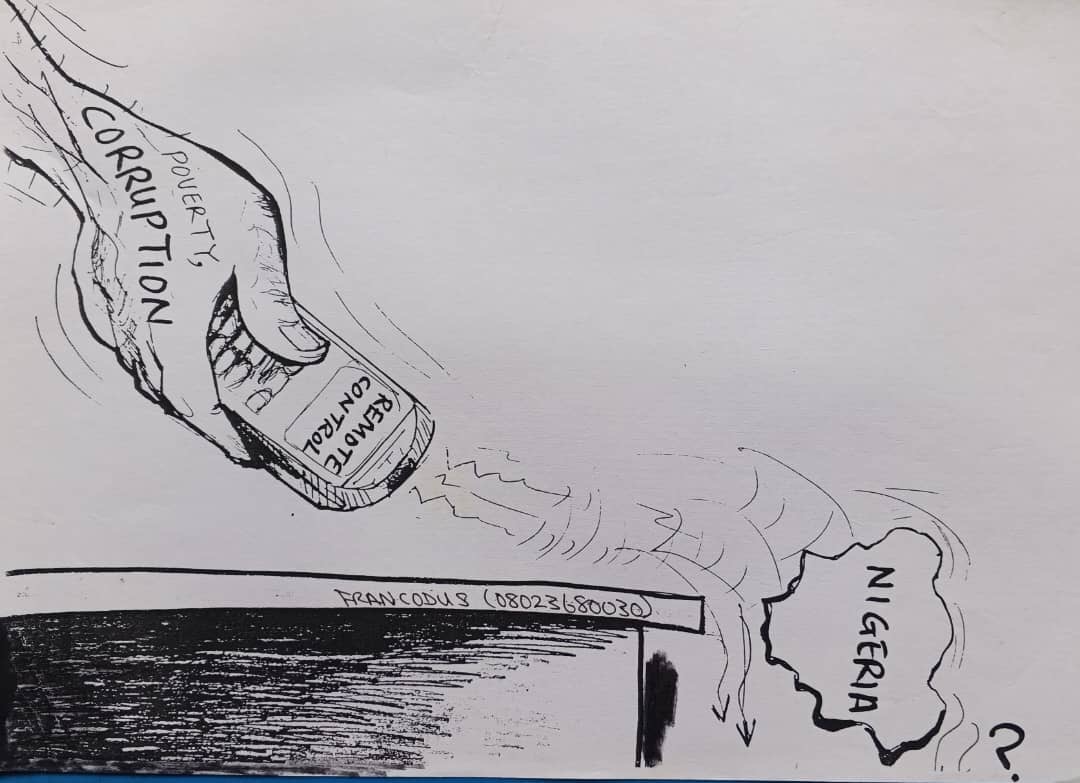
In a country where history is non-existent and politicians don’t celebrate history and those that made history, certainly, people like late Pa Orlando Martins would live in the labyrinth of shadows. It is a culture that has become a philosophy within the doors of Nigeria powers, irrespective of who walks through it adorned with all elements of principalities and powers. It is a cultural philosophy, that even an emeritus professor of history would be affected by once given any form of political powers to preside over in Nigeria. However, history will remember us for not remembering history.
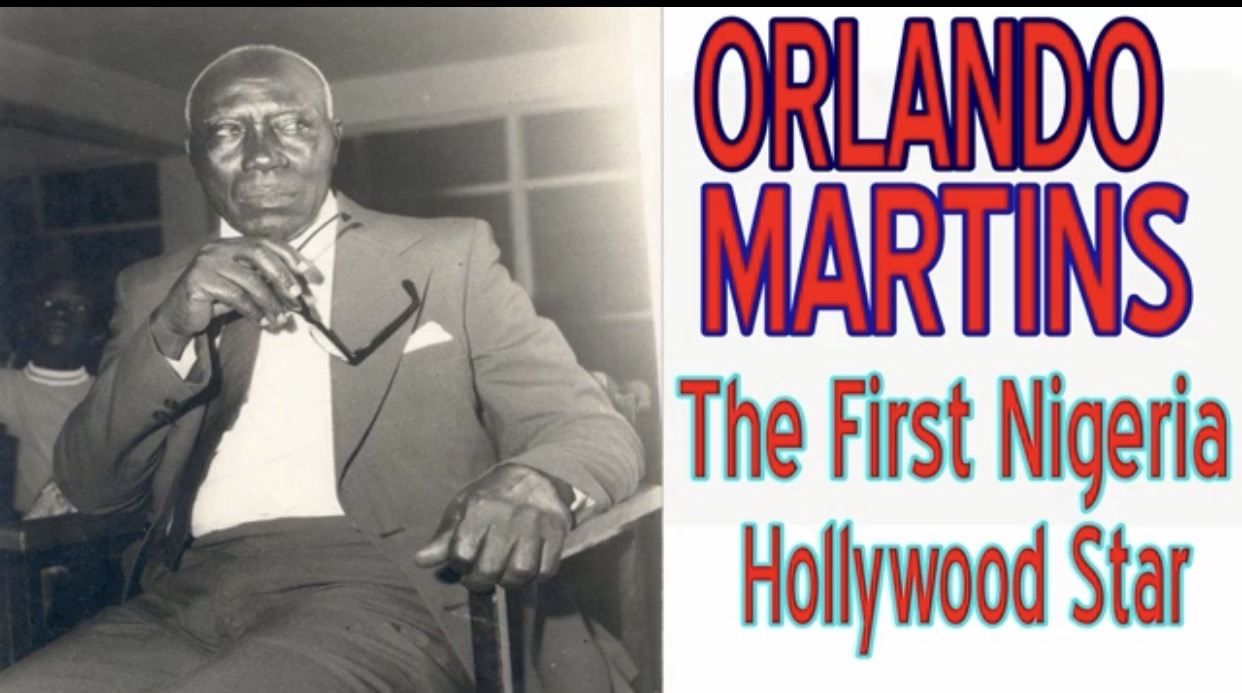
However, do not forget that history has it long before now, before the frantic hum of digital cameras seized and defined the bustling streets of Lagos, Benin City, Enugu, Asaba, Kano, Port Harcourt, Ogun etc, before the term Nollywood was coined and became a global shorthand for African cultural industry, and well before the contemporary generation of Nigerian filmmakers began commanding multi-million-naira streaming budgets, there was a voice. Not a still small voice. It was a voice that did not merely speak but reverberated. It was a rich, cavernous, unforgettable baritone that commanded the attention of London’s West End, Hollywood’s elite directors, and post-war global cinema audiences. That voice belonged to late Pa Orlando Martins.
Born Emmanuel Alhandu Martins in Lagos on December 8, 1899, this creative titan of the screen would go on to become Nigeria’s first globally recognized film icon. I got to hear that name and lucky to watch one of his films as a kid. I was more concerned with seeing an African on screen acting far better than his white colleagues. To me, l saw him as a better actor. Whether it’s because l could relate with him made the difference then is a matter for another day. Yet, to view Martins merely as a historical footnote or a trivia answer to the question of “Who was Nigeria’s first international actor?” is to fundamentally misunderstand his legacy. Pa Orlando Martins was not just a participant in global cinema; he was a creative pioneer who actively laid the psychological, artistic, and structural foundations for what would eventually become the Nigerian film industry. Many may argue this same way many argued with me as a kid that no Nigerian actor has acted on the international film stage. They even attempted to convince me then that Pa Orlando was an American. However, his influence then led to an enduring blueprint for creative resilience, material authenticity, and the uncompromising pursuit of cultural dignity and philosophy.
To understand Martins’ unique but profound influence on Nigerian cinema, one must first look at the crucible in which his artistry was forged for the world to see. Leaving Nigeria as a teenager in 1917 amidst the geopolitical chaos of World War I, Martins however, survived the harsh, racially stratified realities of post-Edwardian London through sheer, unyielding grit. Many within his age group then would understand how difficult it was for a man who is not white skinned to attract attention from these people. He tried many things just to survive the harsh reality of life as a growing man. He was a stoker in the Merchant Marine, a night watchman, a circus snake-handler, and even a professional wrestler billing himself as “Black Butcher Johnson.”
When Pa Orlando finally broke into the British entertainment scene as an extra in the 1920s, you can imagine how the cinematic landscape was deeply hostile to this African persona. The reasons are not hidden because, the global screen then was widely dominated by colonial narratives that reduced Black characters to subservient, fearful, or comical caricatures. These Black characters were nameless extras whose sole purpose was to validate the colonial gaze for all to see without them being seen.
Martins as a growing up youth with the Nigerian spirit was resolute. He refused to bow to the limitations harshly facing him. With his towering physical frame and an innate, regal composure, he subverted every reductive script handed to him the Nigerian way. By the time he co-starred with African-American icon Paul Robeson in Sanders of the River (1935) and Toussaint Louverture (1936), Martins was already modeling a new kind of Black performative presence, the type that steeped in gravity, intelligence, and an undeniable command of the space he boldly occupied.
His breakthrough as “Blossom” in the 1949 Hollywood film The Hasty Heart, alongside Ronald Reagan and Patricia Neal, proved to the world that an African actor could carry the emotional weight of a major Western production. That in itself was a huge achievement. In a famous 1947 poll, British filmgoers voted him among England’s top 15 favorite actors. Now he was a voice not hidden in the shadows anymore, so the Britons instantly laid claim to him. He was to them now a British actor instead of a Nigerian actor. This was more than a personal triumph for him and to Africans. We may not know it, but his resilience was a radical disruption of the global cinematic hierarchy. It sent a powerful message back home to Nigeria, that the African identity was no longer a caricature but a profound cinematic subject.
When Martins made the definitive choice to return home to a newly independent Nigeria in 1959, he did not return merely to retire and bask in the twilight of his international fame. Instead, he brought back a wealth of institutional knowledge, a sophisticated understanding of international style and process of production standards, and an unwavering commitment to nurturing local talent.
The 1960s and 1970s were creatively transitional and formative decades for Nigerian cultural expression. As our country Nigeria grappled with defining its post-colonial identity, Nigerian arts became the battlefield for self-determination. I can still remember a slim part of that history as a little boy. Pa Martins, maybe without his knowing it, became the vital bridge between the classical international stage and the burgeoning Nigerian celluloid era. He immediately integrated into the local creative ecosystem, offering mentorship to younger actors, playwrights, and directors who were trying to build a distinct Nigerian cinematic voice from scratch. How can such a voice be silenced?
His later career choices in Nigeria perfectly mirror this commitment to national self-definition. He chose to collaborate with the country’s leading literary and theatrical minds then. In 1970, he starred as Dr. Gbenga in the film adaptation of Wole Soyinka’s biting political satire, Kongi’s Harvest, directed by Ossie Davis. As if inspired or motivated by the previous production, the following year, he delivered a masterful performance as Obierika in the screen adaptation of Chinua Achebe’s seminal masterpiece, Things Fall Apart. By intentionally anchoring these foundational Nigerian cinematic texts with his legendary presence, Pa Martins did something extraordinary. He deliberately legitimized the young domestic film industry. He clearly demonstrated that the same actor who had shared screens with Audrey Hepburn in The Nun’s Story (1959) had found the greatest creative fulfillment in interpreting the unique stories of his own people.
Aside from his formidable acting talent, Orlando Martins’ influence extends deeply into the aesthetics and material culture of Nigerian filmmaking. Having worked in major British and American studio systems, Martins understood that cinema is a visual language where every prop, every costume, and every set design speaks volumes about the dignity of the subjects on screen.
During his prime years in European cinema, Martins frequently fought behind the scenes against the inaccurate, generalized, and souvent degrading set dressings used to depict African life. When he returned to Nigeria, he championed a philosophy of scenographic authenticity. He urged local filmmakers and theater practitioners to look inward, to meticulously study and preserve the material culture of Nigeria’s diverse ethnic groups, and to present them on screen without Western filters.
This insistence on visual truth heavily influenced the art direction of early Nigerian celluloid experiments. Martins understood that if Africans did not control the visual texture of their own stories, the world would continue to view them through a distorted lens. Today, as contemporary Nigerian filmmakers invest heavily in period pieces, detailed set styling, and authentic cultural representation, they are walking a path that Pa Orlando cleared decades ago. He taught the industry that our material culture—our attire, our architecture, our sacred spaces—is not mere exotic background decoration; it is the very soul of the narrative.
Pa Martins proved that to be globally relevant, an artist does not need to erase their identity, since their identity is their greatest asset. He was a founding member of efforts in the UK to establish a formal foundation to showcase Black talent which demanded multifaceted, dignified roles at a time when such advocacy was dangerous to one’s career. This same spirit of collective advocacy and global ambition is the lifeblood of today’s Nigerian entertainment industry. The tenacity Martins displayed while wrestling as “Black Butcher Johnson” just to pay for his theater auditions is the exact same hustle that fuels the modern independent Nigerian filmmaker. We may not know this but Pa Orlando bequeathed to the Nigerian creative industry a legacy of defiance, a bold refusal to accept the margins, to be silenced, but a deep belief that African talent belongs on the grandest stages of human storytelling.
Sadly, Pa Orlando Martins passed away on September 25, 1985, at the age of 85 in Lagos, and left behind a nation that was just beginning to realize the full potential of the cinematic seed he had planted. His recognition as a Member of the Order of the Niger (MON) in 1982 and his honorary life membership in the British Actors’ Equity Association were well-deserved laurels for a life spent in service of artistic excellence.
For the modern Nigerian film stakeholder in the African creative economy, whether a film festival director curating films for international audiences, a playwright formatting a script for maximum emotional impact, a film award organizer or a researcher analyzing the strategic growth of regional cinema, always remember that Pa Orlando Martins remains the ultimate reference point. Ultimately, he is the North Star of Nigerian cinema.
As the Nigerian film industry continues to evolve, adapting to new technologies and conquering new creative frontiers, it must constantly look back to the towering figure of Pa Orlando. His legacy is a timeless reminder that cinema, at its absolute best, is an act of cultural freedom. He went out into the world as a lone pioneer, conquered the global screen on his own terms, and returned home to hand the torch to the generations that followed. It is a torch that will continue to burn brightly forever, illuminating the creative path for African actors and their unique stories to capture the imagination of the entire world.