Many who have had a glimpse of what the film industry in Nigeria is like, in regards to acting and filmmaking may not yet know its impact on the African cinema and others. The fluidity, character psychology, space cum scenery interrelationship are seen as normal; a thing within us only seen by others, like us on stage or screen. To every Nigerian, Nigeria is a screen, a stage; and we? Actors in various roles taking the interpretations of any form of slice of life within our grasp and stretching it beyond us to others as art in motion.
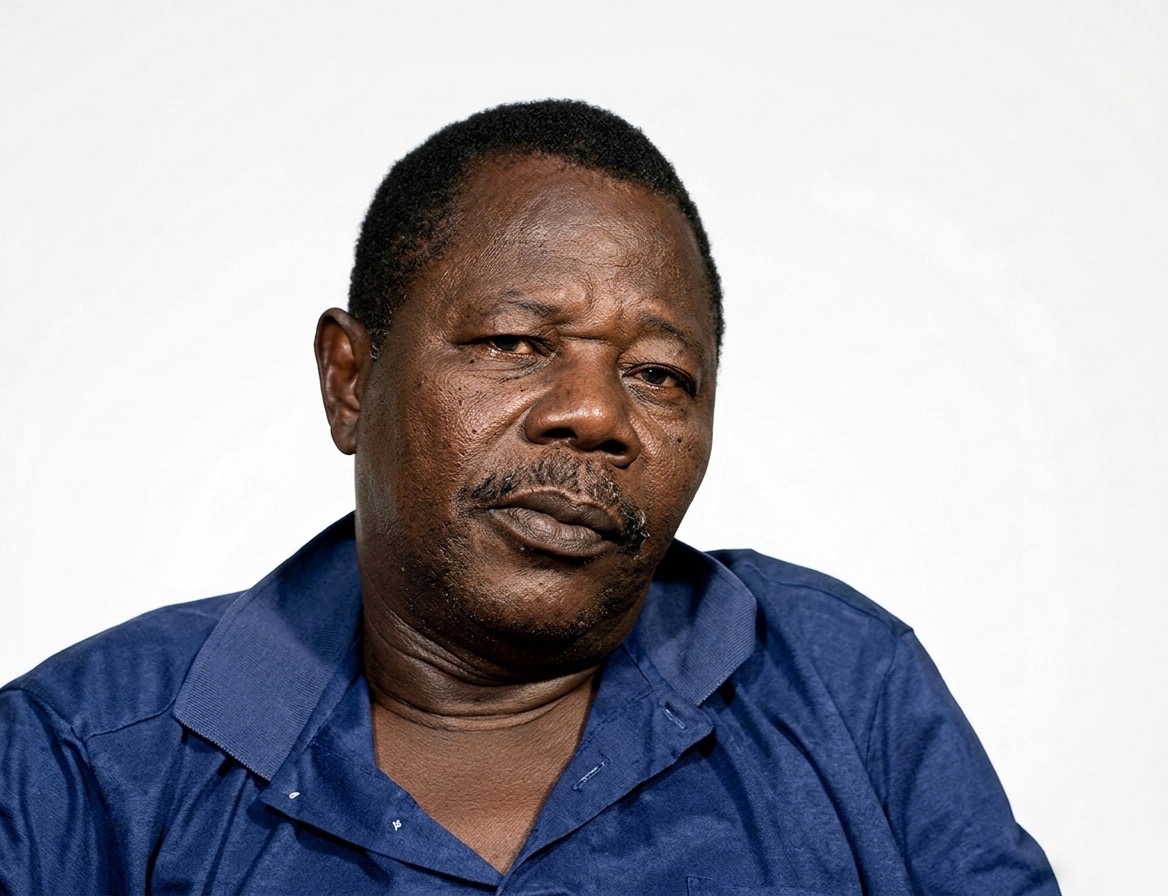
Therefore, the history of contemporary African cinema cannot be written without a dedicated, expansive chapter on some actors who are costumed differently from others, yet with acting methods more uniquely outstanding than others. Late Sam Loco Efe was in that league. Born in Enugu but raised in the multicultural hub of Benin City, a true Edo born with Benin blood in his veins. He actually hails from Utekon village in Edo State, even though he spoke so many languages. Pa Sam Loco Efe (1945–2011) remains one of the most compelling enigmatic forces in Africa and the Nigerian film industry, popularly known as Nollywood. While he is widely celebrated as a comic virtuoso whose unique linguistic dexterity birthed countless numerous memes and unforgettable punchlines; reducing his creative legacy to mere comedy without showing to all his height of artistic talent does a profound disservice to his artistic genius. Pa Sam Loco Efe was, in every sense of the term, a quintessential Method Actor. If you doubt me, try talk to those who watched him on stage in the play Langbodo, his acting skills as a traveling actor or watch his roles on screens and then tell me what l should call an actor whose acting style is reflective of a discipline psychological framework that solely aims for internal truth rather than just gimmicks directed at extreme behaviour or hidden behind the strength of costumes. He was an actor who possessed a rare, immersive capacity to inhabit characters so thoroughly, that the boundary usually felt by the audiences between the performer and the performance dissolve entirely.
For those lucky to have watched the unforgettable moments in which Pa Sam Loco Efe gave life to the lead character, Akara Ogun in Pa Dapo Adelugba’s play Langbodo, during the Second World Black and African Festival of Arts and Culture (FESTAC ’77) in Lagos State, Nigeria, would know that there are many under-discussed or mentioned feats of Pa Sam Loco Efe before he extended his steps of creativity to Nollywood. It was an international event and among the international observers of Nigeria’s cultural masterpiece was Queen Elizabeth II. Surprisingly, Pa Sam Loco’s exceptional and unique delivery and control of stage dynamics earned him a rare, highly coveted special mention from the Queen herself. She commended him as one of the finest actors on the African continent. That was not flattering but fact. This royal recognition at that time, not only solidified Pa Sam Loco’s status as a national treasure but, also served as an early international validation of the depth and sophistication of Nigerian artistry. How too quickly we forget, because we always allow history to remember us for never remembering history. If not, shouldn’t such a name be celebrated as our national treasure?
To understand Sam Loco’s alignment with Method Acting, a technique traditionally associated with the psychological immersion that was well popularized by Konstantin Stanislavski and the American Lee Strasberg, we must intentionally look beyond Western institutional definitions. Pa Sam Loco Efe during his sojourn on earth, practiced an organic, culturally rooted variant of this Method. Sit and take your mind back to the various roles he played from stage to screen and you would realize that his acting style was not born out of formal Hollywood workshops, but from a deeply rooted, observant engagement with the Nigerian societal archetypes. These attributes were enhanced by his rigorous stage discipline, and his unparalleled mastery of performance dynamics. You cannot miss this while he is on stage acting or filming for the screen.
Long before the Nigeria film industry stepped to celluloid and later digital video, Pa Sam Loco had already honed his craft on the theater stage. His foundational years in traveling theater troupes and landmark stage productions went a long way to shaped his character integrity. For Pa Sam Loco, any acting role was not just a costume to be worn and discarded at the director’s “cut”, while makeup is quickly wiped off. To him, every role was a life with breath, while his space was a psychological battleground that demanded absolute surrender. To me he was a wonder actor whose Method acting was the development of a character’s internal monologue with unique external expression. This is felt and seen through his mastering and revolutionary use of language whether on stage or screen. He weaponized his usage of vocabulary to construct the social status, moral compass, and psychological state of his characters rather than just merely delivering them as many actors would do.
Whether he was delivering high-sounding English words to mock a pretentious academia, or manipulating raw, localized Pidgin English to portray a scheming village elder, the language was always structurally tied to the character’s psyche. His name constantly re-echoed more in homes, beer parlours, hotels, on the streets when people remembered him in roles where he played an impoverished, recalcitrant father. You easily noticed the shift in his physical posture, as his gait became heavy, his eyes moved with a perpetual, desperate scanning of his surroundings, and his voice took on a raspy, defensive edge from a mouth bent to one side of his face all in the bid to deliberately impose a statement on his viewers.
I still remember him in the film Ikoka, Where l was the Director of Photography as directed by Peddie Okao: Pa Sam Loco was the conscience of the village in Ikoka community, with strong control of respect from the villagers for standing on the side of truth even though not rich. Truth made him richer than the richest liar. Whenever he is portrayed as a community drunkard in other films, Sam Loco does not rely on the cliché of staggering around. Instead, he moves with the gaiety of one in charge of his movement. He channeled the deeper psychological reality of the character, the unnoticed fast slurred but sharp-witted insights of a man who used alcohol as a shield against societal failures.
His level of understanding the essence of making minute details take front stage in productions, surely require an intense emotional memory, psychological substitution, and core tenets of Method Acting. He actually drew from the real-world frustrations, its silent joys, as well as the idiosyncrasies of the post-colonial Nigerian working class, thereby mirroring them back to the audience with unapologetic realism.
I do not think any director, whether stage of screen has seen him stepped out of his character’s shoes to deliver a joke. If the audience laughed, it was not because Sam Loco was trying to be funny; it was because the character he inhabited was reacting to a situation in a way that was so uniquely human, flawed, and absurd that comedy at that point in time became inevitable. He treated comedic scripts with the same poise, gravity, emotional stakes, and psychological depth that others reserved exclusively for high drama and films.
Sam Loco Efe’s dedication to character immersion, just same way it was easy for his name to be mentioned without a “Mr.”, fundamentally elevated Nollywood’s acting standards during its formative boom in the 1990s and 2000s. However, in an era where rapid production schedules often forced actors to play superficial versions of themselves, Sam Loco stood as a colossus, a bastion of creative artistry and excellence. He proved that even within the constraints of low-budget films, an actor could still achieve profound artistic depth.
We may not know this yet, but his legacy is a masterclass for contemporary African actors. He triggered in us that Nigerian cinema did not need to copy Western cinematic tropes in order to achieve any form of psychological realism.
If history was fair to the arts in Nigeria, many like Sam Loco Efe would remain monuments. Their places of burial ought to be mausoleums here history would stand tall and look straight into people eyes, because their existence are irreplaceable as people like him are titans of the African stage and screen. To label him simply as a comedian is to miss the magnificent scope of his genius. He was not just a trailblazer, but one who instinctively practiced the highest form of Method acting, adapting it to the rhythms, nuances, and soul of Nigerian storytelling like a professional ballet dancer. As an actor, his absolute commitment to character truth went beyond entertainment, leaving behind a blueprint of artistic integrity that would continue to inspire generations of filmmakers, and actors across the globe. I do hope we all remember history if it doesn’t remember people like Pa Sam Loco Efe.