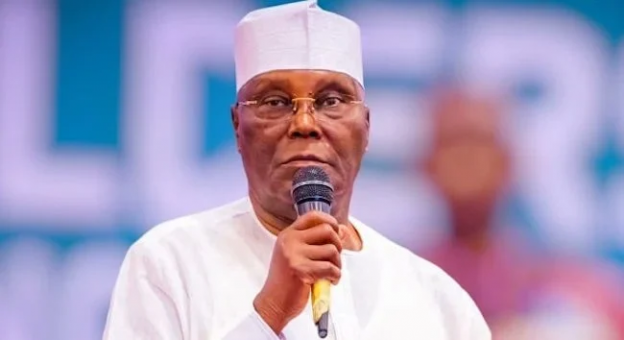
ABUJA – The Federal Government has rejected calls by former Vice President Atiku Abubakar for the restoration of petrol subsidy, insisting that there will be no going back on the removal of the subsidy introduced by President Bola Tinubu in 2023.
The government said reversing the policy would undermine reforms already carried out in the petroleum sector and could create serious legal and fiscal complications for the country.
It also warned that bringing back the subsidy could discourage investment in domestic refining and undermine the progress being made by major refineries, including the Dangote Refinery and other modular refineries operating across the country.
Reacting to Atiku’s proposal to restore petrol subsidy if elected president in 2027, the Special Adviser to the President on Information and Strategy, Bayo Onanuga, described the plan as retrogressive, fiscally unsustainable and a product of what he called “desperation to win the presidency.” Onanuga said Nigeria’s petroleum landscape had changed fundamentally since Tinubu announced the removal of the subsidy, stressing that the country could not afford to return to a system that placed a heavy burden on public finances.
The Presidency maintained that the reforms were designed to reposition the petroleum sector, encourage domestic refining and reduce the financial pressure associated with subsidising petrol consumption.
The government’s position was further supported by the Minister of Finance and Coordinating Minister of the Economy, Taiwo Oyedele, who disclosed that the removal of petrol subsidy had generated N15.8 trillion in resources for the federation between June 2023 and December 2025.
According to Oyedele, N5.4 trillion of the amount accrued to the Federal Government, while N10.4 trillion was shared among state and local governments. President Tinubu also criticised Atiku’s proposal, describing it as evidence of what he considered a lack of understanding of governance and the economy.
The President made the comment while receiving Osun State Governor Ademola Adeleke at the State House recently, insisting that returning to petrol subsidy would not provide a sustainable solution to the country’s economic challenges.
Atiku, who is a major contender for the presidency ahead of the 2027 general election, has promised to restore petrol subsidy if elected, arguing that Nigerians have not enjoyed sufficient benefits from its removal. The former vice president had supported the removal of the subsidy during the 2023 presidential campaign but has now made its restoration a major part of his proposed economic intervention.
He argued that the funds saved from subsidy removal had not translated into improved living conditions for ordinary Nigerians, particularly in terms of food affordability and purchasing power.
Atiku proposed a new intervention centred on domestic refining, with government support capped, properly budgeted and tied to verifiable production and measurable benefits for consumers.
According to Atiku, every barrel of crude allocated under his proposed arrangement would be targeted and tracked to ensure that Nigerians benefit directly from the intervention.
He maintained that his proposal should not be regarded as a return to the opaque subsidy system of the past but as a controlled mechanism aimed at supporting Nigerian refineries while ensuring that the benefits of cheaper crude feedstock are passed on to consumers.
However, financial expert and President of the Capital Market Academics of Nigeria, Prof. Uche Uwaleke, said the debate should go beyond the immediate attraction of cheaper petrol. Uwaleke said Nigeria should focus on finding the most economically sustainable way to use its limited public resources to improve citizens’ welfare over the long term, warning that the old subsidy regime had created opportunities for arbitrage, smuggling, rent-seeking and other sharp practices.
Prof. Ken Ife, a global financial analyst and development economist, also faulted calls for a blanket return to petrol subsidy, arguing that Nigeria could not resolve its economic and fuel challenges through artificial reductions in pump prices.
He said returning to a consumption-driven subsidy regime would recreate the distortions, inefficiencies and fiscal leakages that had historically affected the Nigerian economy.
According to Ife, government should focus on subsidising production rather than consumption, adding that borrowing money to finance petrol subsidy would create further problems for the country.
Meanwhile, a civil servant, Ibrahim Abbas, said many Nigerians had expected the removal of subsidy to generate sufficient revenue for the government to accelerate infrastructure development and improve the economy. He said civil servants had instead experienced worsening economic hardship, declining purchasing power and uncertainty surrounding the implementation of the new minimum wage, factors which he said could make Atiku’s proposal attractive to ordinary Nigerians.
A retired civil servant, Sule Aliu, also lamented the impact of the economic situation on retirees, saying the period since the removal of petrol subsidy had been particularly difficult for people who depend on fixed incomes.
Recall that President Tinubu announced the removal of petrol subsidy on May 29, 2023, shortly after taking office, a decision that pushed petrol prices from below N200 per litre to above N1,000 in some periods and contributed to higher transportation, food and other living costs.
While the Federal Government continues to defend the policy as necessary for economic reform and fiscal sustainability, Atiku maintains that Nigerians have yet to feel meaningful benefits from the savings generated by subsidy removal.
The renewed debate has therefore placed petrol pricing, domestic refining, government revenue and the welfare of Nigerians at the centre of the political conversation ahead of the 2027 presidential election.
President Tinubu also criticised Atiku’s proposal, describing it as evidence of what he considered a lack of understanding of governance and the economy.
The President spoke while receiving Osun State Governor, Ademola Adeleke, at the State House, insisting that returning to petrol subsidy would not provide a sustainable solution to Nigeria’s economic challenges.
Atiku, a major contender for the presidency ahead of the 2027 general election, has promised to restore petrol subsidy if elected, arguing that Nigerians have not enjoyed sufficient benefits from its removal.
The former vice president, who supported subsidy removal during the 2023 presidential campaign, said the savings from the policy had not translated into improved living conditions for ordinary Nigerians, particularly in food affordability and purchasing power.
He proposed an intervention centred on domestic refining, with government support capped, properly budgeted and tied to verifiable production and measurable benefits for consumers.
Atiku said every barrel of crude allocated under his proposed arrangement would be targeted and tracked to ensure that Nigerians directly benefit from the intervention.
He also argued that his proposal should not be confused with the opaque subsidy regime of the past, but should instead operate as a controlled mechanism for supporting Nigerian refineries while ensuring that the benefits of cheaper crude feedstock are passed on to consumers.
However, financial expert and President of the Capital Market Academics of Nigeria, Prof. Uche Uwaleke, said the debate should go beyond the immediate attraction of cheaper petrol.
Uwaleke said Nigeria should focus on finding the most economically sustainable way to deploy its limited public resources to improve citizens’ welfare over the long term.
He warned that the former subsidy regime had created opportunities for arbitrage, smuggling, rent-seeking and other sharp practices.
Similarly, global financial analyst and development economist, Prof. Ken Ife, faulted calls for a blanket return to petrol subsidy, arguing that Nigeria could not resolve its economic and fuel challenges through artificial reductions in pump prices.
Ife said a return to a consumption-driven subsidy regime would recreate the distortions, inefficiencies and fiscal leakages that had historically affected the economy.
He advised the government to focus on subsidising production rather than consumption, warning that borrowing to finance petrol subsidy would create additional economic problems.
Meanwhile, a civil servant, Ibrahim Abbas, said many Nigerians had expected subsidy removal to generate sufficient revenue for the government to accelerate infrastructure development and improve the economy.
Abbas, however, said civil servants had instead faced worsening economic hardship, declining purchasing power and uncertainty over the implementation of the new minimum wage, factors he said could make Atiku’s proposal attractive to ordinary Nigerians.
A retired civil servant, Sule Aliu, also lamented the impact of the economic situation on retirees, saying the period since subsidy removal had been particularly difficult for people dependent on fixed incomes.
President Tinubu announced the removal of petrol subsidy on May 29, 2023, shortly after assuming office. The decision pushed petrol prices from below N200 per litre to above N1,000 in some periods and contributed to increased transportation, food and other living costs.
While the Federal Government continues to defend the policy as necessary for economic reform and fiscal sustainability, Atiku maintains that Nigerians have yet to feel meaningful benefits from the savings generated by subsidy removal.
The renewed controversy has consequently placed petrol pricing, domestic refining, government revenue and the welfare of Nigerians at the centre of the political debate ahead of the 2027 presidential election.