…as dry season knocks
Nigeria’s dry season which typically lasts for five months (from November to March) is setting in, bringing with it concerns and prospects around food production, transportation and prices, in a year which has seen charges for both essentials rising astronomically and impacting cost of living.
The dry season also highlights the condition of Nigeria’s 195,000-kilometre network of roads,(65 percent of which are unpaved) which are softened, sometimes into disrepair by torrential rains, impacting transportation and the cost of goods and services, especially food.
The dry season also opens a window for reconstruction and repair of roads and for evaluation and impact of similar work done in the previous season.
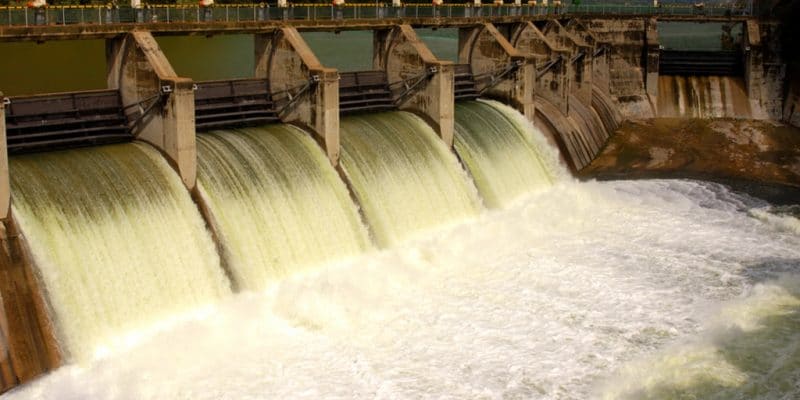
Of particular concern as this year’s dry season kicks off is the extent of the deployment of Nigeria’s 264 dams for irrigation as the Federal Government undertakes to ramp up food production by boosting dry season farming under the National Agricultural Growth Scheme Agro-Pocket (NAGS-AP) Project.
The First Phase of the Dry Season Farming was launched in November 2023. It focuses on the cultivation of wheat across 15 wheat-producing states, covering 118,657 hectares and involving 107,429 farmers.
Phase 2 of the Dry Season Farming was tipped to cut across all 36 states of Nigeria and Federal Capital Territory (FCT) and cover staples including rice, maize, and cassava.
For rice, the target is 250,000 hectares involving 500,000 farmers with the expected output of 1 million metric tons of paddy rice, according to information from Mr. Bayo Onanuga, Special Adviser to the President on Information and Strategy.
For maize, the target is 55,000 hectares with 110,000 farmers, thereby adding 165,000 metric tons to national maize production, while for cassava, the target is 35,000 hectares with 70,000 farmers to produce 525,000 metric tons of cassava.
However, industry watchers think government needs to ramp up action on the deployment of the nation’s 264 dams for farm irrigation to facilitate year-round cultivation and harvests.
The Federal Government had said last October that it had concluded arrangements to partially commercialise all the dams under the nation’s 12 river basins to enable them effectively deliver their mandates.
Prof. Joseph Utsev, Minister of Water Resources and Sanitation, had disclosed this while addressing newsmen shortly after inspecting the Tiga Dam in Bebeji Local Government Area of Kano State, but little has been heard of the project since then.
The minister had said that the commercialisation of the basins would enable them to generate more revenues for the Federal Government.
He gave the assurance that the huge infrastructure available at the basins would guarantee a return on investments.
Utsev explained that the exercise would ensure sustainable operations and management of the infrastructure at the dams.
“The basins have huge infrastructure like water supply schemes, dams, and irrigation that require good funding to be able to keep them running and to provide dividends for Nigerians,” he said.
He said the Federal Government was ready to partner with commercial farmers to pave the way for massive production of assorted food crops in an all-year farming system.
Meanwhile, industry groups have said that better attention to the nation’s 264 dams which are currently poorly applied to crop irrigation would open a window to increasing food production and lowering prices.
“Farmers in Nigeria have been impacted by the lack of access to water to the extent that there is no real enabling environment for sustainable all-year-round agricultural production in the entire country,” said Ibrahim Kabiru, national president of the All Farmers Association of Nigeria.
Despite the push for increased local food production, most dams across the country are still dysfunctional and irrigation schemes are not working, Kabiru said.
Experts say Nigeria’s several dams will boost food production, lower prices to table and reduce dependency on food imports if properly serviced and managed.
They add that food production would increase significantly, as cultivation and harvesting could be conducted twice a year for some crops and three times a year for others, especially as many crops grown in the country, including maize, beans, tomatoes and other fruits, vegetables and some varieties of legumes mature in three months.
They say that dams that provide irrigation year-round would further attract investment into mechanised farming and food processing from home and abroad, as well as create jobs and encourage foreign exchange earnings from food and other farm produce exports.
Furthermore, they say, there would then be opportunities and incentives for increased levels of fish farming.
“The farmers will be better served by improvement in the utilisation of existing dams than even building new ones,” Kabiru said.
Nigeria has a total of 264 dams with a combined storage capacity of 33 billion cubic metres (BCM) of water for multipurpose uses, of which 210 are owned by the Federal Government, 34 by the states, and 20 are owned by private organisations, according to the Federal Ministry of Water Resources.
AfricanFarmer Mogaji, chief executive officer of X-Ray Farms, said majority of the few operating river basins cannot access water because most of their canals have been blocked by sand, such that the water flowing through for farmers has been reduced by more than half.
Industry watchers say while this problem can be quickly and cheaply resolved by basic servicing, the benefits are immense.
“There are river basins shut out from thousands of acres of farmlands because the people did not desilt it, and these are concrete canals that just need to be desilted,” said Mogaji.
“Some dams also need funding as they have some of their parts collapsed,” he noted.
Mogaji also said that budgetary allocations to water resources for maintenance of canals are trimmed at the Senate because the people occupying the ministry seats are usually not experts, players, or professionals.
A document on the Federal Ministry of Water Resources website states that the country’s irrigation land potential is about 3.1 million hectares out of which only 150,000 hectares have been developed.
Abiodun Olorundero, managing director, AquaShoots Limited, said most of the dams in the southwest region are not functioning.
“I have visited between three to four dams that are not active. The Oyan dam in Ogun State is only active for fishing activities and I wonder who gets the returns on such activities,” Olorundero said.
“It’s obvious the government and its personnel can’t manage this infrastructure. So, there should be a proper bidding process for private investment with the capacity to run an efficient water process to add value to agriculture and human existence,” he added.