Abuja – The Niger State Government has taken the Attorney-General of the Federation and Minister of Justice to the Supreme Court over its exclusion from the 13 per cent derivation fund allocated to resource-producing states.
In an originating summons filed by its counsel, Mohammed Ndarani, SAN, the state is seeking judicial interpretation of Sections 232 (1) and (2), as well as 162(2) of the 1999 Constitution. It is also requesting inclusion under the Allocation of Revenue (Federation Account, etc.) Act, 2004.
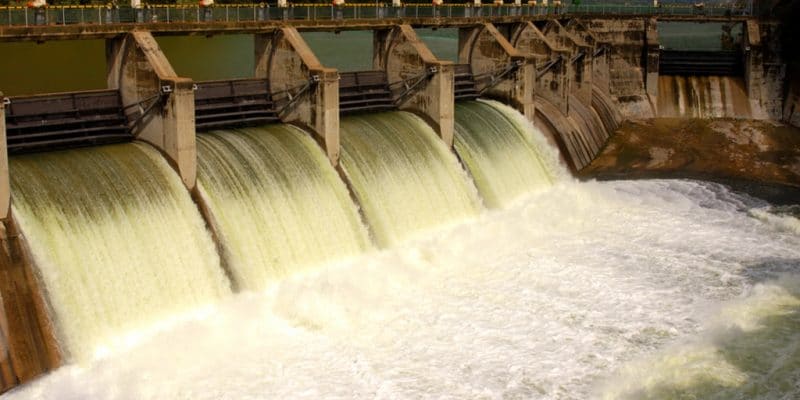
The state argues that despite being host to four major hydroelectric dams—Kainji, Jebba, Shiroro, and Zungeru, it has been denied its rightful share of the derivation fund, which is constitutionally allocated to states that produce natural resources.
According to the suit, the federal government has consistently failed to recognise Niger State as a resource-producing state, even though electricity generated from its territory contributes significantly to the national grid and is also exported to neighbouring countries, including Niger Republic, Benin, and Togo.
Ndarani said the Attorney-General was named as a defendant due to his statutory responsibility of providing legal advice to the Accountant-General, Auditor-General, and the Revenue Mobilisation Allocation and Fiscal Commission, bodies directly involved in the allocation and disbursement of federal revenue.
He accused the federal government of failing to ensure equitable resource distribution, particularly in light of the significant revenue generated from Niger State’s hydroelectric facilities since 1968.
The state also contends that the occupation of vast land areas by the dams has rendered large portions of farmland unusable, affecting the livelihoods of residents who are predominantly subsistence farmers.
Ndarani said Niger State has suffered recurrent flooding as a result of these dams, leading to loss of lives, destruction of property, and displacement of communities.
He cited an environmental assessment conducted by the state government, which revealed significant degradation in affected areas and warned of further risks if urgent protective measures are not implemented.
He further claimed that the federal government has continued to profit from electricity generation in Niger while neglecting its host communities.
He added that no programme has been initiated by the National Environmental Standards and Regulations Enforcement Agency (NESREA) to mitigate the environmental impact or address the suffering of affected residents.
According to the state’s findings, the National Bureau of Statistics has no electricity generation data from the dams between 1968 and 2019, but available figures show that total megawatts fed into the national grid were 2,232,706.27 in 2020, 2,632,348.00 in 2021, 2,830,002.96 in 2022, and 2,658,612.96 in 2023.
The state is asking the court to recognise it as a contributor to the Federation Account through hydroelectric power generation and to declare it entitled to the 13 per cent derivation fund.
Ndarani argued that failure to do so amounts to continuous exploitation, institutional neglect, and deepening poverty in the region.
He concluded that despite Niger’s immense contribution to national energy supply, its people continue to live in misery, without compensation or remediation for the environmental and economic costs they bear.