Kelly Odaro
Airports are not just points of entry and exit for travellers; they are highly regulated spaces where security is paramount, and order is sacrosanct. Every rule, every protocol, and every layer of security clearance is designed with a singular goal — to protect lives and ensure the smooth running of air travel. Yet, in the past week, two separate incidents in Nigerian airports have called into question our collective attitude towards discipline, respect for rules, and the seriousness with which we view security protocols in such sensitive locations.
Within the space of a few days, two Nigerians — the legendary Yoruba musician, King Wasiu Ayinde Marshal, popularly known as Kwam 1, and a woman identified as Comfort Emmanson — made headlines for all the wrong reasons. Both incidents, though different in nature, are bound by a disturbing thread: a blatant disregard for airport regulations and the dignity of airline or security staff. If such acts are not swiftly addressed, they could set a dangerous precedent that erodes public discipline in our airports and, ultimately, pose a greater risk to national security.
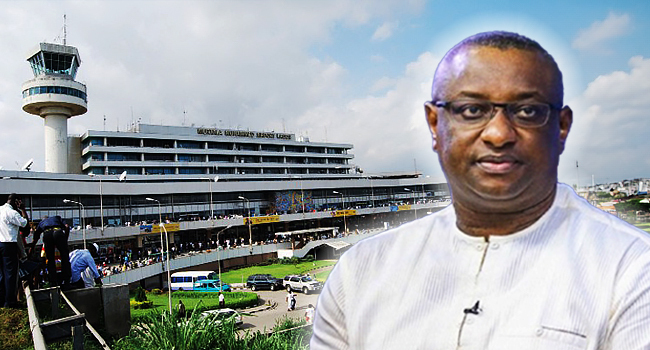
Although the two offenders have been pardoned — Kwam 1’s six-month no-fly sanction has been reduced to one month, and he has been appointed Airport Ambassador by President Bola Ahmed Tinubu, while Comfort Emmanson has also been released from prison with the case against her dropped — they were both recalcitrant.
Kwam 1 is no stranger to fame. His mastery of Fuji music has earned him a loyal fan base spanning decades. But fame, as the saying goes, comes with responsibility. Unfortunately, recent reports from the Nnamdi Azikiwe International Airport in Abuja suggest that the celebrated musician allowed his celebrity status to overshadow basic compliance with airport procedures. According to accounts, he allegedly breached established protocols — a serious matter in any airport, let alone in a country grappling with complex security challenges.
Reports say that on August 5, 2025, Kwam 1 was involved in an altercation at the Nnamdi Azikiwe International Airport, Abuja, while attempting to board a ValueJet flight to Lagos. The dispute began when he carried a flask onboard, which aviation staff suspected contained alcohol — a prohibited substance on domestic flights in Nigeria. When staff requested that he surrender the flask, Kwam 1 refused. He then reportedly moved to block the aircraft from taxiing, escalating the confrontation.
Whether the breach was born out of impatience, a sense of entitlement, or simply poor judgment, it sends the wrong message. The unwritten implication is that celebrities or influential personalities can operate above the law. That is a dangerous mindset, one that undermines not just the authority of airport officials but the entire security framework designed to protect all travellers, regardless of their status.
Barely had the dust settled on the Abuja incident when another arguably more disturbing episode occurred at the Victor Attah International Airport in Akwa Ibom. In this case, a woman identified as Comfort Emmanson was filmed physically attacking airline staff. The video, now widely circulated on social media, shows a brazen display of aggression — shouting, shoving, and disregarding all sense of decorum.
It is one thing to lodge a complaint about poor service; it is quite another to resort to violence in an environment where composure is critical. Airports are stress points, no doubt. Delays, ticketing issues, and cancellations can test anyone’s patience. But when passengers cross the line into physical confrontation, the matter is no longer about customer dissatisfaction — it becomes a security concern.
Two incidents in two separate airports within the same week might sound coincidental, but they point to something deeper: a brewing culture of lawlessness and impunity creeping into spaces where order should be non-negotiable. The phrase “something terrible is trending” is not mere hyperbole. Trends begin with isolated acts that go unaddressed or are treated lightly until they grow into norms.
The danger here is that if these acts of indiscipline are not swiftly punished, they will embolden others to follow suit. Today, it may be a celebrity bypassing screening protocols or a frustrated passenger attacking airline staff. Tomorrow, it could be a coordinated attempt to bypass security checks for more sinister purposes — smuggling contraband, endangering lives, or even facilitating acts of terrorism.
The fallout from these incidents was swift. The Airport Operators of Nigeria (AON), in collaboration with relevant aviation authorities, had imposed a lifetime no-fly ban on Comfort Emmanson for her physical assault on airline staff at the Victor Attah International Airport. This sanction meant she would no longer be allowed to board any commercial flight within the country, effectively grounding her ability to travel by air for life. Such a measure is rare in Nigeria’s aviation history, underscoring the seriousness with which the operators view acts of violence within airport premises. However, the government, through the Aviation Minister, later waded in to resolve the imbroglio, and she was pardoned.
For Kwam 1, the consequence, though less severe, was still significant. The celebrated musician had been handed a six-month suspension from air travel for his breach of protocol at the Nnamdi Azikiwe International Airport. This meant that for half a year, he would be unable to perform at events or attend engagements requiring domestic air travel unless he resorted to alternative means of transportation. While some may argue that this penalty was lenient compared to Comfort Emmanson’s lifetime ban, it nonetheless sent a clear message: no one is above the rules that govern aviation security. Again, the Fuji maestro has since been pardoned, and the sanction reduced to one month no-fly.
The imposition of these sanctions represents an important turning point for Nigeria’s aviation sector. For far too long, breaches of airport protocol, especially by high-profile individuals, have been met with mild warnings or quiet settlements, often swept under the rug to avoid public controversy. This new wave of decisive punishment signals a shift towards stricter enforcement, where both ordinary passengers and celebrities are held to the same standard of conduct.
It is also a step towards restoring public confidence in the system. Passengers and airport staff alike must know that their safety is protected by rules that are consistently applied, not selectively enforced. The credibility of any security framework rests on fairness and the certainty that misconduct will attract proportionate consequences, regardless of the offender’s social standing. These bans, therefore, serve not only as punishment but also as deterrence.
However, while punitive action is essential, it should be complemented by preventive measures. Airport authorities must invest in staff training, customer service improvements, and public sensitisation campaigns. Passengers should be reminded that airports are highly sensitive environments where indiscipline and violence will not be tolerated. The media also has a role in educating the public about these new sanctions so that the deterrent effect is fully realised.
If sustained, these measures could mark the beginning of a cultural change in Nigeria’s airports. A move from tolerance of disorder to an uncompromising insistence on discipline, decorum, and respect for the rules. In a country where law enforcement is often accused of double standards, the lifetime ban on Comfort Emmanson and the six-month suspension of Kwam 1 stand as rare but welcome examples of equal justice under the law. They are precedents worth protecting for the sake of both security and the nation’s image.
Some may dismiss these incidents as mere ‘celebrity drama’ or ‘passenger meltdown,’ but such dismissals reveal a troubling complacency. Every breach of protocol, no matter how small, chips away at the structural integrity of airport security. Rules in aviation are designed not to inconvenience passengers but to safeguard them.
It is certain or undeniable that airport management and airline employees also have negative traits and shortcomings or engage in wrong behaviour at times.
The moment they begin to normalise indiscipline in our airports, they weaken the chain of security. And as any security expert will say, a chain is only as strong as its weakest link. If high-profile individuals can flout rules without consequences, ordinary travellers will follow suit, and those with malicious intent will exploit the chaos.
The culture of according special treatment to celebrities and influential figures has long been a problem. From skipping queues to receiving ‘soft’ enforcement of rules, many famous personalities are unaccustomed to being told “no.”
Airport authorities sometimes shy away from taking decisive action against offenders, especially when they are public figures, for fear of backlash or political interference.
Flight delays, overbooking, poor customer service, and lack of clear communication can drive passengers to the edge. While these do not justify violence or misconduct, they contribute to tensions. The virality of such incidents often rewards bad behaviour with attention, indirectly encouraging copycats.
Nigerian airports operate within a complex security environment marked by threats ranging from smuggling to terrorism. The country has battled with insurgency, militancy, and kidnapping; air travel remains a critical infrastructure that must be protected at all costs.
When individuals, whether celebrities or everyday travellers begin to undermine airport authority, it sends a signal to potential criminals that enforcement is lax. Breaches of protocol could open windows of opportunity for the infiltration of dangerous items, the bypassing of security checks, or even the compromise of restricted areas.
Internationally, countries that have experienced terrorism often trace the failure back to lapses in basic procedures. The “it’s no big deal” attitude has no place in airport security.
In many developed nations, airport rules are enforced with zero tolerance. A celebrity caught breaching security protocols at Heathrow or JFK would face immediate consequences, from hefty fines to temporary bans and, in some cases, criminal charges. Similarly, passengers who assault airline staff in Singapore’s Changi Airport or Dubai International can expect swift arrest and prosecution.
Whether you are a musician, a politician, or an ordinary traveller, the rules must apply equally. Security officers must be empowered to enforce regulations without fear or favour.
To mitigate this chaos in our airports, frontline workers in airports should receive training in conflict de-escalation and be backed by strong legal protections against assault.
Besides, Nigerians must understand that airports are not marketplaces or event centres; they are high-security environments where self-control and respect for rules are mandatory. While misconduct is inexcusable, airlines must address systemic issues that provoke passenger frustration, such as chronic delays and poor communication.
As members of the Fourth Estate of the Realm, the mass media have a responsibility not just to report such incidents but to frame them within their broader implications. This is not about embarrassing Kwam 1 or Comfort Emmanson. It is about warning the public that such acts, if left unchecked, could spiral into something far more dangerous. The media must resist the temptation to treat these incidents as mere viral entertainment. Instead, they should be framed as teachable moments for the entire nation.
It is also worth noting that our airports are the first and last impressions many visitors have of Nigeria. If disorder, arrogance, and violence are allowed to become the norm, the damage to our national image will be incalculable. Tourism, investment, and international trust all suffer when a country’s airports are perceived as chaotic and unsafe.
What happened in Abuja and Akwa Ibom should not be dismissed as isolated acts of bad behaviour. They are warning signs of a deeper cultural problem. One that, if allowed to fester, could have severe consequences for Nigeria’s security and international reputation.
We cannot afford to normalise lawlessness in our airports. Every infraction, no matter who commits it, must be met with appropriate consequences. That is how we maintain order, deter would-be offenders, and safeguard the lives of millions who depend on air travel.
The trend is dangerous, but it is not irreversible. By taking decisive action now, rooted in fairness, transparency, and zero tolerance for indiscipline, Nigeria can protect its airports from becoming breeding grounds for chaos.
In matters of aviation security, there are no small breaches. Every act counts, every rule matters, and every offender must be held accountable. Let us remember: it is always easier to prevent a fire than to put it out.
Odaro, a columnist, lectures in the Department of Mass Communication, Auchi Polytechnic, Auchi.