BY PROF. VIOLET AIGBOKHAEVBO
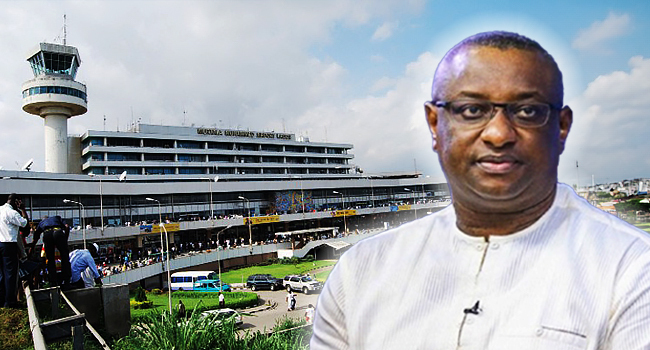
Nigeria’s civil aviation industry is central to the nation’s economic growth and development, providing essential transportation for people, goods, animals and services. With 31 airports, 92 airstrips and heliport, the sector renders domestic, regional and international services.
Yet, corruption, impunity and poor enforcement of regulations continue to plague airline operations. Issues around passengers’ rights, treatment of offenders, and enforcement of sanctions for breaches remain fragmented and inconsistent. A lack of professionalism among airline staff and airport authorities has exposed the sector to public ridicule and eroded confidence in governance.
Driven by insecurity on Nigeria’s highways, armed robbery, kidnapping, inter-communal clashes and other violent crimes, more citizens are turning to air travel. This shift has exposed airlines and crew to a wider range of passengers, including errant behaviour. At the same time, it has fuelled rising airfares and the proliferation of new airlines without a corresponding improvement in customer service delivery.
Passengers routinely complain of arbitrary hikes in fares, flight rescheduling and cancellations for vague “operational reasons,” missing luggage, rudeness from airport staff and inadequate consideration for their welfare. These challenges are further compounded by poor sanitation oversight. Overcrowded airports, littering by passengers, and misuse of facilities, even where bins and water are available, have overwhelmed staff capacity, falling short of global standards.
Resentment among passengers has grown steadily. Many feel shortchanged despite ever-increasing fares, especially as airlines continue to breach schedules with impunity. This frustration often spills into unruly conduct: refusal to switch off electronic devices when instructed, attempting to board with overweight hand luggage, stampeding to the aircraft door before it opens, and ignoring row-by-row disembarkation procedures, actions that irritate crew and compromise order.
Uncertainty around flight schedules also fuels tension. Some passengers arrive late, sparking altercations and heated exchanges at check-in counters. Others dash across tarmacs to catch flights after check-in has closed. Delays to allow celebrities or VIPs to board, as well as poor communication around cancellations, are also common triggers for disputes.
In recent months, three high-profile incidents have highlighted the deepening crisis:
1. June 11, 2025 – Adams Oshiomhole: Senator Adams Oshiomhole, former Governor of Edo State, arrived at Lagos airport at 6:10 a.m. for a 6:30 a.m. Air Peace flight to Abuja. Boarding had closed and the flight departed as scheduled. The Senator accused the airline of racketeering, discriminatory treatment and insensitivity to passengers’ welfare. Air Peace countered, alleging he assaulted staff and disrupted operations by sealing off the terminal entrance. The Minister of Aviation and Aerospace Development opened an investigation, but the findings and possible sanctions are yet to be made public.
2. August 5, 2025 – Wasiu Ayinde (Kwam1): Popular musician Wasiu Ayinde, popularly known as Kwam1, was intercepted at Abuja airport while drinking from a flask suspected to contain alcohol as he attempted to board a ValueJet flight. Asked to surrender the flask, which he claimed contained medication, he refused and allegedly spilled its contents on crew members. He became unruly, blocked the aircraft’s path on the tarmac, and prevented take-off. In response, the pilots proceeded to fly despite the disruption, a move described as reckless, given the risks to lives on the ground. The licence of the pilot, Captain Oluranti Ogoyi, was suspended. Kwam1 was banned from flying locally and internationally pending investigation, which was referred to the Attorney General of the Federation and the Inspector General of Police. The ban was later reduced to one month, and in a surprising turn, Kwam1 was appointed Airport Security Protocol Ambassador.
3. August 10, 2025 – Comfort Emmanson: Comfort Emmanson, a passenger on an Ibom Air flight from Uyo to Lagos, reportedly refused to switch off her phone during take-off. On arrival at Murtala Muhammed International Airport, Lagos, she assaulted cabin crew, attempted to seize a fire extinguisher, and further attacked Ibom Air security personnel and Federal Airports Authority of Nigeria (FAAN) officials. She was forcibly dragged off the aircraft, handed over to police, charged to court and remanded at Kirikiri Correctional Centre, Lagos. Ibom Air also reported her to the Nigerian Civil Aviation Authority (NCAA) and imposed a no-fly restriction. However, police later dropped the charges and she was discharged.
These incidents underscore the absence of a coordinated and consistent framework for addressing misconduct in the aviation sector. It is therefore imperative to intensify enlightenment campaigns for both passengers and crew on aviation standards, with particular emphasis on the dignity of the human person, a right enshrined in Nigeria’s constitution. Failure to do so risks further damaging the global reputation of the country’s aviation industry.
The Civil Aviation Act, 2022 expressly prohibits disruptive behaviour on aircraft, including unruly conduct and interference with crew. Section 85 prescribes penalties of N200,000, two months’ imprisonment, or both. Similarly, Part 19 of the NCAA Regulations (NCAR), 2023 provides consumer protection standards, stipulating passengers’ rights and airlines’ obligations. Compliance, however, has been unimpressive, fuelling frustration and self-help by both passengers and staff.
The Federal Airports Authority of Nigeria (FAAN) has by-laws regulating safe and orderly conduct within airports, ensuring an enabling environment for efficient airline operations. On the international front, the International Civil Aviation Organisation (ICAO), through Annex 17 to the Chicago Convention, prescribes Standards and Recommended Practices (SARPs) on aviation security. These global rules safeguard passengers, crew, personnel and the public from unlawful interference in civil aviation, and Nigeria is expected to align with them.
Going forward, it is critical that the rule of law and due process be consistently applied in resolving breaches of aviation regulations, regardless of the offender’s social standing. Selective enforcement only fuels impunity. At the same time, criticisms of airline and airport staff for poor handling of misconduct must be seen in the broader context of Nigeria’s prevailing culture of defiance, the “no gree for anybody” attitude that now permeates public life.
As the drama around air rage continues with no clear standards of infraction and punishment, the critical question remains: will Nigeria’s aviation sector embrace the lessons necessary for order and professionalism, or will the cycle of impunity and misconduct continue unchecked?