There are moments in the life of a nation when leadership rises above rhetoric and translates compassion into policy. Such moments remind citizens that governance, at its core, is not about power, prestige, or patronage, but about people.
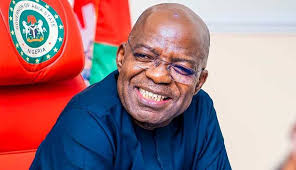
One such moment recently emerged from Abia State, where the Governor, Alex Oti, signed into law the Senior Citizens Bill — a bold and humane initiative designed to provide monthly financial support and healthcare benefits for men and women aged 60 and above. It is an act that deserves not merely commendation, but replication.
I have often imagined a Nigeria in which every state government takes seriously the welfare of its elderly population. A Nigeria where growing old is not a descent into poverty, neglect, and indignity, but a phase of life supported by the state in recognition of decades of contribution to society. If Abia State can initiate such a framework, why not Lagos? Why not Kano, Rivers, Kaduna, or Edo? Why not the Federal Government itself?
The true measure of any government is revealed in how it treats its most vulnerable citizens — the elderly, the infirm, and the poor. In many advanced democracies, state support for senior citizens is not regarded as charity; it is a social contract. Citizens pay taxes during their productive years, and in return, the state provides a safety net when age diminishes earning capacity.
In countries such as the United Kingdom, the elderly are supported through state pensions and comprehensive healthcare under the National Health Service. In the United States, Social Security benefits and Medicare ensure that older citizens are not abandoned to the harsh uncertainties of the marketplace. Across parts of Europe and Asia, similar welfare frameworks exist, designed not as political gimmicks but as enduring pillars of governance.
These are what we often refer to as ‘saner climes’. Societies where the dignity of the human person is not contingent upon wealth, political access, or familial connections. Nigeria, unfortunately, has not fully embraced this ethos.
In our country, ageing is frequently accompanied by hardship. Many elderly Nigerians, especially those outside the formal employment sector, have no pension scheme to rely upon. Years of labour — in farms, markets, small businesses, and public service often culminate in financial insecurity. For countless senior citizens, survival depends on the goodwill of children and extended family members, who themselves may be struggling within an unforgiving economic climate.
Inflation, rising healthcare costs, and the erosion of family support structures have compounded the vulnerability of the elderly. What was once sustained by communal bonds is now strained by urbanisation, unemployment, and economic instability. It is against this sobering backdrop that Governor Alex Oti’s decision assumes profound significance.
By signing the Senior Citizens Bill into law, Governor Oti has signalled that governance can be compassionate without being reckless; visionary without being utopian. The legislation recognises that citizens who have crossed the age of 60 deserve more than ceremonial acknowledgement on national holidays. They deserve material support — a monthly stipend that guarantees a measure of economic stability, and healthcare coverage that ensures access to medical services without catastrophic out-of-pocket expenses. This is not extravagance. It is justice.
For decades, Nigeria’s political discourse has been dominated by infrastructure — roads, bridges, flyovers, and buildings. While such projects are necessary, development must be people-centred. A glittering edifice cannot substitute for a grandmother who cannot afford medication. A monumental gateway cannot console a retired civil servant whose pension has been delayed for months or years. Development that excludes the elderly is development without soul.
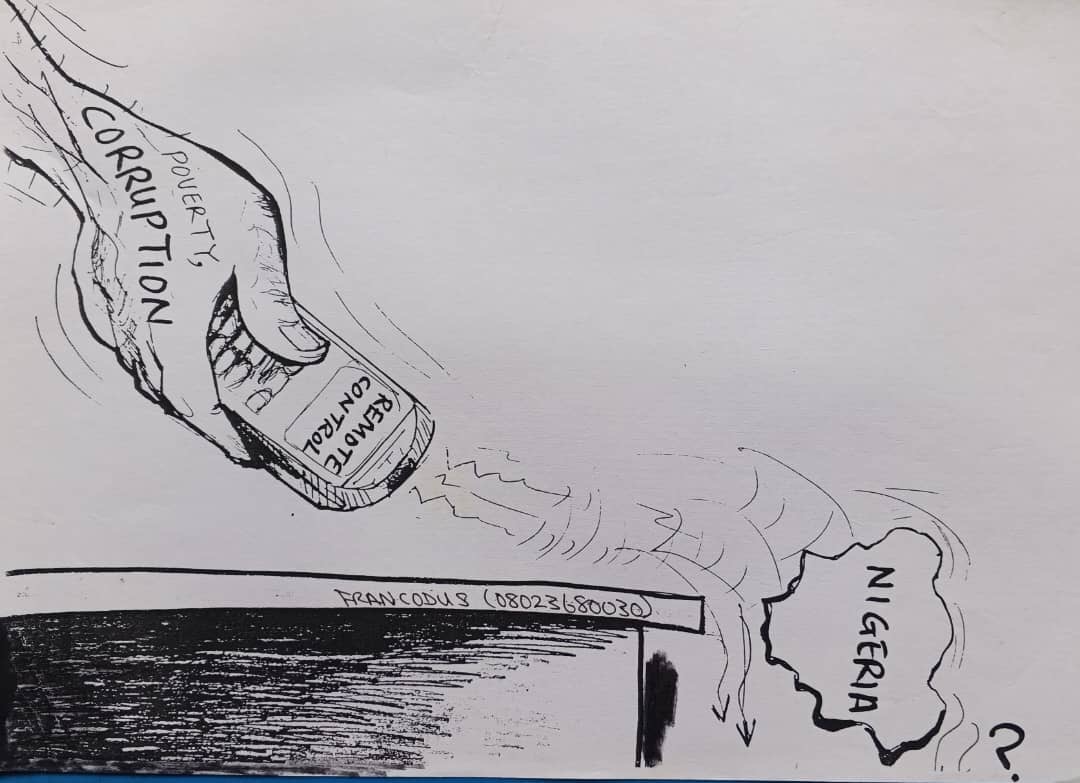
Nigeria is not a poor country; it is a country with misplaced priorities. Each election cycle, billions of naira are spent on campaigns, logistics, and political mobilisation. Public office holders live in opulence, often insulated from the economic realities faced by ordinary citizens. Convoys multiply. Government houses expand. Overseas medical trips continue unabated.
Meanwhile, elderly citizens queue under the scorching sun for verification exercises that determine whether they will receive pensions already owed to them. One must ask: is this the best we can do?
Several Nigerian political leaders possess the financial and administrative capacity to implement welfare schemes similar to that of Abia State. Yet, instead of institutionalising support systems, some prefer to amass wealth, acquire properties abroad, and stash public funds in foreign accounts. The moral contradiction is stark: a political class enjoying unprecedented luxury in a nation where senior citizens die in penury.
Governor Oti’s initiative challenges this culture of indifference. Critics may argue that such welfare programmes are financially unsustainable. However, this perspective often ignores the broader socio-economic benefits of social protection.
Firstly, providing a monthly stipend to elderly citizens stimulates local economies. Senior citizens spend primarily on essentials — food, medicine, utilities thereby injecting money into small businesses and local markets.
Secondly, access to healthcare reduces preventable complications and hospital admissions. Early treatment and preventive care are far less costly than emergency interventions.
Thirdly, a welfare scheme strengthens social cohesion. Citizens who see tangible benefits of governance are more likely to trust institutions and participate constructively in civic life. Thus, caring for the elderly is not an act of fiscal recklessness; it is an investment in stability.
The Senior Citizens Bill in Abia should not be reduced to partisan celebration. It should provoke a national conversation about the architecture of social security in Nigeria. Why do we not have a comprehensive, enforceable framework that guarantees basic income and healthcare for senior citizens nationwide?
The National Assembly, state houses of assembly, civil society organisations, and policy think tanks must engage seriously with this question. The issue transcends party lines. Ageing is universal; every citizen who lives long enough will eventually confront its realities. The absence of structured support for the elderly exposes a fundamental weakness in our social contract.
Traditionally, African societies placed enormous emphasis on filial responsibility. Children were expected to care for ageing parents. While this cultural value remains admirable, economic realities have rendered it insufficient as a standalone solution.
Youth unemployment, migration, and the high cost of living mean that many adult children struggle to provide even for their nuclear families. It is unrealistic and unfair to expect private households alone to shoulder responsibilities that modern states elsewhere have institutionalised. The role of the state is not to replace family structures, but to complement them.
In politics, legacies are often measured by monuments and megaprojects. Yet, history has shown that the most enduring legacies are those that touch lives directly. Social security reforms, educational expansion, and healthcare improvements often outlive the leaders who initiated them.
Governor Alex Oti’s decision positions him not merely as an administrator, but as a reformer attentive to intergenerational justice. Whether one agrees with all his policies or not, this particular initiative sets a benchmark. Other governors should feel challenged, not threatened by it.
What would it take for other states to emulate Abia? Firstly, state assemblies must enact clear, transparent laws outlining eligibility, funding mechanisms, and accountability structures. Secondly, funds wasted on non-essential expenditures can be redirected towards welfare schemes. Thirdly, accurate records of senior citizens are essential to prevent fraud and ensure proper targeting. Fourthly, regular audits and civil society oversight can safeguard the programme from abuse. If implemented thoughtfully, such schemes can become sustainable pillars of governance.
Ultimately, the debate over elderly welfare is a test of conscience. It compels leaders to ask whether public office is a platform for personal enrichment or a vehicle for collective upliftment.
Nigeria stands at a crossroads. Economic hardship has deepened inequality. Trust in institutions has eroded. Citizens yearn not merely for promises, but for policies that demonstrate empathy.
The elderly — those who built our roads, tilled our soil, taught in our schools, staffed our hospitals, and defended our nation deserve more than applause on ceremonial occasions. They deserve security.
I have a dream that one day, every state in Nigeria will have the likes of Governor Alex Oti; that every state will rise to the challenge set by Abia State. That governors across the federation will sign into law robust Senior Citizens Bills. That men and women above the age of 60 will receive a guaranteed monthly stipend until death, accompanied by comprehensive healthcare support.
Such a vision is neither radical nor unrealistic. It is, in fact, consistent with global best practice and fundamental human decency.
Leadership is not measured by the height of edifices, but by the depth of compassion. It is not defined by the accumulation of wealth, but by the distribution of opportunity and protection.
Governor Alex Oti has demonstrated that political will can translate into humane governance. The question now is whether others will follow his example or continue to preside over a system in which elderly citizens are left to navigate the twilight of life in uncertainty and want.
I trust that my amiable Governor, Senator Monday Okpebholo, the Akpakomiza, will have the compassion to emulate Governor Alex Oti’s model and bring succour to the people.
____________________________
Odaro, a columnist, lectures in the Department of Mass Communication, Auchi Polytechnic, Auchi.