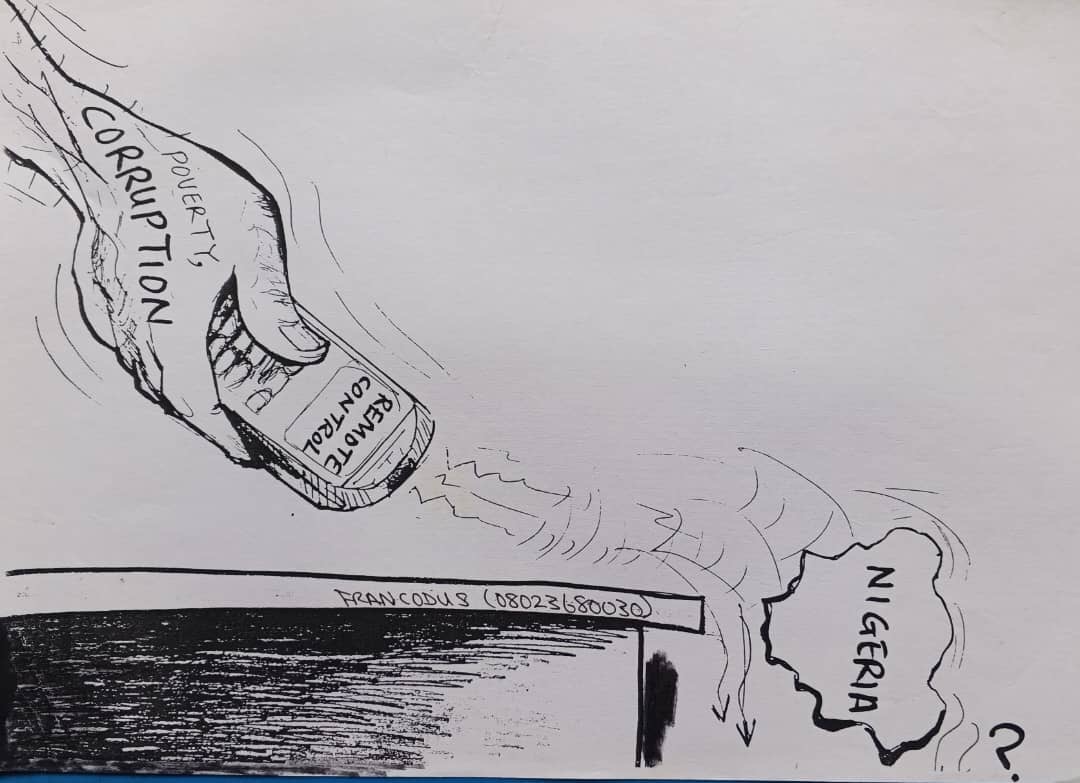
The National Electric Power Authority, later rebranded as the Power Holding Company of Nigeria, and now unbundled into distribution entities such as the Benin Electricity Distribution Company (BEDC), has never truly endeared itself to Nigerians.
Regardless of the nomenclature it has assumed over the years, the story has remained depressingly consistent— poor service delivery, systemic inefficiency, exploitation of consumers, and an almost ritualistic pattern of epileptic power supply.
For some time now, parts of Edo State, particularly within the Benin metropolis, have been plunged into an unforgiving darkness. Entire neighbourhoods go for days, sometimes weeks, without a flicker of electricity. In areas where power supply exists, it is grossly erratic, unpredictable, and insufficient for any meaningful economic activity. The consequences of this persistent blackout are not abstract; they are painfully real, deeply personal, and economically devastating.
Business operators, especially small and medium-scale entrepreneurs, have borne the brunt of this dysfunction. The barber who depends on electric clippers, the welder whose craft is powered by current, the tailor who must meet delivery deadlines, the frozen food seller whose goods require constant refrigeration— all have been forced into a daily struggle for survival.
In the absence of public electricity, they have turned to alternative sources of power, most notably petrol and diesel generators. However, this alternative has become increasingly unsustainable due to the astronomical rise in fuel prices.
The recent surge in fuel pump prices has compounded the already dire situation. Petrol, once relatively affordable, has now become a luxury for many Nigerians. Diesel, which powers larger generators, is even more exorbitant. For business operators, this means a sharp increase in operational costs.
What used to be a manageable expense has now ballooned into a crushing financial burden. Many entrepreneurs spend more on fuel than they do on rent or staff salaries. This is not just economically irrational, it is fundamentally unsustainable.
The ripple effect of this reality is evident across the economy. As the cost of production rises, so too does the cost of goods and services. The baker increases the price of bread because of the cost of powering ovens. The sachet water producer raises prices due to the expense of running generators. The cybercafé operator charges more, while the hairdresser adjusts her service fees upward. In essence, the inefficiency of electricity supply, coupled with rising fuel costs, has triggered a chain reaction of inflationary pressures that ultimately burden the ordinary Nigerian.
What makes this situation particularly troubling is the apparent indifference of those at the helm of electricity distribution. The management of BEDC appears disconnected from the lived realities of the people. There is little evidence of urgency, empathy, or accountability. Instead, consumers are met with silence, excuses, or, at best, vague assurances that rarely translate into tangible improvements.
Even more galling is the persistence of estimated billing— a practice that has become synonymous with exploitation. Despite repeated complaints, regulatory interventions, and public outcry, many households and businesses continue to receive outrageously inflated bills for electricity they did not consume. It is a system that defies logic and undermines trust. How does one justify paying for darkness? How does a company reconcile charging customers for services not rendered?
This practice has not only deepened public resentment but has also reinforced the perception that the system is rigged against the average Nigerian. It is difficult to escape the conclusion that consumers are being taken for granted, if not outrightly exploited. In a civilised society, service providers are held accountable to clear standards. Here, however, inefficiency appears to be rewarded, while consumers are left with little recourse.
Beyond the economic implications, the social consequences of this persistent blackout are equally alarming. Students are unable to study effectively at night, particularly those preparing for critical examinations. Families are forced to endure sleepless nights in poorly ventilated homes, especially during periods of intense heat.
Healthcare services are compromised, as clinics and pharmacies struggle to preserve medicines and operate essential equipment. Security is also affected, as dark streets and neighbourhoods create fertile ground for criminal activities.
In a broader sense, the failure of electricity supply represents a significant barrier to national development. No modern economy can thrive without reliable power. Industrial growth, technological innovation, and digital transformation all depend on a stable electricity infrastructure. By failing to provide this basic necessity, the power sector is effectively stifling progress and undermining the country’s development aspirations.
It is important to note that the challenges facing the power sector are not entirely new. They are the result of years of neglect, poor planning, inadequate investment, and policy inconsistencies.
However, the privatisation of electricity distribution companies was expected to herald a new era of efficiency, accountability, and customer-oriented service delivery. Unfortunately, for many Nigerians, this expectation has not been met. If anything, the situation appears to have worsened in certain areas.
The question, therefore, is not whether the system is broken, it clearly is, but what is being done to fix it. Regulatory bodies must rise to the occasion and enforce compliance with service standards. Electricity distribution companies must be held accountable for their performance, not shielded by bureaucracy or political considerations. There must be transparency in billing, investment in infrastructure, and a genuine commitment to improving service delivery.
Moreover, there is an urgent need to address the issue of metering. The widespread lack of prepaid meters has perpetuated the culture of estimated billing and its associated abuses. Providing consumers with accurate metering is not a privilege; it is a fundamental right. It ensures fairness, promotes accountability, and restores a measure of trust between service providers and consumers.
At the same time, there must be a broader conversation about energy diversification. Nigeria cannot afford to rely solely on a dysfunctional national grid. Renewable energy sources such as solar power offer viable alternatives, particularly in a country blessed with abundant sunlight. Encouraging investment in such alternatives could help alleviate the pressure on the grid and provide more reliable power to underserved communities.
However, while long-term solutions are necessary, the immediate suffering of the people cannot be ignored. Nigerians are enduring a daily ordeal that tests their resilience and patience. The combined effect of unreliable electricity and soaring fuel prices has created a perfect storm of hardship. It is a situation that demands urgent intervention, not rhetoric.
One cannot help but reflect on the irony of the situation. In a nation endowed with vast natural resources, including the capacity for power generation, millions of citizens are forced to live in darkness. Businesses struggle to survive, families are pushed to the brink, and the promise of a better future seems increasingly elusive. It is a contradiction that speaks to deeper systemic issues that must be addressed.
Worst still, customers are compelled to shoulder responsibilities that rightly belong to the electricity distribution company. In many communities, residents contribute funds to procure and install electric poles, purchase cables, and even provide transformers.
What should ordinarily be a basic obligation of service providers has, over time, been transferred to long-suffering consumers, who must organise themselves to secure the most rudimentary infrastructure for power supply.
Ironically, after these facilities have been sourced and installed through communal effort, the BEDC turns around to lay claim to ownership of the very materials it neither funded nor provided. This paradox reflects a deeply troubling imbalance, where those who invest their scarce resources into public utilities are denied both control and due recognition. It raises fundamental questions about fairness, accountability, and the ethics of service delivery.
More troubling is the bureaucratic bottleneck that often accompanies the use of these facilities. Customers are frequently subjected to unofficial demands before basic technical services such as the fusing of transformers are carried out.
These practices not only undermine public trust but also entrench a culture of inefficiency and exploitation within the system. Essential services that should be rendered promptly are instead delayed, pending inducements that have no place in a regulated sector.
The delays in responding to fault reports are equally exasperating. When transformers develop faults or power outages occur, affected communities are left in prolonged darkness, sometimes for days on end, despite having invested heavily in the infrastructure. Calls placed to the appropriate authorities are often met with indifference or sluggish responses, compounding the frustration of already burdened consumers and crippling economic activities in the process.
There is, therefore, little surprise that many view BEDC as a menace rather than a service provider. The combination of neglect, exploitation, and inefficiency paints a grim picture of a system in dire need of reform.
For any meaningful progress to be achieved, there must be a deliberate effort to restore accountability, enforce service standards, and prioritise the welfare of consumers who, for too long, have borne the brunt of systemic failure.
Until meaningful reforms are implemented, BEDC and similar entities will continue to be viewed not as providers of essential services, but as symbols of systemic failure. The label “merchant of darkness” is not merely a rhetorical flourish; it is a reflection of lived experience. It captures the frustration, anger, and disillusionment of a people who have been denied a basic necessity for far too long.
Electricity is not a luxury. It is a fundamental component of modern life. Its absence affects every aspect of human existence, from economic productivity to social well-being. The current state of power supply in Edo State, and indeed in many parts of Nigeria, is unacceptable. It is a situation that calls for urgent, decisive, and sustained action.
The people deserve better. They deserve a system that works, a service that delivers, and a future that is not shrouded in darkness. Until then, the story remains the same— of a people striving for light in the face of unrelenting darkness, and of a system that must either reform or be remembered as one of the greatest disappointments in the nation’s history.
_____________________________
Dr. Odaro, a columnist, lectures in the Department of Mass Communication, Auchi Polytechnic, Auchi.