Religion has, for centuries, served as a moral compass for humanity. It offers meaning to suffering, provides a framework for ethical living, and gives hope to millions navigating the uncertainties of existence. Yet history equally shows that when doctrines are interpreted rigidly or applied without regard for human realities, faith can sometimes become a burden rather than a blessing. Few religious debates illustrate this dilemma more starkly than the long-standing blood transfusion doctrine of Jehovah’s Witnesses.
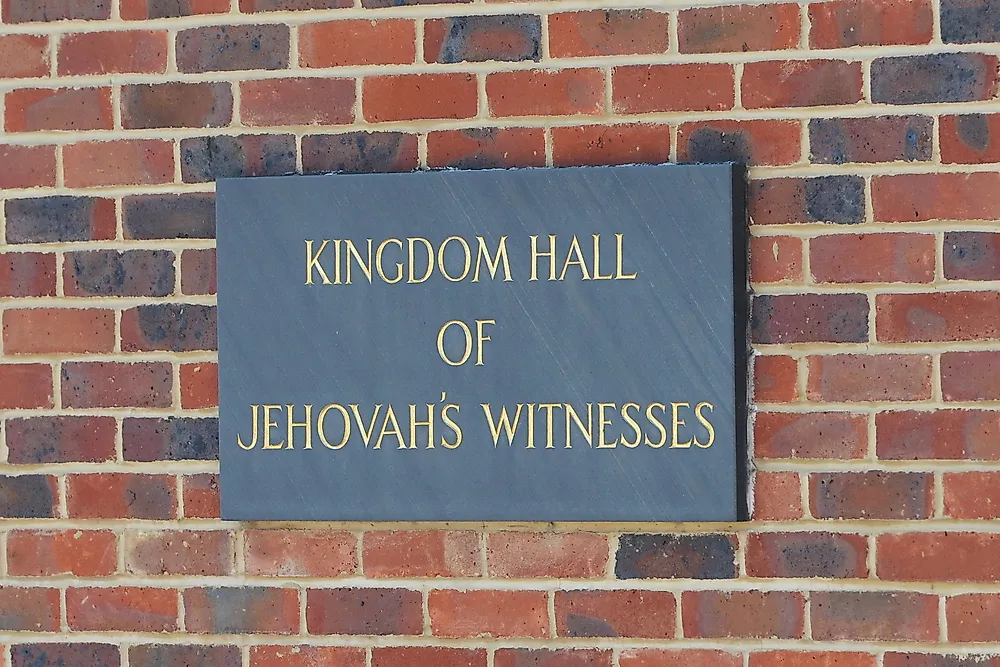
For decades, the denomination has maintained a strict theological stance prohibiting the acceptance of blood transfusions by its members. The policy, rooted in their interpretation of certain passages of the Bible, has meant that adherents are expected to refuse blood even in life-threatening circumstances. To believers within the fold, obedience to this doctrine represents an act of faith and loyalty to divine command. However, to many observers outside the faith, the policy has raised troubling ethical and humanitarian questions.
Recent developments suggest that even within the organisation itself, there may be a gradual reconsideration of certain aspects of this long-held doctrine. The reported review allowing autologous blood storage and transfusion, where an individual’s own blood may be stored and later used for medical purposes, appears to indicate a cautious shift. While the adjustment may seem minor on the surface, it has nonetheless reopened a long-standing conversation about the consequences of rigid doctrinal positions on matters of life and death.
For many critics, the central issue has never been theological debate alone; it has been the human cost. Across different countries, numerous accounts exist of members of the faith who declined blood transfusions even when medical experts insisted that the procedure was necessary to save their lives. In several of these cases, the refusal resulted in preventable deaths— individuals who might have survived had they accepted standard medical treatment.
The controversy becomes even more poignant when examined in the context of developing countries such as Nigeria, where healthcare challenges are already severe. In a system struggling with limited infrastructure, scarce medical resources and rising cases of complex illnesses, the decision to reject life-saving medical procedures can have devastating consequences not only for individuals but also for families and communities.
One particularly heartbreaking case that recently stirred public emotion involved a Nigerian woman, Mensa Omolara, popularly known on X as AuntieEsther, who battled cancer. Her illness had drawn the sympathy of many compassionate Nigerians who rallied together to support her financially, with a whopping sum of N30.7 million raised in December 2025.
The substantial donations were raised to enable her to undergo surgery and treatment that could potentially prolong her life. It was an inspiring demonstration of collective humanity. People of different faiths and backgrounds uniting to save a stranger.
Yet, despite the outpouring of goodwill, the woman reportedly refused a blood transfusion because of her religious beliefs as a member of the Jehovah’s Witness faith.
Medical professionals had emphasised that the procedure was necessary for the success of the surgery. Without it, the chances of survival were dangerously slim. Still, bound by doctrinal conviction, she maintained her refusal. In the end, the worst fears were realised. The young woman succumbed to her illness, leaving behind grieving relatives and a public grappling with a painful question: could her death have been avoided?
The ethical dilemma here is profound. On one hand, freedom of religion is a fundamental human right. Every individual has the liberty to practise their faith and adhere to its doctrines without coercion. Religious diversity is an essential feature of democratic societies, and no state should impose belief systems on its citizens.
On the other hand, when a doctrine directly affects the preservation of human life, it inevitably raises difficult moral questions. Should institutional religious authority possess the power, directly or indirectly, to influence decisions that lead to preventable deaths? Where should society draw the line between respect for faith and the responsibility to safeguard life?
Critics argue that the blood transfusion doctrine of Jehovah’s Witnesses represents an example of theological rigidity that fails to adapt to evolving medical knowledge. Blood transfusion is not a reckless medical experiment; it is a well-established procedure that has saved millions of lives worldwide. From trauma victims and accident survivors to women experiencing severe complications during childbirth, blood transfusion remains one of the most critical interventions in modern healthcare.
To refuse such treatment entirely, critics contend, is to place doctrinal interpretation above the intrinsic value of human life. Moreover, the recent reconsideration of aspects of the policy, such as allowing autologous blood storage, inevitably raises another troubling question: if certain modifications can now be introduced, does this not imply that the earlier restrictions may have been unnecessarily severe?
For families who have lost loved ones over the years, such developments can be emotionally difficult to reconcile. If doctrinal interpretations can evolve today, what does that say about those who died yesterday under the weight of the previous rules?
This is where the debate becomes deeply philosophical. Religious leaders are, after all, human beings. They interpret sacred texts through lenses shaped by culture, tradition and historical context. While believers may view these interpretations as divinely guided, history has repeatedly shown that religious doctrines can and do change over time.
The central concern, therefore, is whether doctrines that carry life-and-death consequences should be subject to deeper scrutiny and compassion.
The case of the Nigerian cancer patient, AuntieEsther, illustrates the tragic tension between faith and survival. Her decision, though personally sincere, was made within a doctrinal environment that strongly discourages blood transfusions. Such teachings often place immense psychological pressure on adherents who fear that accepting blood may be interpreted as disobedience to divine instruction.
For devout believers, the choice is not merely medical; it is spiritual. They may perceive compliance with the doctrine as a test of faith, even when the consequence is fatal. This raises another troubling question: can genuine free choice exist when spiritual consequences are attached to medical decisions?
Critics argue that such circumstances blur the boundary between voluntary belief and institutional influence. When individuals are taught from childhood that accepting blood transfusion could jeopardise their relationship with God, the psychological weight of that belief becomes formidable.
In such situations, declining medical treatment may feel less like a choice and more like an obligation. Beyond individual tragedies, the broader social impact cannot be ignored. Families left behind must live with the emotional aftermath of decisions shaped by doctrine. Children grow up without parents; spouses struggle with grief; communities lose productive members.
While the faith community may interpret such sacrifices as demonstrations of spiritual loyalty, the human consequences remain painfully real.
None of this discussion seeks to ridicule or demonise believers. Members of Jehovah’s Witnesses are widely recognised for their dedication, discipline and commitment to their faith. Many are known for their peaceful conduct, strong family values and diligent evangelism. Their sincerity is rarely in doubt.
However, sincerity alone does not resolve ethical dilemmas. Throughout history, well-intentioned beliefs have sometimes produced unintended harm. When this occurs, moral courage demands a willingness to reassess longstanding assumptions.
Religious institutions, like all human organisations, must periodically reflect on whether their teachings continue to serve the well-being of their adherents. Faith should ideally uplift life, not endanger it.
The emerging shift in policy regarding autologous blood transfusion may therefore represent an opportunity, perhaps even a turning point.
If the leadership of the Jehovah’s Witnesses is willing to reconsider aspects of the doctrine in light of medical realities, it could pave the way for deeper dialogue about the broader issue of blood transfusion. Such dialogue would not necessarily undermine the spiritual integrity of the faith; rather, it could demonstrate compassion and responsiveness to the realities faced by believers in modern society.
After all, the preservation of life lies at the heart of many religious teachings. Most moral traditions emphasise the sanctity of human life as one of the highest values. Compassion, mercy and the alleviation of suffering are principles celebrated across religious boundaries.
It would therefore be tragic if doctrines intended to honour God ultimately resulted in avoidable human suffering. The story of the Nigerian woman who lost her battle with cancer should remain a solemn reminder of the stakes involved in this debate. Her death has become more than a personal tragedy; it symbolises the painful intersection between faith, doctrine and medical necessity.
Perhaps the most haunting question her story leaves behind is simple yet profound: if faith is meant to sustain life and hope, should it ever require a believer to reject the very treatment that could keep them alive?
As societies continue to advance scientifically and medically, religious traditions will inevitably encounter new ethical crossroads. The challenge will always be to balance fidelity to spiritual convictions with the responsibility to protect human life.
For the Jehovah’s Witnesses, the conversation about blood transfusion remains one of the most sensitive and consequential issues in their history. The recent reconsideration of certain policies suggests that change, however gradual, is possible. One can only hope that future reflections within the organisation will continue to place compassion and the value of human life at the forefront.
Because in the end, doctrines may evolve, interpretations may change and institutions may reform but a life lost can never be restored.
___________________________________
Dr. Odaro, a columnist, lectures in the Department of Mass Communication, Auchi Polytechnic, Auchi.