THERE are at least two important things to consider when examining the development trajectory of states when it comes to corruption. The first is that there are different types of corruption less favourably than others. But, this is sometimes misplaced, when it comes to countries like Nigeria, the media assumes that corruption is the only reason for the country’s failure to break past its west middle income status. The assumption appears be that if the billions stolen by corrupt leaders were recovered and invested properly in public services Nigeria would prosper.
There are several problems with this notion. Economic development is not an event occurring at a single point in time. It is an ongoing and dynamic process. If corruption does in fact affect systematic economic performance, we need nuanced analysis to figure out how that happens.
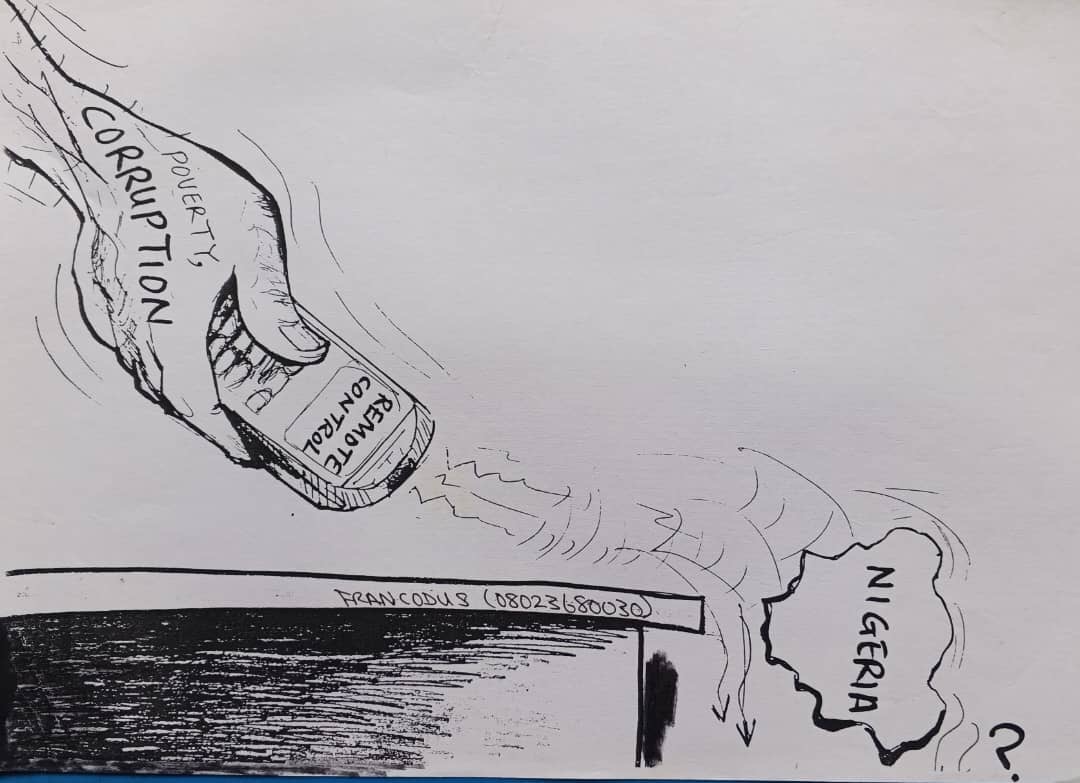
Corruption is the bane of Nigerian socio-economic development which threatens the existence of Nigeria as a political entity, it is therefore imperative that all and sundry should engage in anti-corruption struggle. Corruption is a world wide phenomenon and there hardly any society without one form of corruption or the other. Corrupt practices did not begin today; history is as old as the human race. The menaces called corruption is a big problem in Nigeria. Corruption is indeed a big cankerworm that has eaten deep into the fabric of Nigeria society. It is a monster that all and sundry blame for the economic development of the nation. It is perhaps the only reason why nothing seems to be working. Corruption is indeed threatening the existence of Nigeria as an entity. Nearly every sphere human endeavour is affected by corruption and no profession is speared either even in churches.
Interestingly, successive governments pursued policies against corruption and it was the main reason why the military made incursions into politics. Despite various policies adopted by the government, corruption is every increasing in the country and the world at large. Nigeria is said to have generated huger avenue during this current political dispensation than at other times of her history.
Causes of corruption in Nigeria:
Corruption is caused generally by greed of our political leaders who go abroad and store our money in different accounts so that their children will not get poor even when they leave the positions, lack of positive values, porous system, weak enforcement oversight mechanisms, excessive materialism, societal pressure, lack of virile welfare structures, insecurity of employment tenure, indiscipline, inordinate desire for wealth accumulation (get rich-quick syndrome), poverty of the mind, nepotism (partiality, favouritism, preferential treatment, bias, discrimination etc)and lack of genuine fear of God.
Cost of corruption
If corruption affects a country’s economy, one possible avenue is through transactional costs.
Nevertheless, the type of hard – to calculate corruption practiced in countries like Nigeria likely affect economic growth. The fact that both domestic and international business cannot accurately calculate the cost of doing business in Nigeria makes them jittery at the best of times. Investors and business people put a premium on stability, credibility and predictability.
But that is not as saying that Nigeria is any more corrupt that any other country and that such corruption is the cause of its poor economic development. It is possible that the only difference between the kind of corruption in these Asiain economics and that fond in Nigeria that the former was a more organised form of corruption.
The kind of corruption that takes place in countries like Nigeria is perhaps comparable to patrimonial corrupt practices that were prevalent in feudal Europe and the wars that built it states.
While corruption in itself may not be the sole and simplicity cause of poor economic development there value in the moral repugnance that it elicits among the masses. It is their livehood that are being pocketed by those who neither care for, nor respect, the public fro whom they steal. If the public who suffer the consequences of gross and morality outrageous corruption are outraged enough to be organised. Then political change and development may be one possible outcome.
Effects of corruption to a country
Effect of corruption to the nation in general, to the port system in particular and to us as a people is colossal, for instance; it undermines the national image a corruption ridden country stinks in the country of nations sand meaningful investments cannot be attracted nor developmental cooperation can be established because every Nigerian is viewed as correspond dubious outside. For instance, Nigeria has become consistently ranked among the most corrupt country in the world by transparency international.
It threatens the very survival of a nation as it prevents the provision of basic social amenities for the citizenry. The money meant for development is often pocketed by a few thereby making good governance impossible.
It has affected our health sectors not to talk of our educational institutional. As at today none of the universities in Nigeria is rated among the first 200 in the world and none is rd among the best in Africa.
Corruption generally erodes standards to abysmal level quality of goods and services cannot granted in a corrupt society thereby making Nigeria a savage of dump mentality.
Corruption aggravates unemployment and underdevelopment. Corruption engenders mass poverty and thwart efforts to overcome.
Most infrastructural decay and unsatisfactory provision of amenities can be traced directly or indirectly to corruption. There is a total collapse of power an road network in the country today due to corrupt attitude of past leaders.
Erodes the ethnical base of society, as due diligence, excellence, honesty, merit and integrate discouraged. It breeds all lands of crimes and vandalism, arm robbery, kidnapping, youth agitation etc.
It leads to massive brain drain which has been driven to other parts of the world where they now spearhead developmental and scientific exploits.
I wish to state here that Nigeria government will show it is prepared to fight corruption, when it starts the fight from the judicial administration system. Until judges are stopped from being corrupt, they will not have the moral capital to be just.
Nigeria I would suggest is no “dirtier” than any other country – it is simply dirty in different way. The solution is most likely in the institution of regulatory structures that encourage the advancement of the country’s productive and technological capacity.
Another opinion at the very least, is the streaming and control of corrupt practices so that higher and lower level officials are organised and coordinated enough to ensure that whatever corruption occurs does so in a way that does not discourage business and technological investment and innovation.

President Mohammedu Buhari