Nigeria’s capital market has received contrasting assessments from two leading global financial institutions, with Bloomberg ranking the Nigerian Exchange (NGX) as the world’s best-performing stock market in dollar terms, while FTSE Russell maintained a cautious stance over the country’s bid to regain Frontier Market status.
Bloomberg, citing data covering 92 stock markets worldwide, reported that Nigerian equities have delivered an estimated 67 per cent return in U.S. dollar terms in 2026, overtaking South Korea’s Kospi Index to emerge as the world’s top-performing equity market.
The report attributed the strong performance to a combination of economic reforms, improved foreign exchange liquidity, banking sector recapitalisation, stronger corporate earnings and a relatively stable naira, which has appreciated by about four per cent against the U.S. dollar this year.
According to Bloomberg, the appreciation of the local currency has amplified returns for foreign investors, while Nigeria’s limited exposure to the global technology and artificial intelligence selloff that affected several Asian markets has helped sustain investor confidence.
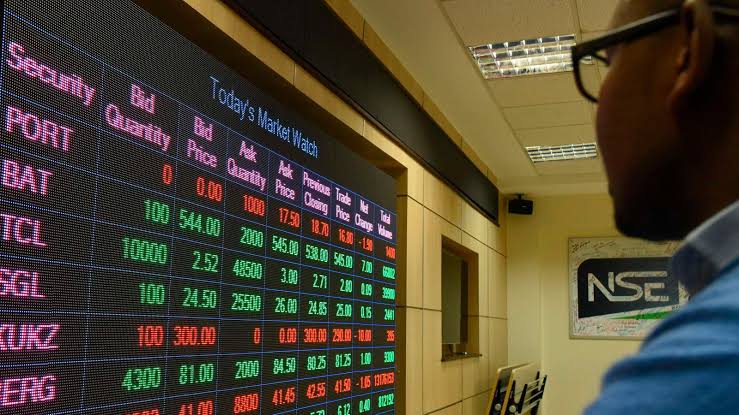
The Nigerian Exchange reflected the renewed optimism during the week ended July 10, with the All-Share Index (ASI) advancing 6.35 per cent to close at 243,798 points, its strongest weekly gain this year. Market capitalisation also rose by ₦9.34 trillion to ₦156.44 trillion, lifting the market’s year-to-date return to approximately 57.7 per cent.
The rally was largely driven by sustained buying interest in banking stocks, including FIRSTHOLDCO, ZENITHBANK, ACCESSCORP and GTCO, alongside continued gains in telecommunications giant Airtel Africa, whose share price climbed to a record ₦5,801.40, representing a gain of about 155 per cent since the beginning of the year.
While Bloomberg celebrated Nigeria’s investment performance, FTSE Russell adopted a more measured position.
The global index provider last week retained Nigeria under review for possible reclassification to Frontier Market status, citing concerns over the country’s transition to a T+1 settlement cycle and the potential pre-funding requirements for foreign investors.
FTSE Russell said it would continue assessing whether Nigeria’s settlement framework fully satisfies its Delivery versus Payment (DvP) accessibility criteria before making a final decision, which is expected during its next review in August.
The position contrasts with that of S&P Dow Jones Indices, which recently placed Nigeria on its **2027 Country Classification Watchlist for a possible upgrade from Standalone Market to Frontier Market status, citing improvements in market regulation, transparency and governance.
Analysts say the differing assessments reflect the distinct criteria used by the institutions.
While Bloomberg evaluates actual investment performance and returns, FTSE Russell focuses on market accessibility, settlement efficiency and the ease with which international investors can deploy and repatriate capital.
Market observers note that the two positions are not necessarily contradictory. Nigeria’s equities can outperform global peers while the country’s market infrastructure continues to evolve to meet international benchmark standards.
Investors are now expected to closely monitor FTSE Russell’s August review, which could influence future foreign portfolio inflows, as well as the continued implementation of financial sector reforms and other capital market initiatives.
Despite FTSE Russell’s cautious stance, Bloomberg’s recognition has reinforced Nigeria’s growing profile among global investors, placing the country’s stock market firmly in the international spotlight after years of limited foreign participation.
For market participants, the message is clear: Nigeria’s reform-driven equity rally is attracting global attention. The next challenge is translating strong market performance into broader international index recognition that could unlock a new wave of institutional investment.