By Gift Chidiebere Igwe
For many years, public schools in Nigeria were regarded as such that provide opportunities for children of the common men to be educated. They have always been considered a last resort for parents who lacked the means to give their children what was regarded as the “best” education in private schools. Public schools were stereotypically seen as institutions designed for the less-privileged in the society, where quality was often sacrificed due to the inadequacies associated with the system.
Public schools at some point in our educational history were indeed the toast of all including foreign educators who willingly took up teaching jobs in our public schools sector, raising academically sound graduates at all levels, before it took a nosedive due to neglect by successive governments in Nigeria.
These inadequacies manifested in poorly-maintained classrooms, undedicated teachers, unstable and dysfunctional school management, lack of modern academic or extra-curricular school facilities, insecurity, and a generally low educational standard.
As a result, many parents or guardians developed preferences for sending their wards to private schools where they could get some more quality as opposed to the above-mentioned inhibiting factors, bearing the high cost of sending their wards to expensive privately owned schools despite the harsh economic realities in the country.
The good news, however, is that the tide is turning. Current attitude of the government and several Non-governmental Organisations appear to lean towards addressing these long-standing challenges.
Public schools in Edo are currently facing a quiet revolution.
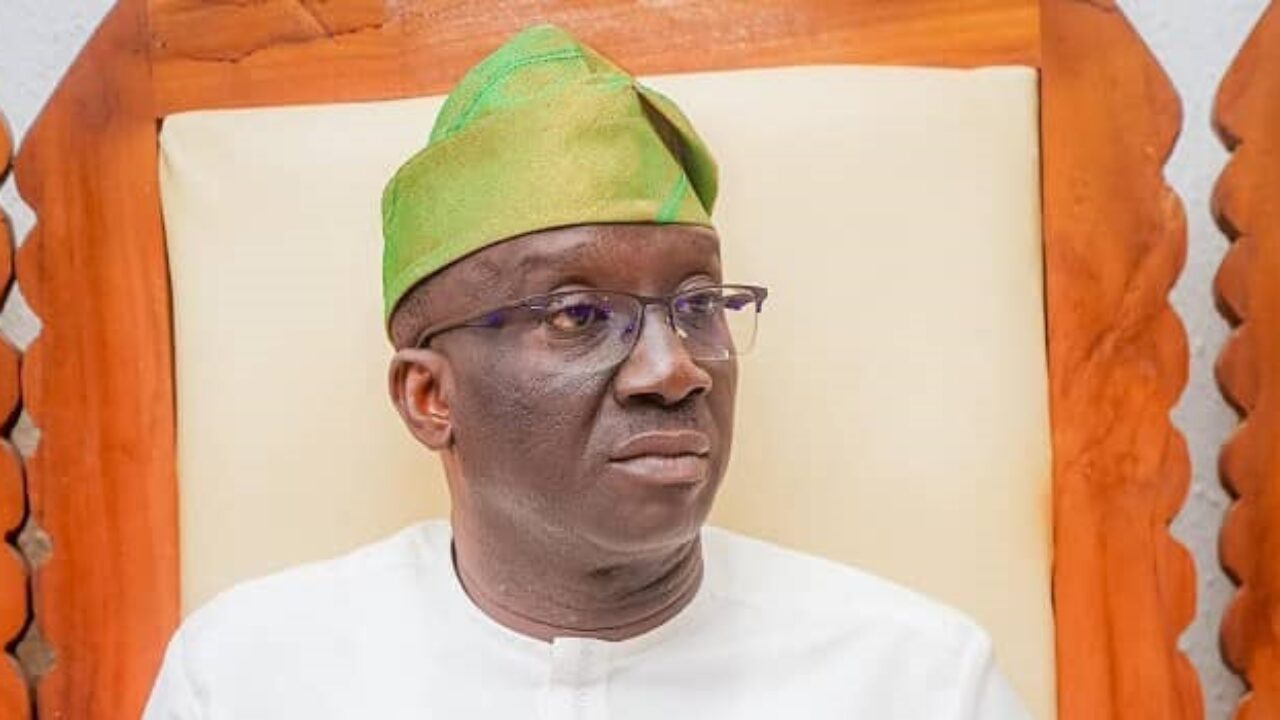
In fact, the Edo state government under the leadership of Governor Monday Okpebehlo is deeply committed in the quest to not just revitalise the glory of public schools in Edo state, but also working tirelessly to see that these schools are equipped to prepare our children with all they would need to navigate the highly competitive labour market and also become employers of labour.
This transformation is clearly evident in the various initiatives and programs championed by Gov. Monday Okpebehlo, since he assumed office in November 2024.
Shortly after assuming office, The Governor embarked on a statewide assessment of public schools, he consulted with education stakeholders and conducted firsthand inspections to understand the true state of the sector.
What he found was troubling—many of these schools were in a state of disrepair, with crumbling walls, overcrowded classrooms, absence of furnitures, causing students to sit on bare floors. There were also reported cases of vandalism and stealing of schools facilities, largely due to absence of insecurity surveillance and many years of neglect.
Moved by what he saw, the governor pledged immediate intervention. He swiftly launched the “100 Days in Office that targeted the renovation of 100 Schools within the period, in February 2025. The initiative targeted schools across Edo North, Central, and South, providing structural repairs, new roofing, perimeter fencing, classroom furniture, and lots more.
Beneficiaries included Ebo Primary School (Iyekogba), Evbareke Junior Secondary School, and Use Junior Secondary School, among others.
Other significant milestones followed. On March 25, 2025, Governor Okpebholo declared a state of emergency on public education, focusing particularly on schools in Ikpoba-Okha and Egor Local Government Areas.
In April, he resumed construction on the long-abandoned Ebomisi Secondary School in Ugbogiobo. By May, his administration announced the renovation of an additional 120 schools as part of efforts towards implementing President Bola Tinubu’s Renewed Hope Agenda in public education sector.
Most recently, the governor revealed plans to recruit more qualified teachers to match the upgraded infrastructure and improve learning outcomes.
In recognition of these efforts, Governor Okpebholo received national commendation from President Bola Ahmed Tinubu, who praised the reforms as a model for other states to follow.
The vision for public education in Edo State is being steadily restored. This is not the time to remain stuck in outdated perceptions. State-owned schools are rising to meet modern standards—and they are open to all.
Financial limitations should no longer be a barrier to quality education. Now is the time to give every child in Edo State a fair shot at the future they deserve.