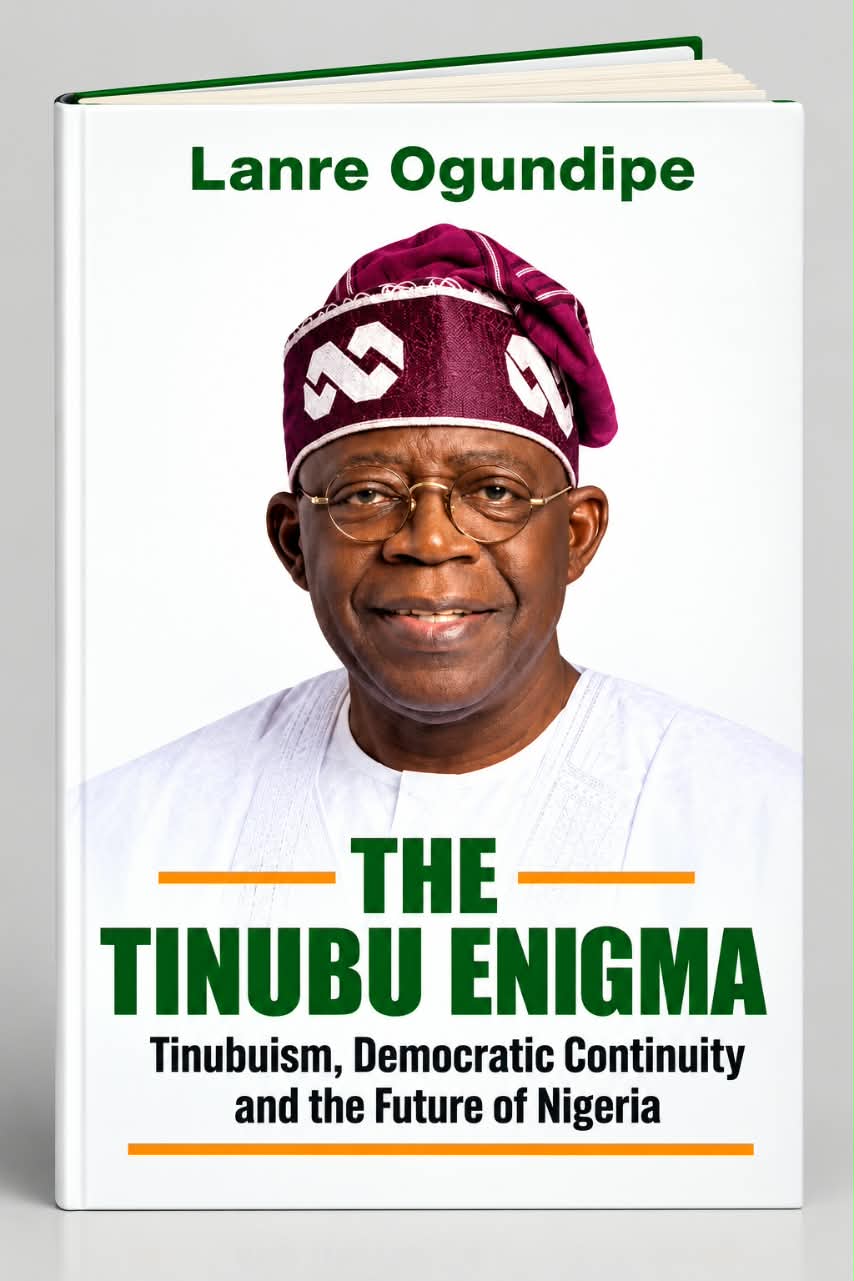
ABUJA — A new book examining President Bola Ahmed Tinubu’s political evolution, strategies and approach to democratic governance is scheduled for publication before the end of 2026.
Titled The Tinubu Enigma: Tinubuism, Democratic Continuity and the Future of Nigeria, the approximately 300-page book is authored by veteran journalist Lanre Ogundipe, a former president of the Nigeria Union of Journalists (NUJ) and the African Union of Journalists.
The publication explores Tinubu’s emergence as a political strategist, coalition builder and organiser, while examining the influence of his political methods on Nigeria’s democratic development and governance.
According to the author, the book is neither intended as a work of praise nor a partisan condemnation of the President, but rather as an attempt at political interpretation.
The publication examines Tinubu not merely as an individual politician but as a broader political phenomenon shaped by power, strategy, coalition management, institutional influence and the challenges of governing a complex federation.
Its early chapters focus on Tinubu’s political organisation and coalition-building strategies within Nigeria’s evolving democratic landscape, while subsequent chapters address questions surrounding governance, political legitimacy, economic reforms, institutional endurance and democratic accountability.
A central theme of the book is the concept of “Tinubuism”, which Ogundipe presents as a subject for critical examination rather than an established political doctrine.
The author seeks to determine whether recurring patterns in Tinubu’s political career could be understood as a distinctive approach to political organisation, coalition management and the exercise of democratic power in contemporary Nigeria.
The book also situates Tinubu’s political experience within the context of Nigeria’s Fourth Republic and broader African debates on statecraft, democratic consolidation and political leadership.
It brings together political commentaries, analytical essays and historical reflections, including previously published materials that have been substantially developed alongside new contributions.
According to the announcement, the manuscript has undergone extensive editorial development and has been reviewed by scholars and analysts ahead of publication.
The book is expected to contribute to discussions among scholars, journalists, political practitioners, researchers, students and members of the public interested in Nigerian politics and the future of the country’s democracy.